CONTENT

CNSA, the China National Space Administration, is China’s national space agency responsible for areas including civil space policy, exploration programs, and international cooperation. Its work connects scientific missions with industrial development, including dedicated oversight of commercial space.
China’s space progress offers a useful view of how the country develops complex technologies and organizes research partnerships. However, a credible assessment must distinguish agency responsibilities, demonstrated capabilities, and future targets.
Those distinctions matter when evaluating potential suppliers, research collaborations, or lessons for technology development elsewhere.
China distributes space responsibilities across several organizations. The institution announcing a mission may differ from the organization building its hardware or managing its crew.
| Organization | Relevant responsibility |
| CNSA | Space policy, exploration coordination, and international partnerships. |
| China Manned Space Agency, or CMSA | Human spaceflight and an expanding role in integrated lunar activities. |
| China Aerospace Science and Technology Corporation, or CASC | Aerospace hardware development, including the Chang’e-7 probe and its Long March 5 launcher. |
The boundaries are evolving. In May 2026, China announced it would integrate crewed lunar landing and robotic lunar exploration across missions, resources, and teams. This makes older descriptions of completely separate lunar programs incomplete.
NASA combines human spaceflight, science, and research and technology within one agency, as its May 2026 reorganization confirms. China assigns responsibilities across multiple bodies.
Comparisons should therefore match specific programs and capabilities; national launch totals or aerospace-company revenues are poor substitutes for agency-level measures.
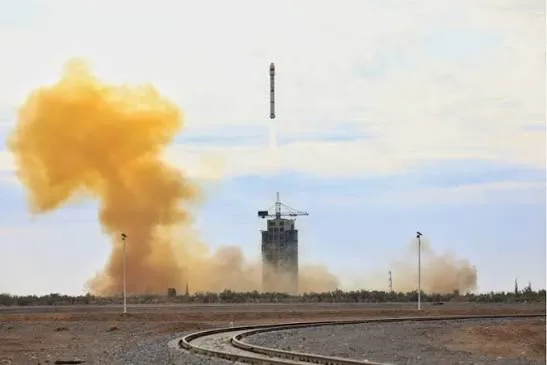
The agency’s November 2025 action plan links commercial space development to access to research, infrastructure, and customers. It calls for national research opportunities for commercial participants, wider use of state testing facilities, technology commercialization, and expanded government purchasing of commercial space services.
The practical lesson is about development costs. A company needs test facilities, qualification processes, and a credible customer pathway alongside engineering talent.
Shared infrastructure can reduce duplicated investment, while procurement can help establish demand. These are potential effects of the policy design, rather than evidence that every participant has secured access or contracts.
In April 2026, CNSA and the State Administration for Market Regulation released a commercial space standards framework. It covers six branches, including manufacturing, launch operations, application services, and facilities, with more than 1,000 planned standard items.
That figure describes the framework’s planned coverage. It should not become a claim that 1,000 new mandatory rules already apply. A supplier assessment should identify the standards relevant to a product, the testing evidence, and the approvals needed for its intended use.
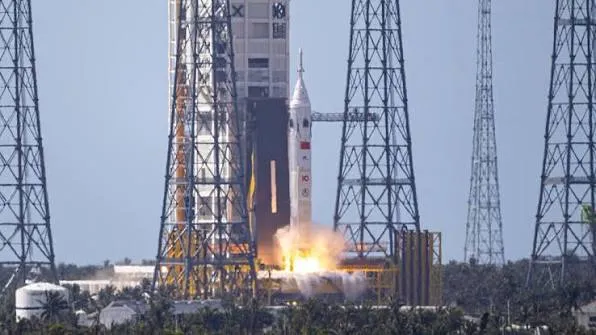
The asteroid probe launched on May 29, 2025, Beijing time. On July 6, 2026, the agency reported that it had reached approximately 20 kilometers from asteroid 2016 HO3 and begun scientific observations. Its team also improved estimates of the asteroid’s position using optical navigation data.
This milestone demonstrates progress in deep-space navigation and close-range observation. The July update described further investigations to support sampling, so arrival should remain distinct from a completed sample-return mission.
In April 2026, the agency reported two newly identified minerals in Chang’e-5 samples. Research teams linked the findings to questions about lunar composition and geological evolution.
The strategic value extends beyond spacecraft performance. Scientific instruments, laboratory methods, and access to material determine how much knowledge a mission produces after flight operations end. These results show why research capacity belongs in any assessment of China’s technological progress.
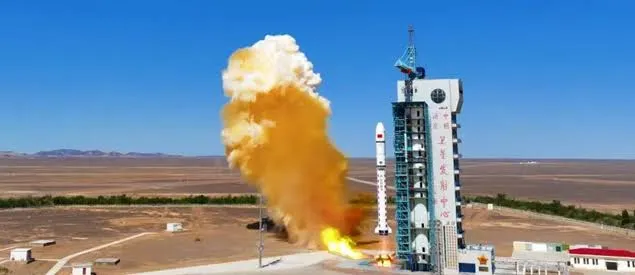
The CNSA Moon roadmap connects surface surveys with resource experiments and longer-term research infrastructure. The planetary program adds the challenge of retrieving material from Mars. Each stage tests different capabilities, so its schedule needs separate treatment.
| Mission or program | Verified schedule or status | Intended purpose |
| Chang’e-7 | An August 23, 2026 notice ruled out the planned 2026 launch window. It did not provide a replacement date. | Survey the lunar south pole’s environment and resources. The spacecraft includes an orbiter, lander, rover, a hopping drone designed to dive into dark craters, and a relay satellite. |
| Chang’e-8 | The published target is around 2029. | Conduct scientific exploration and experiments using local lunar resources. Carry payloads from 11 countries and regions plus one international organization |
| Tianwen-3 | An April 2026 update targets launch around 2028 and sample return around 2031. | Retrieve Martian material for laboratory investigation. |
| International Lunar Research Station | The published plan targets a basic configuration by 2035. | Establish scientific facilities on the lunar surface and in lunar orbit. |
This deep-space strategy creates demanding engineering requirements: reliable landing, surface mobility, sample handling, power, and communications. Those requirements help identify relevant technology categories, but mission plans alone do not establish an addressable commercial market.
A lunar-resource experiment, for example, can demonstrate a process under difficult conditions. Commercial viability would require additional evidence about output, reliability, energy consumption, transport, and customers. That distinction keeps the discussion useful for business planning.
China offers specific scientific participation routes. In April 2026, the agency announced five cooperative projects for its Mars sample-return mission involving institutions in Hong Kong, Macao, and overseas. These include a laser retroreflector array from Italy’s National Institute for Nuclear Physics.
The Lagrange-V Solar Observatory’s 2026 cooperation call illustrates how participation works in practice. It specifies a combined allowance of 15 kilograms and 30 watts for cooperative payloads. A successful proposal must fit the spacecraft’s technical limits.
The business implication is concrete: assess the instrument, interface, project stage, and research rights before treating a partnership announcement as market access. A defined contribution gives both sides a clearer basis for collaboration than a broad expression of interest.
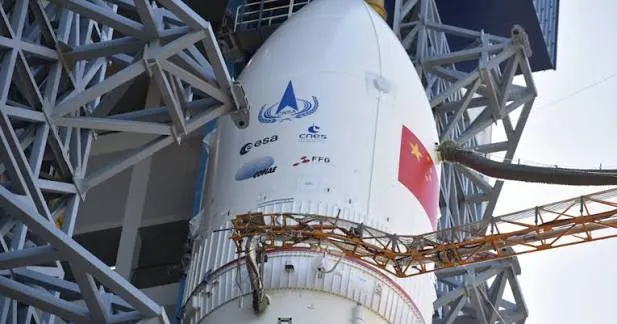
The evidence supports a measured conclusion: China is strengthening its role as a technology hub through demanding missions, scientific output, and industrial coordination. The transferable lesson concerns how organizations connect research goals with the facilities and partners needed to deliver them.
A useful commercial assessment should answer three questions:
These questions turn attention to China’s space progress into a practical research agenda. They also let companies learn from its development methods without assuming every mission target will become a profitable product.
CNSA offers one perspective on China’s approach to complex innovation. ChoZan helps teams examine the wider business implications through China research, expert calls, digital transformation workshops, and learning expeditions. Our China reports provide additional context on technology and business trends.
Book a consultation to define the questions, companies, and practices most relevant to your next strategic decision.
The agency lists its address in Beijing’s Haidian District, at 8A Fucheng Road. This is its administrative location. Individual missions also involve research institutes, manufacturing centers, and launch facilities elsewhere in China.
Shan Zhongde leads the agency as of September 2026. An official September 11 report identifies him as its administrator and describes his participation in the International Space Summit in Paris earlier that month.
China’s total government space expenditure was estimated at approximately US$20.6 billion in 2025, placing it second globally behind the United States. This is a national government space spending estimate rather than CNSA’s standalone agency budget, and the underlying dataset covers both civil and defense space expenditure.
Some mission data is available through dedicated scientific platforms. In July 2026, the agency published updated orbital-position information for asteroid 2016 HO3 through its lunar and planetary data system. Check each dataset’s access conditions.
Yes. International institutions can apply through announced lunar-sample loan rounds, subject to expert review. In April 2026, the agency approved three institutions in a second selection round. Applicants should check current notices for eligibility and deadlines.
Yes. Its planned Lagrange-V Solar Observatory will investigate solar magnetic fields, eruptions, and their effects on Earth. The 2026 mission document connects those observations with improved scientific foundations for space-weather warning and forecasting technologies.
The mission plan calls for contamination controls throughout collection, sealing, transport, and laboratory analysis. It also proposes a specialized facility with clean and biosafety areas, plus biological risk assessment, under international planetary-protection guidance.
The agency coordinates satellite observations and distributes imagery to emergency authorities. After the August 2026 Gyirong disaster, it supplied pre- and post-event images to support damage assessment and relief decisions.
China executed 92 orbital launches in 2025, a national record. Commercial launches accounted for 50 of those missions. More than 300 satellites reached orbit.
The plan calls for debris tracking, collision-warning support, and arrangements for satellite disposal and safe reentry. These measures address risks across a spacecraft’s operating life, including the responsibilities that continue after its useful mission ends.
The ILRS is a China-initiated lunar base project. Seventeen countries and international organizations, along with more than 50 research institutions, have joined. It serves as an alternative to the NASA-led Artemis program.