CONTENT
Chinese solar modules now combine large industrial scale with serious technical depth. Current products from leading manufacturers span high-volume TOPCon, premium HJT, and back-contact designs reaching about 25% commercial module efficiency. Yet country of origin and a Tier 1 badge cannot settle a procurement decision.
Independent 2025 testing found at least one failure in 59% of tested bills of materials, while severe Chinese overcapacity pressured prices and manufacturer finances. The commercial task is clear: qualify the exact factory, component combination, warranty entity, and traceable supply chain that fit the project.
Solar panels from China can reduce equipment and system costs, but weak due diligence can turn a low factory quote into a customs, financing, or performance problem.
China’s advantage comes from manufacturing density. Polysilicon, wafers, cells, glass, frames, encapsulants, and assembly sit within a mature supplier network. A 2025 government science source put China’s share of global PV module supply at 70%. A 2026 government report said Chinese modules had reached more than 200 countries and regions by the close of 2025.
Scale creates a difficult contradiction. Reuters reported in August 2025 that Chinese panel makers could produce roughly twice the volume the world purchased each year. Upstream polysilicon utilization was expected to average only 35% to 40% in 2025.
Vertical integration can improve cost visibility and documentation. It does not guarantee consistent components across factories or production runs.
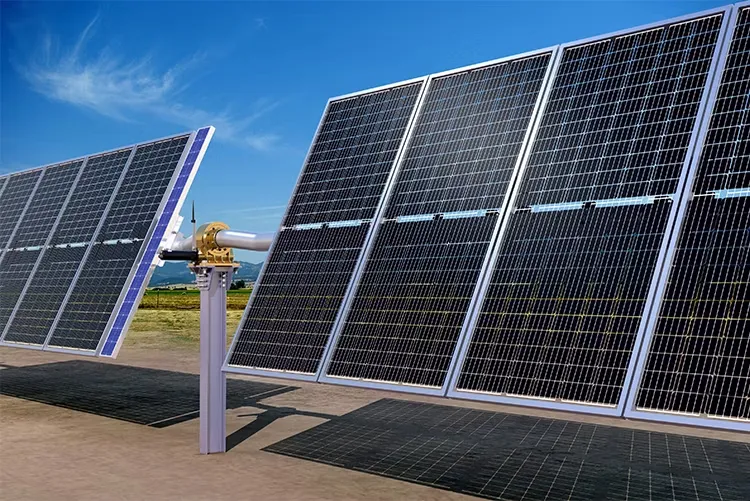
The key architectures compete on yield, scale, space use, and reliability.
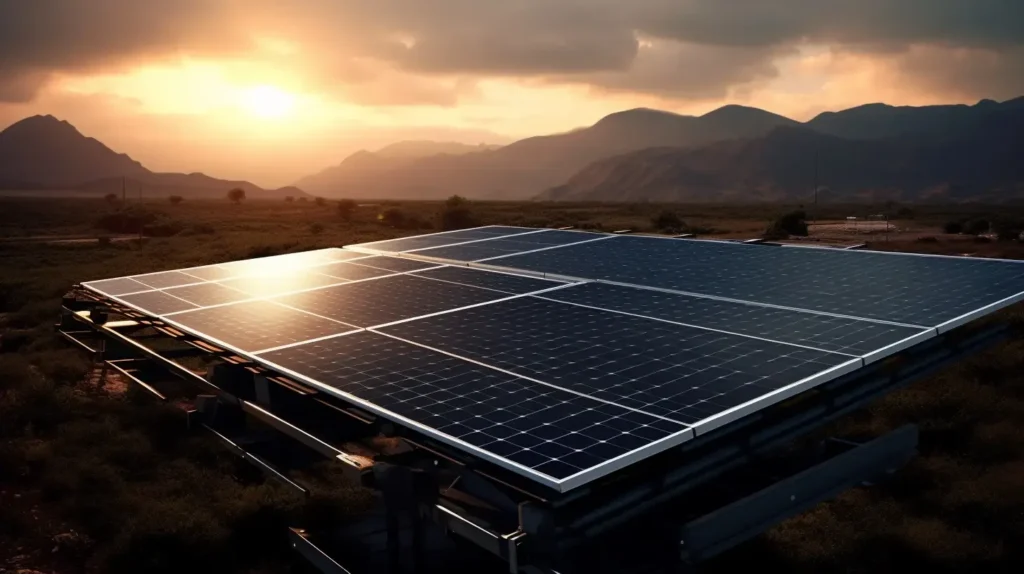
TOPCon has the strongest high-volume position. Reuters reported in January 2025 that it was expected to make up the bulk of high-efficiency cell capacity during the following five years. JinkoSolar’s Tiger Neo 3.0 lists up to 670 W output, 24.8% efficiency, and 85% plus or minus 5% bifaciality.
Scale, broad availability, and rear-side generation support the commercial case. TOPCon modules still require BOM-specific review for ultraviolet stability, encapsulation, junction boxes, and glass strength.
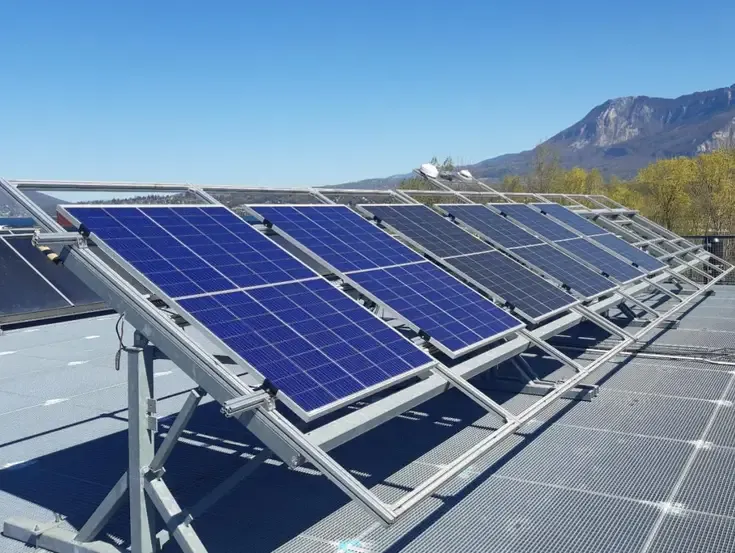
Heterojunction combines crystalline silicon with thin passivation layers. Its case centers on temperature behavior and bifacial potential, while production remains less mature than TOPCon at industry scale.
In January 2025, Trinasolar announced a 25.44% aperture efficiency record for a large-area HJT research module, confirmed by Fraunhofer CalLab. The result shows the potential of HJT technology. Buyers still need contracted, mass-production specifications.
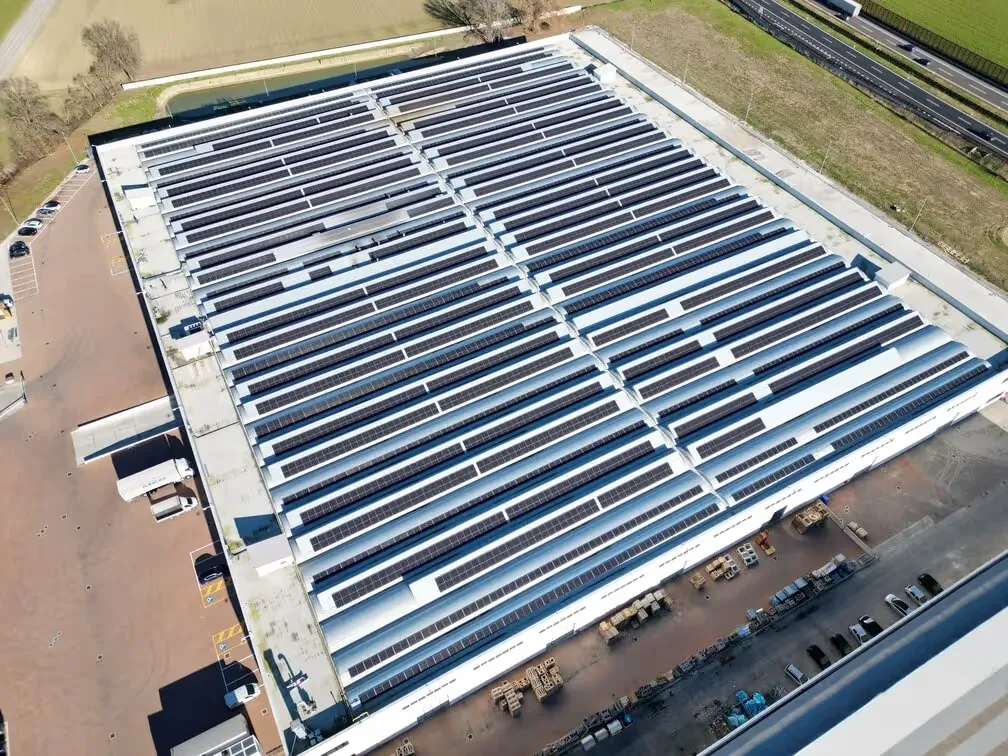
Back-contact designs move electrical contacts away from the front surface. LONGi launched the Hi-MO X10 in Europe during 2025 with up to 670 W output, 24.8% commercial efficiency, and a 30-year power warranty. Its May 2025 HJT back-contact module reached 25% commercial efficiency.
Back-contact cells form a design family rather than one chemistry. They suit projects where power density carries high value. Bifacial response, temperature coefficient, and price premium still require product-level comparison.
| Technology | Main commercial strength | Point to verify | Strong use case |
| TOPCon | Scale, supplier choice, bifacial output | UV stability and exact BOM | Utility and commercial projects |
| HJT | Temperature behavior and efficiency potential | Delivered efficiency, availability, and cost | Hot climates and yield-led projects |
| Back contact | High power per square meter | Bifaciality, premium, and factory experience | Space-constrained roofs and premium applications |
The phrase Chinese solar panels covers leading products, value-focused brands, contract manufacturers, and unverified trading offers. Quality depends on the cell, glass, encapsulant, backsheet, junction box, connector, frame, and assembly process.
The 2025 Kiwa PVEL Reliability Scorecard makes this concrete. Kiwa found at least one failure among 83% of participating manufacturers and 59% of tested BOMs. The same model name can contain different materials, so its tests assess each BOM under third-party production oversight.
Standard IEC 61215 and IEC 61730 certification remains a baseline for design qualification and safety. It should sit beside extended reliability testing, factory audits, electroluminescence images, calibrated flash-test data, and pre-shipment sampling.
The language around quality tiers can create false confidence. BloombergNEF’s March 2026 Tier 1 methodology says its classification measures industry acceptance. It does not directly assess quality or financial strength, and BNEF publishes no Tier 2 or Tier 3 list.
Tier 1 can support a bankability discussion because it reflects use in non-recourse financed projects. Technical acceptance needs independent product tests. Financial review needs current accounts, insurance, service capacity, and the legal entity behind the warranty.
Product warranties address defects. Performance warranties promise a power curve. Neither automatically covers labor, freight, testing, removal, or lost generation.
Published degradation rates help compare offers, but the remedy matters too. LONGi’s 2025 Hi-MO X10 materials state 1% first-year degradation and 0.35% annually afterward. Contracts should define measurement, claim thresholds, compensation, and local service.
With OEM manufacturing, a private-label seller may change its factory or components. The purchase agreement should lock the approved factory and BOM and require consent for substitutions.
The assembly country does not reveal the full chain. Polysilicon, wafers, cells, and modules may each come from different locations.
The U.S. Department of Commerce reached affirmative trade findings in April 2025 on cells from Cambodia, Malaysia, Thailand, and Vietnam. It found that companies in all four countries received Chinese government subsidies. A Southeast Asian factory address does not remove China-related exposure.
The 2025 U.S. enforcement strategy called for stronger tracing technologies. Effective supply-chain traceability connects invoices, production records, lot codes, factory addresses, and module serial numbers from polysilicon through assembly.
A credible China solar module file needs chain-of-custody records, current certificates, factory-specific tests, and a customs response process. Suppliers that refuse upstream disclosure create commercial risk.
Extreme solar overcapacity pushed quotes below sustainable levels. The Financial Times reported that global module pricing rose from about 9 cents per watt in December 2025 to 11.4 cents by mid-April 2026 as China curbed destructive competition.
A quote needs a validity date, Incoterm, freight assumptions, duty treatment, delivery schedule, and change-control clause. Buyers comparing solar panels China offers should model delivered cost alongside yield, system costs, degradation, tariffs, financing, and warranty recovery.
Higher efficiency can reduce module count, racks, cables, and labor. A premium can make sense when those savings are documented. Customs exposure or an unstable warranty counterparty can erase a low quote.
| Decision area | Evidence to request | Warning sign |
| Technology | Product datasheet, PAN file, temperature coefficient, bifaciality | Marketing record presented as delivered specification |
| Quality | Locked BOM, factory audit, extended test results, EL images | Model name supplied without component details |
| Warranty | Full terms, claim process, local service entity, insurance | Power headline with broad exclusions |
| Finance | Current financials, lender acceptance, parent support | Tier 1 badge used as the only proof |
| Traceability | Upstream map, invoices, lot and serial links | Assembly country presented as complete origin proof |
| Commercials | Landed cost, duties, freight, delivery, substitution control | Factory price compared without compliance cost |
The strongest Chinese solar modules combine dense supplier networks, rapid cell innovation, high efficiency, and large delivery capacity. The market also contains BOM variation, stressed suppliers, trade exposure, and weak warranty structures.
Select the architecture for the site, qualify the factory and BOM, test the warranty entity, map the supply chain, and compare lifetime value. This captures the advantages of solar panels from China while keeping risk visible.
Chozan helps global teams understand the commercial forces shaping Chinese solar modules, from technology shifts and manufacturing ecosystems to policy, competition, and supplier risk. Our China research and advisory work turns fast-moving market signals into clear strategic choices.
Expert calls, workshops, executive briefings, and China learning expeditions can support deeper evaluation of partners, innovation, and sourcing models. Book now to discuss the questions that matter to your organization.
Chinese solar modules can work well near coasts when the selected BOM has suitable salt-mist certification, corrosion-resistant frames, sealed junction boxes, and compatible mounting hardware. Request project-specific test evidence and confirm warranty coverage for the site environment.
Check the business license, factory address, certification holder, audit report, and export records against the contracting entity. A live video audit and third-party inspection can confirm production lines, equipment, inventory, and control over the stated facility.
A direct import of China solar panels is possible, but small orders can lose their price advantage after freight, customs, certification checks, taxes, handling, and local warranty support. A qualified regional distributor may provide stronger recourse and simpler replacement service.
The phrase PV panels China usually signals a search for Chinese manufacturers, wholesale prices, or export suppliers. Buyers should narrow results by target market certification, module architecture, factory location, annual capacity, independent testing, and after-sales coverage.
A commercial shipment usually needs an invoice, packing list, bill of lading, certificate of origin, serial-number list, test certificates, warranty documents, and market-specific customs records. Exact requirements depend on destination, tariff classification, and project rules.
Reputable photovoltaic panels China suppliers should provide factory-specific certificates, full datasheets, traceable serial numbers, approved BOM details, warranty terms, and inspection access. Clear substitution controls and responsive technical support matter as much as production capacity.
Bifacial modules can add value on reflective flat roofs with sufficient rear clearance and suitable row spacing. The yield case should use site geometry, albedo, shading, and racking assumptions rather than the module’s laboratory bifaciality figure alone.
Solar PV panels China listings can reach similar wattages through different cell sizes, cell counts, efficiencies, and module formats. Dimensions affect racking, wind loading, handling, container density, roof fit, and total balance-of-system cost.
Sample review should include visual inspection, electroluminescence imaging, flash testing, insulation checks, dimensions, labeling, and document matching. Samples must come from normal production under independent oversight, since hand-selected units may not represent commercial shipments.
Minor connector or junction-box issues may have approved service procedures, but cracked glass, damaged cells, failed insulation, or severe delamination usually require replacement. Unauthorized repair can create safety risks and void the manufacturer’s warranty.