CONTENT
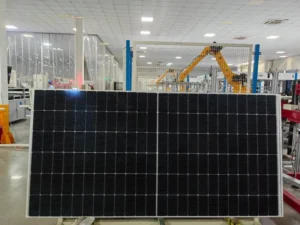
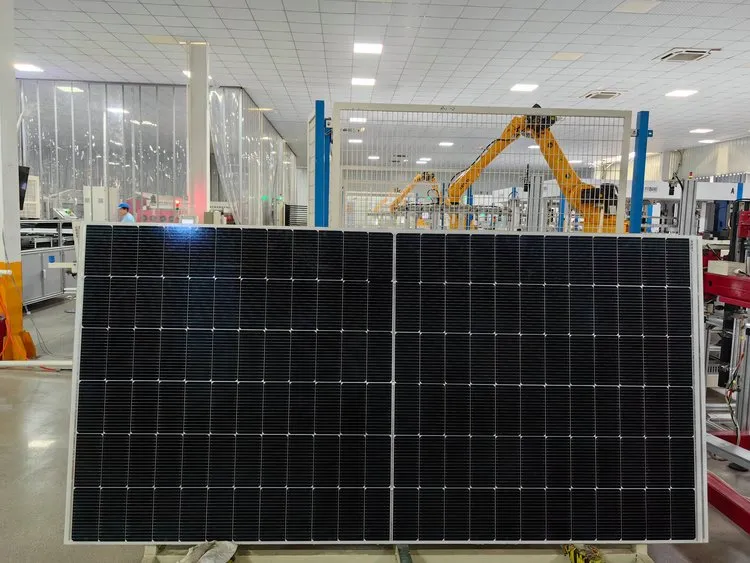
A TOPCon solar panel uses cells built on n-type silicon with an ultrathin oxide layer and doped polysilicon contact. These layers reduce carrier recombination while allowing electrical charge to move out of the cell efficiently. The result is higher voltage, conversion efficiency, and energy density than conventional PERC architecture can usually deliver.
This matters because n-type TOPCon solar panels have moved from premium products to the industry’s main crystalline-silicon platform. The 2026 International Technology Roadmap for Photovoltaics found that TOPCon dominated production in 2025, while PERC’s share had fallen to roughly 14%.
TOPCon stands for tunnel oxide passivated contact. It describes the electrical contact architecture inside the solar cell, rather than the size, wattage, glass structure, or brand of the finished module.
Most commercial TOPCon solar cells use a phosphorus-doped n-type silicon wafer. The front contains a boron-diffused emitter, while the rear contains an ultrathin silicon oxide layer and a heavily doped polysilicon layer. Together, these layers form a carrier-selective contact.
The architecture addresses a central efficiency problem. Direct metal contact with silicon creates sites where electrons and holes can recombine before contributing to electrical current. TOPCon’s passivated contact separates metal from the wafer more effectively, reducing this loss.
A module labeled TOPCon may be monofacial or bifacial, framed or frameless, and designed for rooftop or utility-scale applications. Cell architecture alone does not define the whole product.
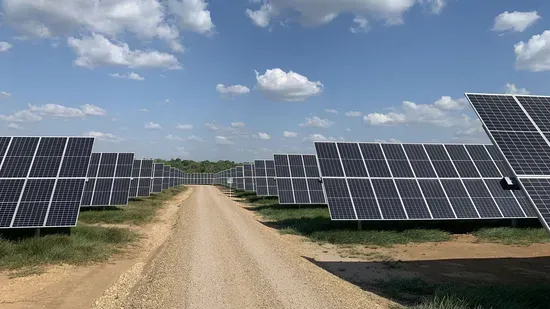
N-type silicon uses phosphorus as the principal dopant, giving the wafer an excess of free electrons. It avoids the classic boron-oxygen light-induced degradation mechanism associated with boron-doped p-type substrates.
This does not make n-type cells immune to degradation. It removes one well-known loss mechanism and provides a strong base for high-efficiency passivated contacts.
The key layer is roughly 1 to 2 nanometers of silicon oxide between crystalline silicon and doped polysilicon. This interface passivates defects that would otherwise trap electrical charge and increase carrier recombination.
The selective contact allows electrons to move through while restricting unwanted hole recombination. Recent 2026 research found that both oxide passivation and nanoscale pinholes influence charge transport. Control over oxidation temperature, time, atmosphere, and interface chemistry therefore matters at industrial scale.
A doped polysilicon layer sits above the tunnel oxide. Metal fingers then collect the current. Manufacturers commonly screen-print silver-containing pastes on both sides and use thermal processing or laser-enhanced contact optimization to improve electrical contact.
The manufacturing process must balance several competing requirements. Thicker polysilicon can improve passivation but absorb more light. Aggressive metallization can lower resistance while damaging the passivated interface. Narrower metal fingers reduce shading but demand precise printing.
This balance explains why TOPCon solar cell efficiency depends on process control, rather than the architecture’s name alone.
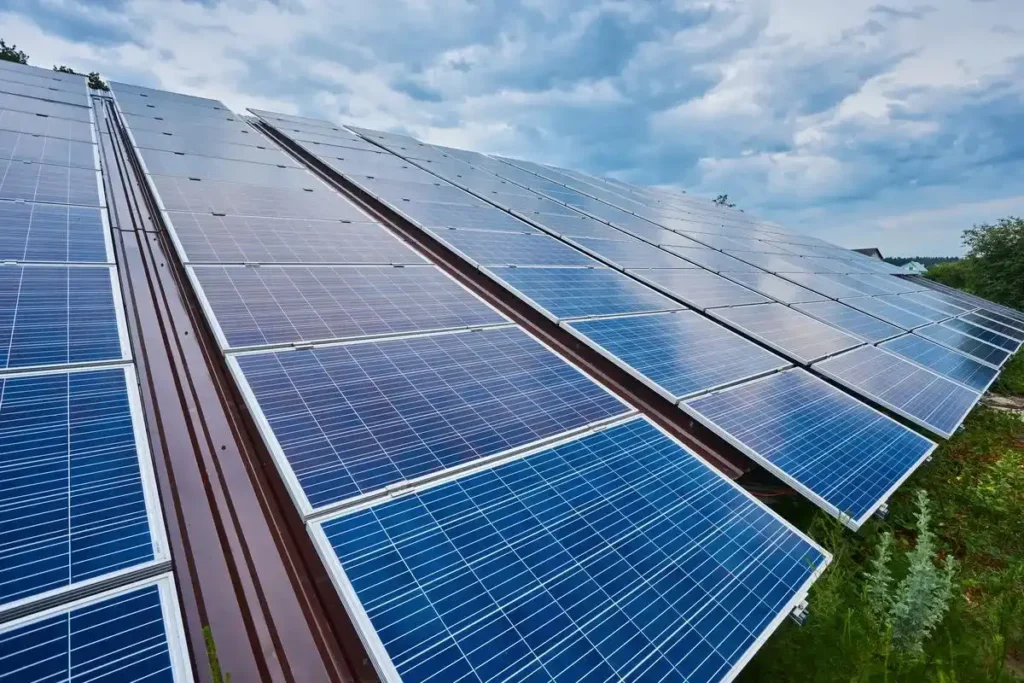
TOPCon offered Chinese manufacturers an attractive combination: greater efficiency potential and a practical route from existing PERC manufacturing.
A 2025 peer-reviewed performance and reliability assessment found that TOPCon requires an upgrade to existing PERC lines, while HJT generally requires a more distinct equipment set. TOPCon adds steps such as boron diffusion, tunnel oxidation, polysilicon deposition, and more demanding edge isolation, but several upstream and downstream processes remain familiar.
This production-line conversion advantage helped established Chinese cell manufacturers use their equipment base, supplier relationships, and process expertise. It also reduced the commercial risk of moving away from PERC.
The 2026 ITRPV analysis reported that n-type wafers represented about 82% of the market in 2025. Current mainstream TOPCon module efficiency reached roughly 23.5%.
Laboratory records are higher. JinkoSolar announced a certified TOPCon solar cell record of 27.79% in November 2025. A separate industrial M10-format cell reached 26.66% in 2026. These figures should not be compared directly with commercial module efficiency because module assembly introduces optical, spacing, and electrical losses.
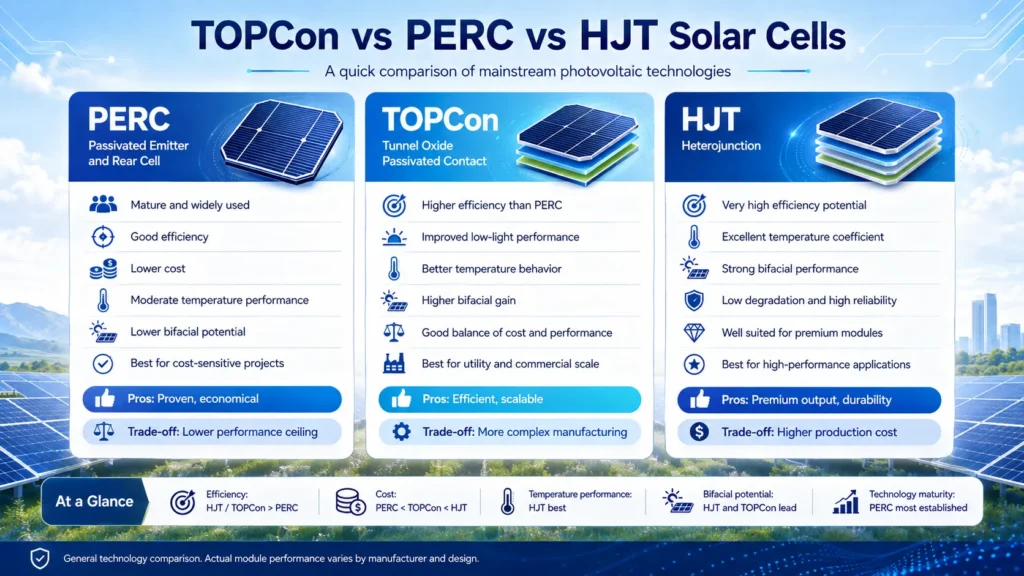
The commercial appeal of TOPCon technology becomes clearer when architecture, factory fit, and materials are compared together.
| Factor | PERC | TOPCon | HJT |
| Typical wafer | P-type | N-type | N-type |
| Contact approach | Local rear metal contacts | Tunnel oxide and doped polysilicon | Amorphous silicon and transparent conductive oxide |
| Current module efficiency | About 21.7% | About 23.5% | About 23.5% |
| Factory transition | Mature legacy process | Upgrade path from PERC | More distinct equipment and process flow |
| 2025 cell-level silver use | About 8.9 mg/W | About 10 mg/W | About 12 mg/W |
| Strategic strength | Low-cost installed base | Scale, efficiency, and process compatibility | Strong passivation and bifacial potential |
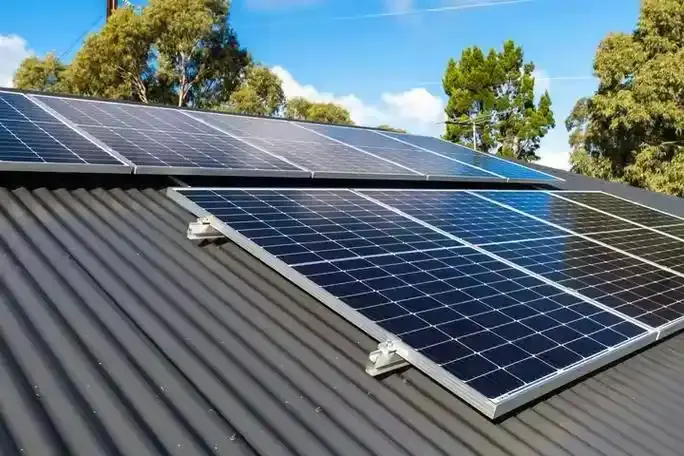
The rear contact structure makes bifacial TOPCon solar panels well suited to rear-side electricity generation. Bifaciality measures rear-side power as a percentage of front-side power under controlled conditions. It does not state how much extra energy a project will produce.
Actual bifacial gain depends on ground reflectivity, module height, row spacing, tracker geometry, shading, and rear obstruction. A high-bifaciality module mounted close to a dark rooftop may gain little. The same module can create more value on an elevated tracker over a reflective surface.
China’s new mandatory module efficiency standard, published in June 2026 and effective January 1, 2027, reportedly sets a minimum 75% bifaciality level for TOPCon modules. Public interpretations also place the minimum Grade 3 module efficiency near 23.2%.
Lower boron-oxygen degradation has become a major selling point for TOPCon solar panels, but buyers should assess the complete module design.
The IEA PVPS 2025 reliability report identified UV-induced degradation and potential-induced degradation as areas requiring careful testing in current TOPCon products. It also warned that architectures and material combinations change rapidly, leaving limited long-term field data for some current designs.
Encapsulant chemistry, glass thickness, passivation layers, metallization paste, junction-box quality, and factory controls can influence the degradation rate. Procurement should therefore request extended UV exposure, damp-heat, mechanical-load, and illuminated PID results for the exact bill of materials.
The TOPCon solar manufacturing model still depends heavily on silver. ITRPV estimates place 2025 TOPCon consumption near 10 mg/W at cell level, compared with 8.9 mg/W for PERC.
Manufacturers are responding through finer metal fingers, busbarless interconnection, laser-enhanced contacts, silver-coated copper, and alternative rear contacts. ITRPV projects TOPCon silver use could fall to 6.3 mg/W by 2036.
The challenge reaches beyond material cost. Thinner contacts must maintain conductivity, adhesion, production yield, and long-term stability. A process that saves silver but raises breakage or contact resistance can weaken the final economics.
Intellectual property also affects market access. In January 2026, the US Patent and Trademark Office denied challenges filed against First Solar’s TOPCon-related patents. Export strategy now requires technical and legal due diligence together.
A disciplined assessment should cover five areas:
The best product is determined by lifetime energy value and project risk. Nameplate wattage or initial price per watt provides only part of that calculation.
TOPCon’s commercial strength comes from combining better contact physics with production compatibility and industrial scale. China’s new efficiency rules suggest that the next phase will place more pressure on early, lower-efficiency TOPCon lines, rather than treating all n-type capacity as equally competitive.
At the same time, TOPCon solar cell technology provides a base for TOPCon back-contact designs and perovskite-silicon tandem cells. The architecture can therefore remain commercially relevant even as the industry moves beyond conventional front-and-rear-contact modules.
A TOPCon solar panel reflects a wider China story about manufacturing speed, process refinement, materials strategy, and regulatory change. ChoZan’s China research and consulting services help teams examine these shifts, connect technical developments with business implications, and learn from China’s innovation model.
Book a consultation to explore the questions most relevant to your organization.
No. TOPCon is an industry term for tunnel oxide passivated contact architecture. Manufacturers may add proprietary process names, but buyers should compare certified module data, reliability results, bill-of-materials controls, and warranty terms rather than branding alone.
No. TOPCon identifies the cell contact design, while bifacial describes a module that accepts rear-side light. Check the datasheet for bifaciality, rear-side rating, transparent back construction, and mounting requirements before modeling extra yield.
Usually, yes. Compatibility depends on voltage, current, connector, string length, and inverter input limits, rather than the cell architecture alone. A qualified designer should verify the module datasheet against the inverter’s operating window and local code.
No. Module wattage also rises with panel area and cell count. Efficiency measures watts produced per unit area under standard test conditions. Compare both figures when roof space, tracker length, shipping, or installation labor affects project economics.
Yes, but placing dissimilar modules in one string can create current and voltage mismatch. Designers commonly separate module types across independent MPPT inputs or inverters. Electrical compatibility, warranty conditions, and local code should guide the final configuration.
These labels usually describe a manufacturer’s own generation of process improvements. They are not universal technical standards. Ask which changes affect cell efficiency, metallization, degradation testing, temperature behavior, or the module warranty before comparing branded versions.
A full-black design can absorb more heat and may sacrifice a small amount of output compared with an equivalent reflective or bifacial construction. Compare temperature coefficient and efficiency across exact models, since architecture alone does not determine the result.
Yes. Cooler cell temperatures generally support higher electrical output, while snow can increase rear irradiance for bifacial designs. Structural loading, snow shedding, low-angle shading, and seasonal albedo still need site-specific engineering.
Service life depends on the complete module, installation, climate, and quality control. Review the product and performance warranties separately, then test the supplier’s annual degradation assumptions against independent reliability evidence and the project’s financial model.
Most crystalline-silicon TOPCon modules contain recoverable glass, aluminum, copper, and silicon, but recycling economics and local processing rules vary. Procurement teams should request material declarations, recycling instructions, and take-back terms before treating recyclability as assured.