CONTENT
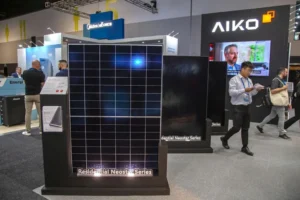
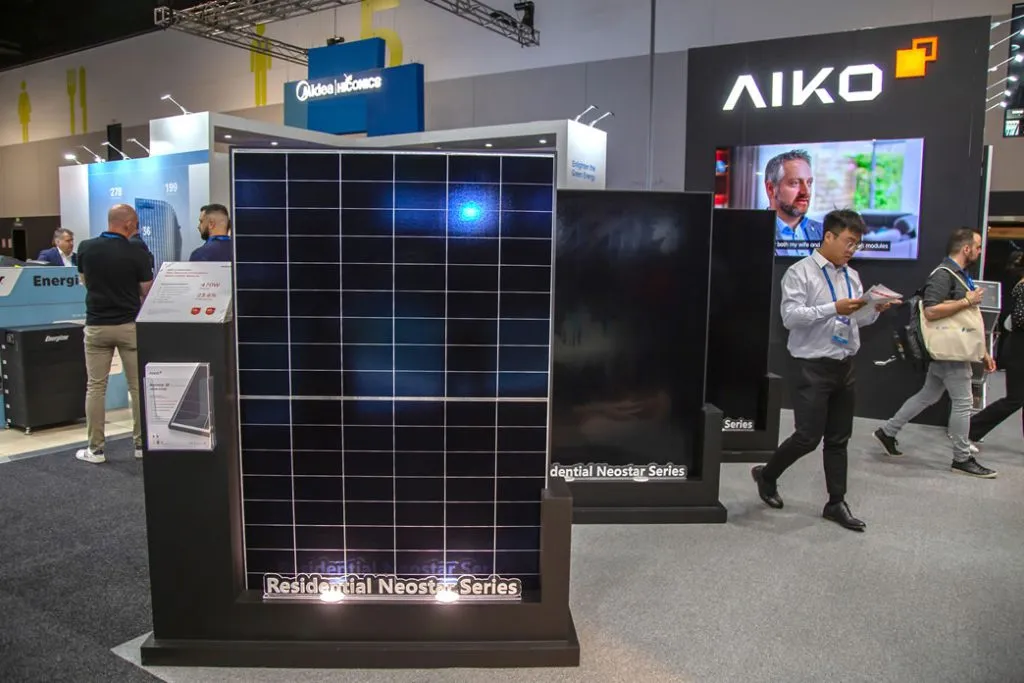
AIKO Solar Panels use N-type All Back Contact cells that place electrical contacts behind the cell instead of across its light-facing surface. The change increases usable light-receiving area, creates a uniform black face, and supports higher power density. AIKO’s current Neostar 3P54 reaches 500 W and 25% module efficiency in a format under two square meters.
The commercial value lies in fitting more nameplate capacity into constrained space. Still, efficiency alone does not guarantee better annual output or lower project costs. Panel format, temperature behavior, shade patterns, exact product construction, and local warranty support remain decisive.
Conventional crystalline-silicon cells collect current through metal fingers and busbars that occupy part of the front surface. The All Back Contact architecture places both positive and negative contacts on the rear. The resulting busbar-free front surface exposes more silicon to incoming light.
AIKO combines this structure with N-type silicon and rear-side passivation. Passivation reduces charge-carrier loss before they contribute to electrical current. Rear metallization then carries that current across the cell.
The difference appears in commercial module ratings. AIKO and LONGi had commercialized modules reaching 25% efficiency. AIKO’s 675 W Comet module ranked first in the shared position because it carried the higher power rating.
This distinction matters. A cell efficiency record comes from an individual cell or laboratory device. Module conversion efficiency measures the completed product, including spaces, frame boundaries, interconnections, glass, and encapsulation losses.
ABC addresses the cell surface. AIKO’s INFINITE design addresses the space around and between cells. The platform combines hidden rear interconnections with precision overlap soldering and a near-zero-gap layout. AIKO reported that this cell-to-module integration increased active cell area by about 1.7% within the same module footprint.
The result is more active material within a fixed external size. That distinction matters on roofs where usable area, fire setbacks, vents, and roof geometry limit panel count.
For example, a 10 kW array requires 20 panels at 500 W each. It requires 23 panels at 450 W each. Actual design results still depend on string voltage, inverter limits, roof shape, local electrical rules, and the wattage available through local distributors.
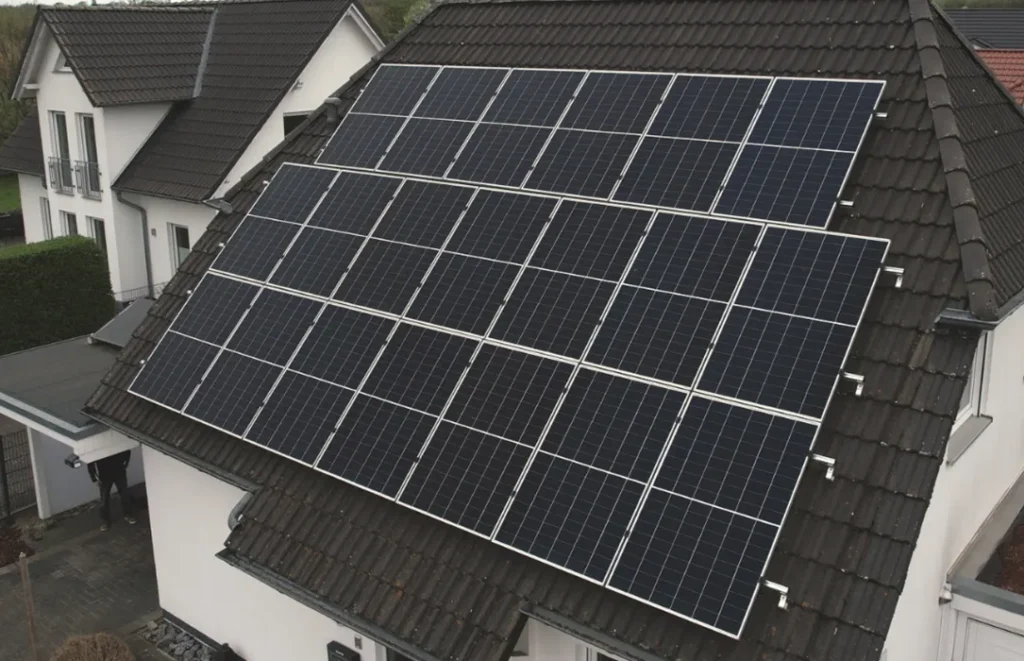
The same architecture changes module aesthetics. With no visible front busbars and smaller cell gaps, the surface appears more uniform. This can add commercial value to homes, hotels, retail properties, and buildings where the array remains highly visible.
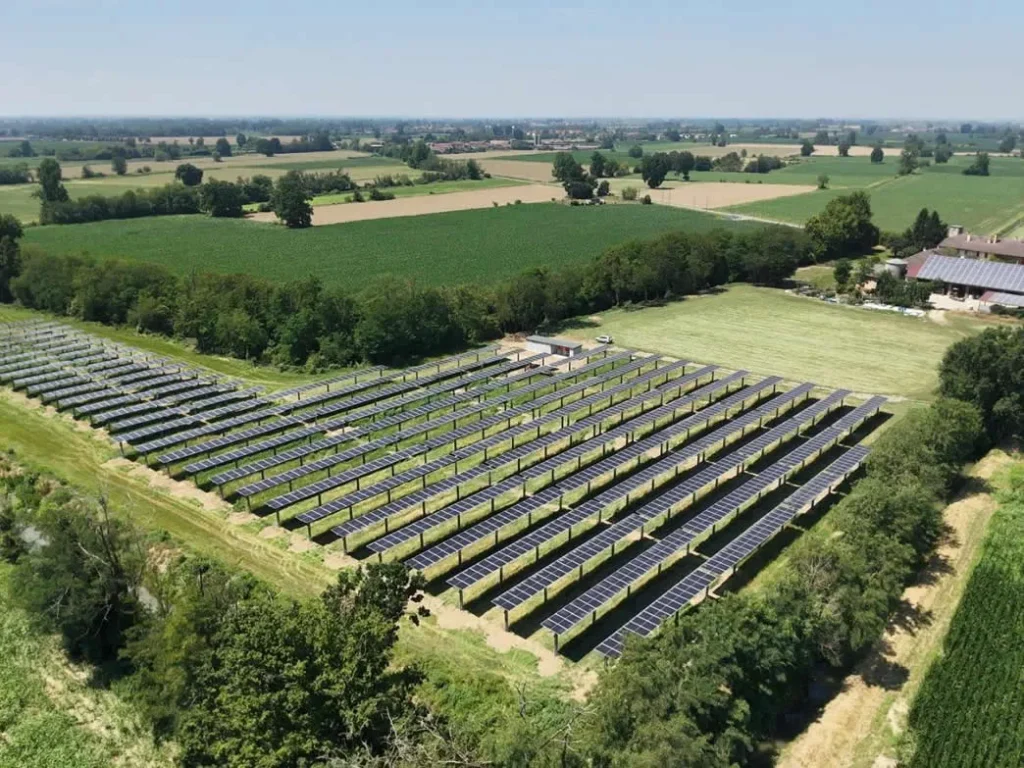
The AIKO Neostar solar panels target residential and smaller commercial roofs. The broader portfolio places Comet modules in commercial and industrial projects and Stellar modules in utility applications.
Current global catalog references include:
| Series | Main application | Current reference | Design relevance |
| Neostar 3P54 | Residential roofs | 470 W to 500 W, up to 25% | High capacity in a sub-two-square-meter format |
| Comet 3N72 | Commercial and industrial | 655 W to 690 W | Higher wattage can reduce module and connection counts |
| Stellar 3N+72 | Utility projects | 650 W to 685 W | Dual-glass, bifacial design for rear-side generation |
These ranges come from AIKO’s current global product catalog. Availability, warranty duration, model construction, and maximum output can differ by country.
A premium AIKO solar panel makes the strongest economic case when space restricts capacity. On an unconstrained site, buyers should compare total installed cost and modeled energy rather than automatically selecting the highest efficiency figure.
The Neostar 3P54 lists a temperature coefficient of minus 0.26% per degree Celsius above the 25°C test reference. At a 45°C cell temperature, that coefficient implies a nameplate reduction of about 5.2% before other system effects.
Cell temperature differs from ambient temperature. Mounting clearance, wind, roof material, irradiance, and module color influence operating conditions. Project comparisons should use consistent assumptions and the exact temperature coefficients from each datasheet.
AIKO says its partial-shading optimization lets unaffected cells continue contributing when a single cell becomes shaded. During the 2025 global delivery announcement, the company claimed its third-generation INFINITE design could generate 30% more electricity than TOPCon when one cell was fully shaded.
That controlled comparison should not become a general annual-yield promise. Trees, chimneys, dirt, leaves, neighboring buildings, and roof geometry create different shade patterns. A bankable comparison needs an hourly shade model using the correct module electrical data.
Shade optimization also doesn’t eliminate the value of microinverters or DC optimizers. Their role depends on roof orientation, rapid-shutdown rules, monitoring needs, and the severity of mismatch.
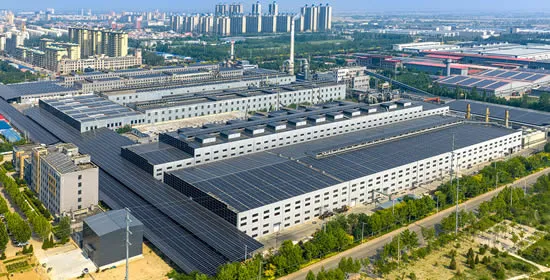
AIKO Solar’s manufacturing footprint is in China. AIKO has six production bases in Foshan, Yiwu, Tianjin, Zhuhai, Jinan, and Chuzhou. The listed parent is Shanghai AIKO Solar Energy.
AIKO announced in January 2025 that its Jinan facility had produced its first module from the 10 GW first-phase N-type ABC project. The company said the integrated facility connects cell and module production and uses automated defect detection and product traceability.
A corporate manufacturing map does not identify the origin of every shipment. Buyers should confirm the factory, country-of-origin label, model code, and bill of materials attached to the proposed delivery.
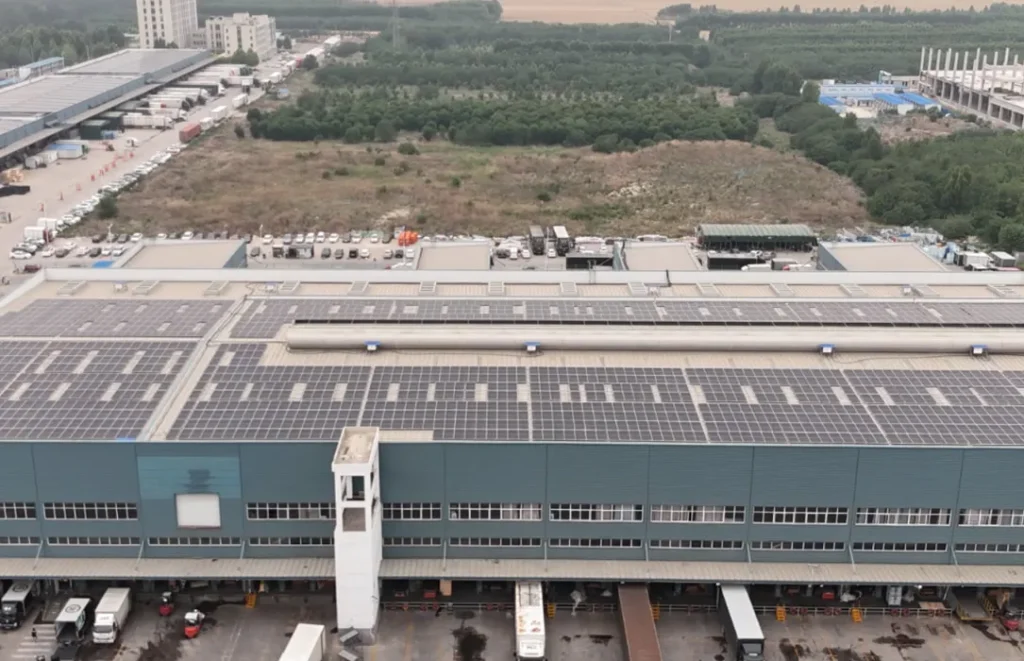
Higher efficiency deserves attention, but procurement should test the complete commercial case.
AIKO introduced its fourth-generation INFINITE ULTRA platform in June 2026. The company reported up to 690 W output, 25.6% mass-production module efficiency, and average ABC cell efficiency of 27.4%.
These developments show how AIKO solar cells and module integration now advance together. AIKO expects commercial deliveries during the third quarter of 2026. Buyers should distinguish an unveiled product from one in volume production and local distribution.
AIKO Solar Panels show how Chinese companies connect advanced research, manufacturing scale, and rapid commercialization. ChoZan helps leadership teams understand what developments like ABC technology mean for global technology strategy, sourcing, and market planning.
Our services include:
Book a consultation with ChoZan to identify the China innovations that matter to your business.
IBC is the general category for interdigitated back contact cells. ABC is AIKO’s branded N-type implementation, with both polarities and metal contacts on the rear. The terms overlap technically, but they are not interchangeable brand names.
Usually, no. AIKO modules connect to standard compatible string inverters or microinverters. The designer must still check voltage, current, connector, string length, and local electrical rules against the exact module datasheet before approving the system.
Partial-shading optimization does not replace module-level power electronics in every design. Optimizers may still help with complex roof planes, rapid shutdown, or module monitoring. A shade study should determine if their added cost and complexity are justified.
No. The 25% figure applies to specific high-output models and current commercial references. Other Neostar, Comet, and Stellar variants carry different ratings. Buyers should match the quoted model number, wattage, dimensions, and efficiency to AIKO’s current datasheet.
Some are. AIKO markets bifacial dual-glass modules within its Stellar utility range, while several residential Neostar products are monofacial. Dual-glass construction alone does not prove bifacial operation, so confirm rear-side rating and bifaciality on the datasheet.
Mono-glass modules use a front glass sheet and a polymer backsheet, which can reduce weight. Dual-glass modules sandwich cells between glass layers and may support different durability or bifacial designs. Compare weight, fire class, load rating, and warranty.
No. BloombergNEF Tier 1 primarily reflects project-finance bankability under its methodology, while Kiwa PVEL evaluates submitted module bills of materials through laboratory tests. Neither label removes the need to verify the quoted model, factory, warranty, and supplier.
No. Product warranty length, extension terms, labor coverage, registration rules, and claim channels can differ across markets and models. Request the regional warranty document before purchase and confirm which legal entity will handle a claim locally.
Compare the complete installed system, not panel price alone. Model annual energy, roof-area constraints, module count, racking, electrical hardware, labor, inverter loading, and warranty value. A higher module price works only when system-level savings or output support it.
AIKO unveiled the Z Series in June 2026 and said commercial deliveries were expected in the third quarter. Availability can vary by distributor and country, so treat launch specifications as provisional until a local quote names the exact shipping model.