CONTENT
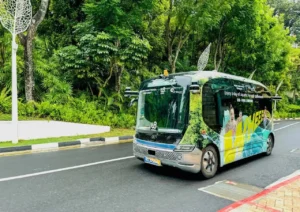
A short connection between a metro station and a hospital gives an autonomous shuttle a clear task. Operators know where passengers board, where they need to go, and which road conditions the vehicle must handle.
China’s fixed-route deployments offer a practical way to examine how autonomous public transport develops. Defined corridors support repeatable testing, scheduled services, and clearer fleet planning. For executives studying the sector, the useful evidence lies in procurement decisions, service design, and operating performance.
The cases below show how Chinese cities are approaching those decisions and what businesses should assess before backing a deployment.
China is moving toward clearer rules on what automated-driving systems can do, where they can do it, and how they should demonstrate safety.
China published GB/T 45312-2025, covering operational design conditions for automated driving systems, in February 2025. Beijing’s autonomous-driving regulation took effect on April 1, 2025, and covers road access, infrastructure, data reporting, safety management, and Level 3 or higher automated-driving vehicles.
The national framework became more concrete in July 2026, when China approved GB 44721-2026, a mandatory safety standard for Level 3 and Level 4 automated-driving systems in M-category and N-category vehicles. It will take effect on July 1, 2027, and requires manufacturers to address system safety across development, simulation, field testing, and road testing.
These rules do not require fixed routes. Their relevance is the need to document where an automated system can operate safely and how it demonstrates that safety. For a proposed service, establish the approval process and applicable testing requirements before launch.
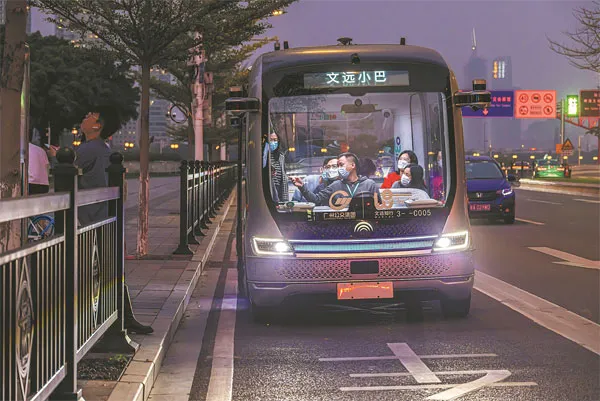
Guangzhou provides one of the clearest cases.
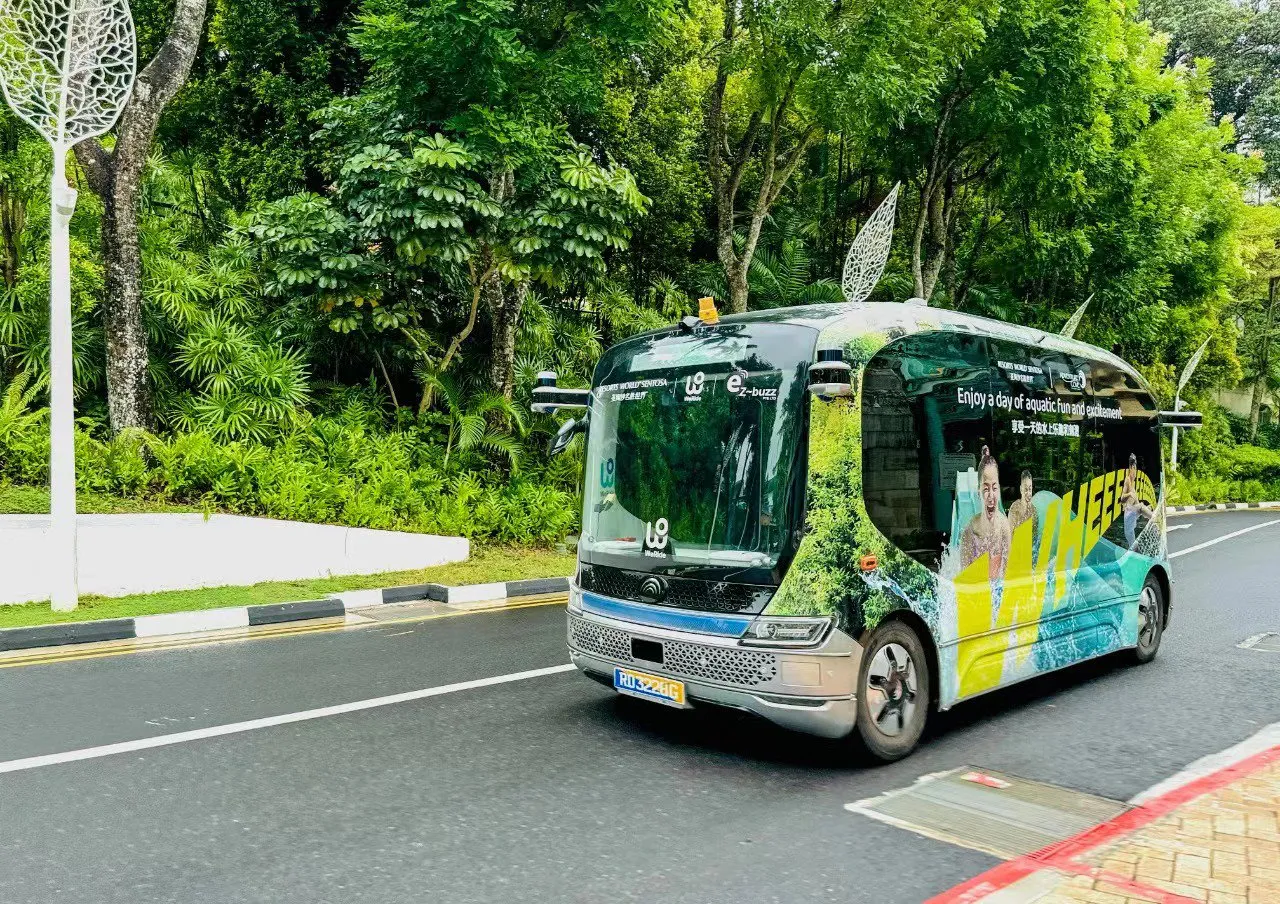
As of March 2025, WeRide and Guangzhou Bus Group had deployed 50 Robobuses across 10 commercial shuttle lines. The city also operated autonomous services on its BRT network. One Tianhe BRT route covers 9 kilometers and connects commercial areas, communities, transport hubs, and other BRT services.
In April 2025, Guangzhou launched another autonomous route along Dongfeng Road. The 13.6-kilometer service connects urban destinations and offers transfers to several metro lines.
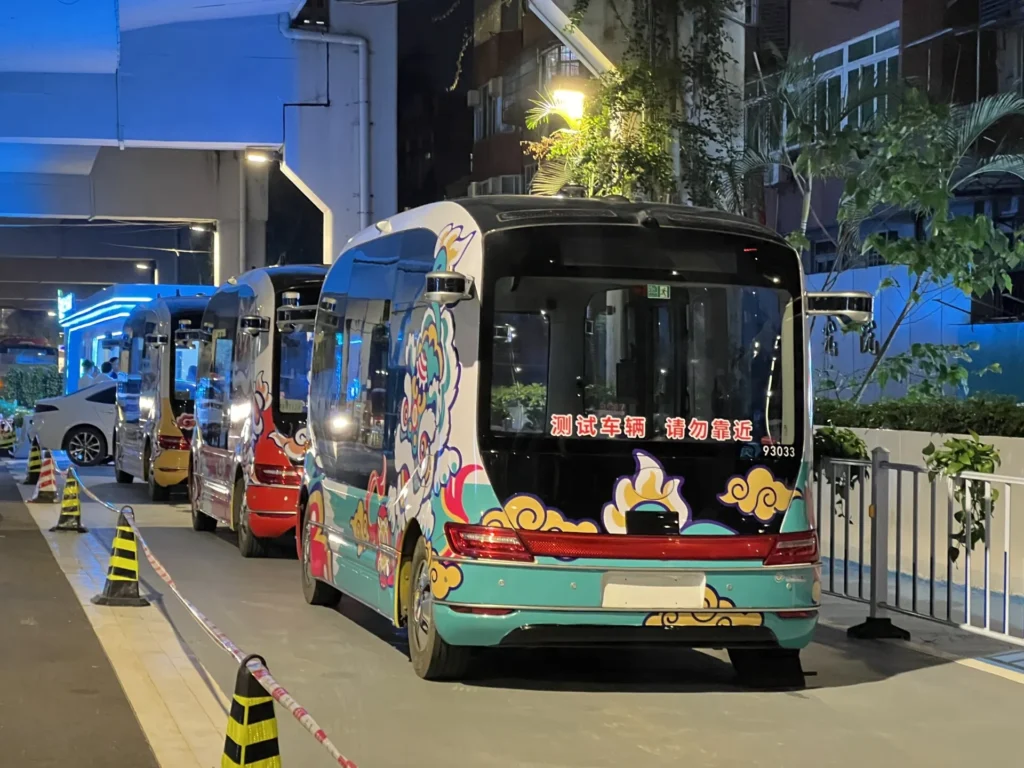
The more significant commercial signal came later in 2025. WeRide disclosed that it secured a Guangzhou Bus Group contract for 100 8.5-meter pure-electric robobuses valued at RMB 89 million [US$12.5 million].
That procurement matters more than another prototype reveal. It suggests that the autonomous electric shuttle is entering a more conventional fleet-purchasing process in one of China’s largest cities.
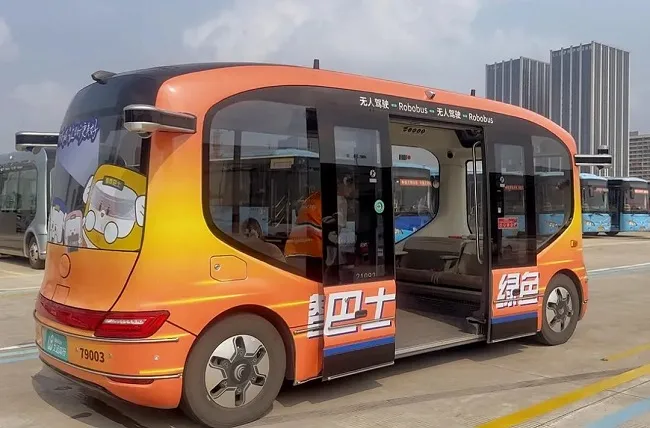
Wuxi launched two intelligent-driving bus routes in July 2025.
Fast 5 runs a 20-kilometer round trip with 19 stations through residential areas, commercial centers, hospitals, and schools. Microbus Line 43 takes a very different approach. Its 1.8-kilometer route connects a Line 1 metro station directly with the outpatient building of the Affiliated Hospital of Jiangnan University.
Microbus Line 43 illustrates a specific feeder-service role: carrying passengers from the metro to a hospital entrance. Its usefulness can be assessed through the time and effort it saves on that connection.
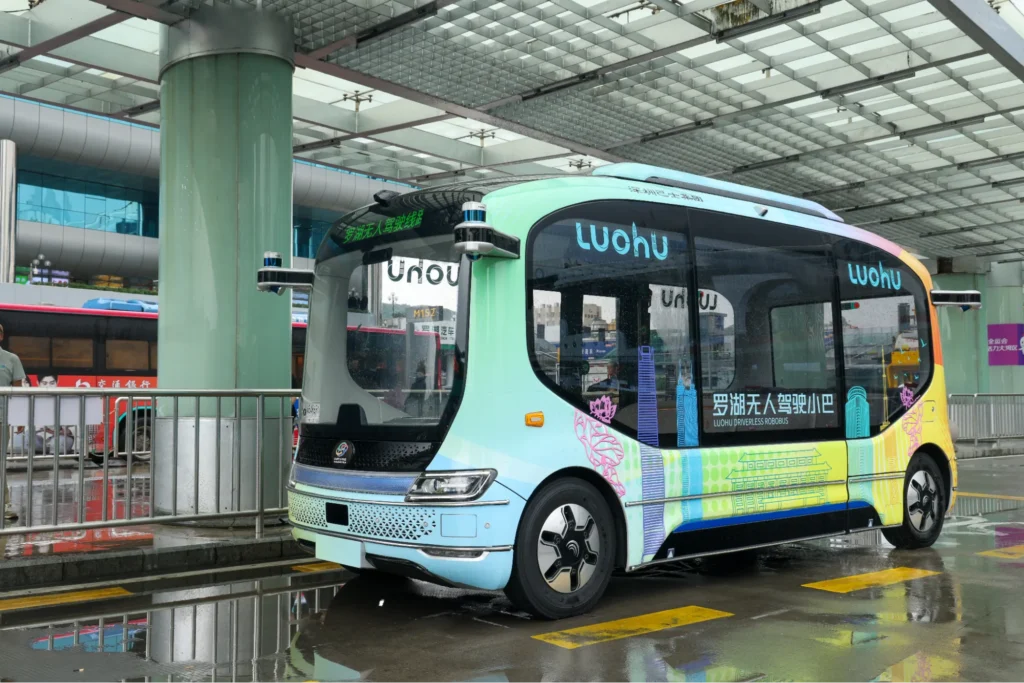
In August 2025, WeRide and Shenzhen Bus Group launched the B888 route in Luohu. The service connects Luohu Port with MixC Market and passes major commercial and cultural destinations. WeRide describes it as Shenzhen’s first Level 4 fully driverless Robobus public-transport line.
Shenzhen Bus Group later published operating information for the route. The case adds a central commercial-district setting to the deployment examples, with passenger service tied to an established urban corridor.
In August 2026, China News Service reported that PIX Moving had put 25 L4 autonomous vehicles onto an 8-kilometer public-road loop around Guanshanhu Park. The project combines passenger transport with tourism and mobile-service concepts.
This mixed-use model needs careful assessment. Fleet size describes the deployment’s scale; evaluating commercial performance also requires evidence of how each service contributes to vehicle use and revenue.
A transport operator needs to understand how vehicles, staff, facilities, and support systems perform as a system.
China’s Chengdu project illustrates the point. In 2025, Chengdu Public Transport Group and CRRC Electric Vehicle introduced four 6-meter L4 minibuses for a pilot autonomous bus project. The partners developed procedures covering operations, dispatch, inspection, maintenance, and emergency response, alongside system-integration guidance for autonomous bus operations.
Fleet planners can model charging windows, depot requirements, timetable performance, stop dwell times, maintenance cycles, remote assistance, passenger demand, and intervention events against a repeated service pattern.
Compare these measures with the existing service on the same corridor. Cost assessments need to include remote support, onboard staffing where required, maintenance, and charging. The deployments described here do not establish a cost advantage over conventional buses.
Singapore provides a timely lesson for companies studying Chinese autonomous-driving exports.
WeRide and Pony.ai technology entered Punggol through scheduled fixed-route services.
Public rides began in 2026. As of July 12, more than 11,500 unique riders had used the autonomous services. Singapore’s Land Transport Authority then reported demand for more flexible pick-up, drop-off, and routing options.
Almost 60 percent of surveyed Punggol residents preferred choosing where they boarded and exited, while about 40 percent preferred more direct routes. Singapore responded with plans for an on-demand pilot while keeping the existing fixed routes.
For companies studying Chinese technology overseas, this raises a service-design question: when does a scheduled route limit passenger usefulness? Rider feedback can help identify that point. Any expansion into flexible routing then needs its own assessment of safety, dispatch complexity, and service economics.
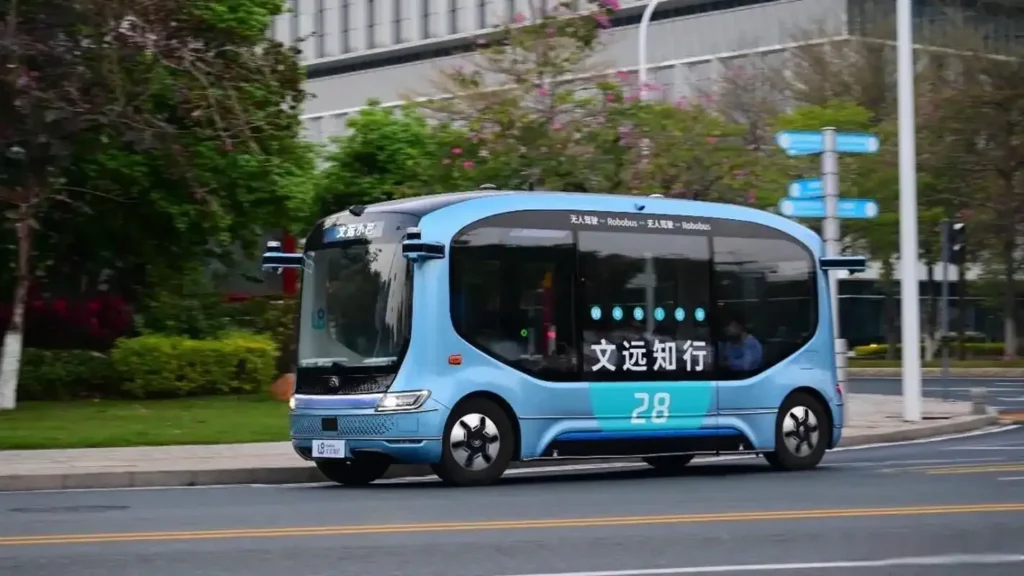
Before committing to an autonomous shuttle project, establish who will make each deployment decision and what evidence they will use.
China’s autonomous shuttle story sits inside a much wider shift across AI, robotics, mobility, digital services, and operating models.
Chozan helps global companies examine those shifts through China research, technology trend analysis, innovation tours, learning expeditions, digital-transformation consulting, workshops, and direct expert discussions.
For teams deciding which Chinese innovations matter outside China, firsthand market research and structured comparison can be more useful than following individual launch announcements.
Book a consultation to discuss the companies, operating models, and strategic questions your team needs to explore.
An autonomous shuttle usually serves multiple passengers along a defined corridor or service pattern, while a robotaxi focuses on point-to-point ride requests. The technologies may overlap, but capacity, dispatch, stops, regulation, and operating economics can differ substantially.
The operating arrangements vary. Check if a service carries onboard safety personnel, uses remote assistance, or operates without an onboard driver. A vehicle’s automation label alone does not explain how a particular passenger service is supervised.
Level 4 means the automated-driving system can perform the driving task within its defined operating conditions without expecting a human driver to take control. Service still depends on approved roads, operating conditions, safety systems, and local regulations.
Several projects discussed here use electric vehicles. “Electric” describes the propulsion system; “autonomous” describes driving capability. When assessing a service, treat battery range and charging needs separately from questions about automated operation and its approved conditions.
Access varies by city. Current services use tools including WeChat mini programs, QR codes, transit cards, mobile booking, and designated boarding points. China’s existing mobile-payment infrastructure makes autonomous services easier to connect with established digital transport habits.
Yes. Recent Chinese deployments include open urban roads, BRT corridors, commercial districts, and public-road loops. Permission depends on local regulation, the vehicle’s approved operating conditions, route testing, safety procedures, and the deployment stage.
Smaller vehicles can better match lower-volume feeder, campus, tourism, medical, and neighborhood routes than full-size buses. They also let operators test service frequency and demand without committing to the passenger capacity of a conventional large bus.
The phrase driverless bus China covers several formats, including L4 robobuses on public routes, low-speed shuttles, feeder services, tourism loops, and autonomous bus pilots. Vehicle size, safety staffing, commercial status, and route complexity vary considerably between projects.
Useful measures include passenger demand, completed trips, intervention events, route completion, dwell time, service availability, charging requirements, maintenance needs, passenger feedback, remote-support workload, and total operating cost. These metrics reveal far more than autonomous mileage alone.
Yes, but localization matters. Singapore’s 2026 deployment with WeRide and Pony.ai shows Chinese autonomous technology operating under a different regulator and with local transport partners. Its move toward direct routing also shows why overseas deployment must adapt to local rider behavior.