CONTENT

China Space Exploration centers on lunar south pole research, asteroid sampling and a planned sample return from Mars. Recent missions combine scientific investigation with demanding tests of navigation, robotics and spacecraft coordination. Their significance also lies in how China develops and integrates complex technology. Recent CNSA mission notices document concrete progress alongside unresolved engineering tasks.
The useful question is which capabilities have reached flight, which still require validation, and how other organizations can learn from that process. Commercial relevance depends on the evidence behind each capability and the conditions under which others can apply it.
The China Space Exploration Program spans several mission families. This roadmap compiles recent CNSA announcements into a single reference, separating achieved milestones from future targets.
| Mission | Verified position | Next announced objective |
| Chang’e-7 | Could not launch in its planned 2026 window, according to the August 23 notice | Lunar south pole environment and resource surveys; the notice gives no replacement date |
| Chang’e-8 | CNSA announced partner selections in April 2025 | Launch around 2029 under that published plan, with resource-use technology experiments |
| Tianwen-2 | Reached approximately 20 kilometers from its asteroid target in July 2026 | Detailed observations and sampling, with capsule recovery targeted for late 2027 |
| Tianwen-3 | CNSA announced five selected partner projects in April 2026 | Launch around 2028 and return Martian samples around 2031 |
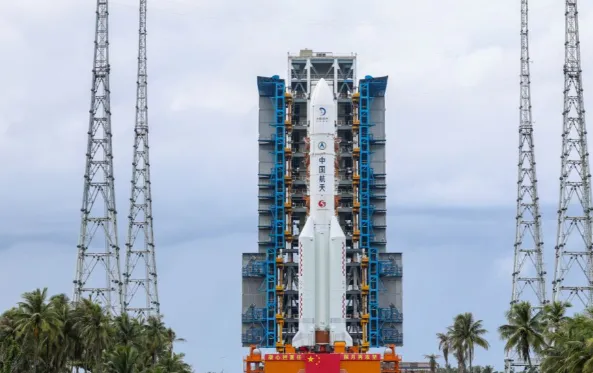
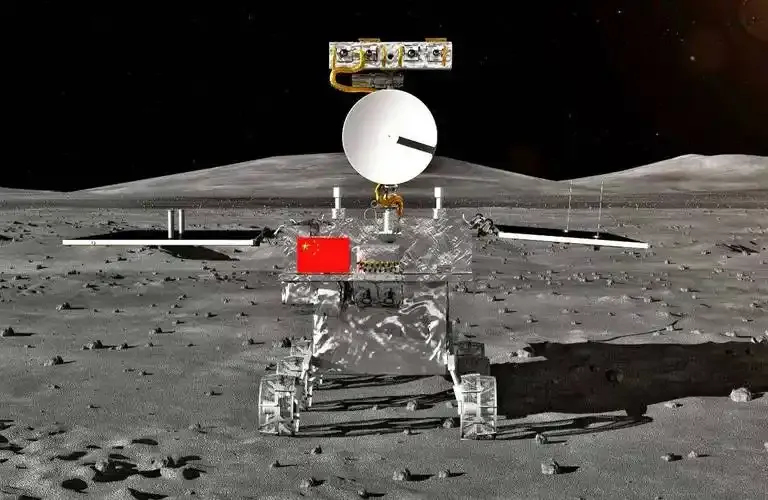
The mission’s engineering objectives include precise soft landing, legged movement, surface hopping and exploration of permanently shadowed craters. CNSA’s July 2026 technical update describes a combination of orbital observations, landing, roving and hopping operations.
A 2025 review published in the Journal of Deep Space Exploration also identifies the search for direct evidence of water ice as a Chang’e-7 mission objective.
That combination matters because a survey must connect regional measurements with observations at specific locations. Different vehicles can address different parts of the same scientific problem. The challenge lies in how their measurements and operations work together.
The subsequent postponement also deserves attention. A published readiness decision gives strategy teams a reason to revise assumptions about when mission results could become available. Arrival at the launch site and a successful launch are separate milestones.
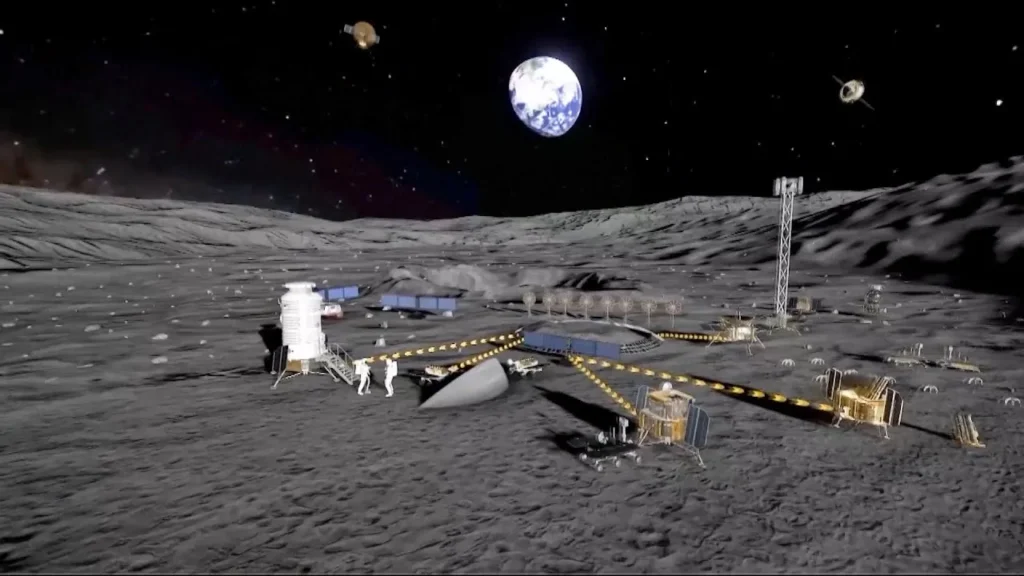
A 2025 technical review describes planned experiments involving lunar soil 3D printing, local sample analysis, and remote robotic operations. These experiments examine equipment’s ability to process and work with material available on the Moon.
The practical questions concern power consumption, material consistency, and equipment reliability. A successful experiment would inform later system design.
Any business case for larger operations would still need evidence on production rate, maintenance, transport requirements and demand.
The spacecraft targets Kamo’oalewa, also designated 2016 HO3. Its July 2026 arrival announcement contains an engineering result that deserves more attention: the mission team used optical navigation data to reduce the asteroid’s estimated position error from hundreds of kilometers to kilometer scale.
That is a specific example of better measurements improving the model needed for the next operation. It offers a useful way to assess China’s space exploration: examine how much a mission has reduced uncertainty and what the reduction makes possible.
The surface presents another problem. A 2025 Chinese Academy of Sciences account explains that contact with hard material could make the spacecraft rebound, while loose material could allow it to sink. Navigation success therefore leaves a separate contact-control challenge.
The planned architecture also extends the spacecraft’s scientific work beyond delivering asteroid samples. After releasing its return capsule near Earth, the main probe would continue toward comet 311P/PANSTARRS.
The industrial robotics comparison focuses on how a system handles uncertainty. Ask what the machine can measure before contact, how it changes its response, and which failure modes the test actually covers. This is an engineering interpretation of the mission’s reported challenges.
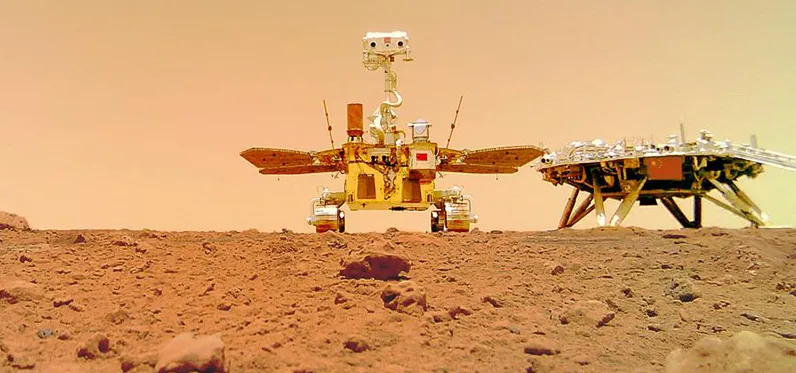
The mission aims to return at least 500 grams of Martian material. Its chief scientist described a two-launch architecture in a July 2025 mission briefing. The overall task includes collecting samples, departing Mars, transferring into orbit, and delivering them to Earth.
The central challenge is preserving a scientifically useful sample throughout that chain. Each stage must support the next, and the final material must retain enough information to answer the original research questions. A 2025 mission-team paper in Nature Astronomy treats site selection, collection and laboratory analysis as connected decisions.
This gives planetary science a direct role in spacecraft design. A technically accessible site may offer a different scientific return from a more difficult location. Instrument choice, surface access and sample handling must fit a common objective.
The broader management lesson concerns interfaces. Teams assessing complex technology should ask who owns each handoff, how they verify compatibility, and what happens when one subsystem changes. The mission’s eventual outcome will depend on the complete sequence working.
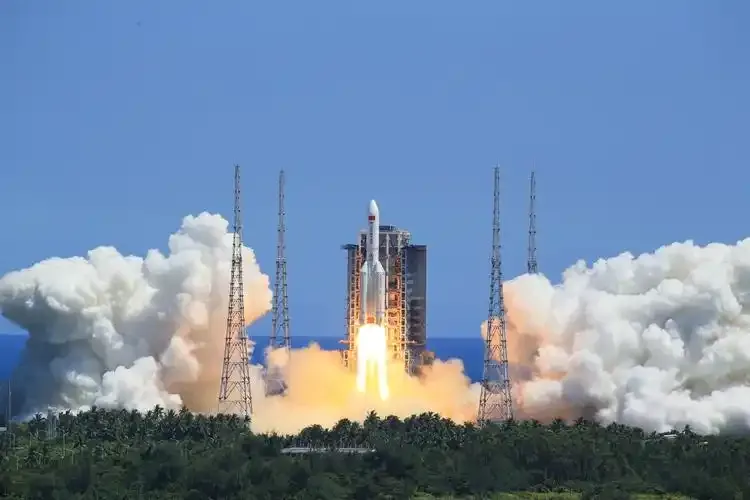
CNSA’s April 2026 partner selection notice reports 28 expressions of interest and five selected projects. Its stated criteria include scientific value, mission support, engineering feasibility, and technical maturity. One selected project is a laser retroreflector array led by Italy’s National Institute for Nuclear Physics at the Frascati National Laboratory.
These criteria offer a clear lesson for prospective technology partners. A proposal needs a defined contribution, a credible development path, and a close fit with the host mission. General enthusiasm for cooperation cannot answer questions about readiness or integration.
A separate October 22, 2026 payload call offers another useful detail. China’s planned uncrewed Lanyue lander flight invites proposals from domestic organizations. It sets total payload limits of 50 kilograms and generally 100 watts, with a March 1, 2027 deadline.
The distinction between these routes matters. International partner selection and domestic payload competition have different eligibility and integration requirements. Any opportunity assessment should begin with the actual notice, its technical constraints, and its submission process.
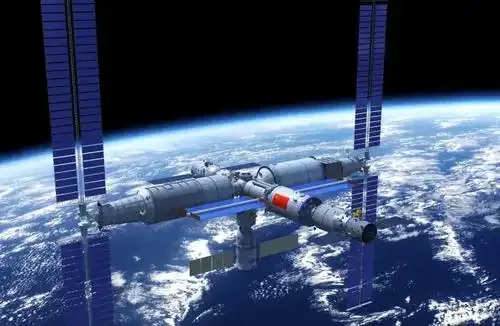
A business assessment of China’s Space Exploration should start with the organizations and subsystems behind each deep-space milestone.
A supplier assessment should connect three things: the component delivered, the test it passed, and the customer requirement it could meet. Flight experience may support a reliability discussion, but a different operating environment may require further qualification.
A research brief should also specify what would change a product or investment decision. A robotics project might require evidence of recovery after sensor failure. A supplier search might require qualification records, delivery references, and a clear account of the supplier’s actual contribution.
The next step is a bounded comparison: choose one relevant subsystem, document its operating requirements, and identify which of China’s demonstrated practices merits a test within your own development process. That turns a broad interest in national progress into a decision the organization can evaluate.
China’s space missions raise useful questions about robotics, engineering validation, and coordinating complex projects. Business leaders can use these questions to examine China’s innovation practices more closely.
ChoZan helps global businesses understand China through tailored research, strategy consulting, expert calls, workshops and China learning expeditions. Our work includes market analysis, discussions with industry specialists and company visits, shaped around each team’s priorities.
For teams following China space exploration, these services can support a broader examination of robotics, AI and technology adoption across Chinese industries. A focused engagement starts with questions that inform business decisions.
Book a consultation to discuss a research brief, team workshop, or tailored learning expedition.
China targets its first crewed lunar landing before 2030. The February 2026 official update describes work on the rocket, crew spacecraft, lander, and ground systems. This remains a development objective, subject to testing and readiness.
Responsibility varies by mission. For Tianwen-2, the China Academy of Space Technology leads spacecraft development, while the National Astronomical Observatories leads the ground application system. CNSA’s mission announcement identifies the separate engineering and scientific responsibilities.
Kamo’oalewa is an asteroid that orbits the Sun and has an orbital period similar to Earth’s. Its quasi-satellite status describes that relationship. The term can sound like a second Moon, but the orbital arrangement is different.
Time zones explain the one-day difference. Tianwen-2 lifted off at 1:31 a.m. in China on May 29, 2025, equivalent to May 28 in UTC. Check the stated time standard before treating those dates as conflicting.
Yes, through reviewed applications and loan agreements. CNSA’s April 2026 announcement approved three international institutions in its second application round. Researchers should follow new calls and their conditions, since an earlier approval does not guarantee access.
The proposed handling system includes biocontainment, controlled unpacking, and biological risk assessment. The mission team’s 2025 laboratory plan calls for isolation between samples and Earth’s environment, with safety checks before wider scientific work or release.
Organic molecules alone would not establish past life. Researchers must evaluate geological explanations alongside chemical and microscopic evidence. The mission’s scientific framework examines multiple possible indicators, because material associated with habitability can have several origins.
A February 2025 study identified buried layers consistent with ancient coastal deposits using Zhurong radar data. The researchers interpreted them as evidence supporting a former northern ocean. That finding informs past-habitability research but does not establish that Mars hosted life.
The University of Science and Technology of China maintains a calibrated Tianwen-1 magnetometer data resource. Its July 2026 update explains release coverage and quality flags. Check those notes and acknowledgment requirements before starting an analysis.
Start with dated CNSA mission notices and China Manned Space Agency announcements for crewed lunar work. Compare the latest statement with earlier plans, and check Chinese-language originals when an English summary omits timing or readiness details.