CONTENT

Zai Lab is a commercial-stage biopharmaceutical company operating across China and the United States. Its model combines regional licensing and commercialization with global drug development through partnerships and internal discovery. Its therapeutic priorities include oncology, immunology, neuroscience, and infectious disease. Its 2026 strategy update explains this combination of a regional business and global research programs.
The company offers a useful case study in China’s expanding contribution to medicine. Scientific discovery, clinical execution, and patient access can sit in different organizations and countries. The business challenge is to connect them while controlling development costs and preserving the rights needed to capture value.

The pipeline follows three distinct development routes. Each creates a different relationship between scientific contribution, geographic reach, and responsibility for bringing a medicine to market.
| Development route | Verified example | What the arrangement means |
| Regional license | The January 2025 Vertex agreement for povetacicept | Rights cover mainland China, Hong Kong, Macau, Taiwan, and Singapore. Local development and commercial responsibilities accompany the license. |
| Combined discovery and platform technology | The January 2025 MediLink agreement for ZL-6201 | An antibody discovered by Zai Lab combines with Suzhou-based MediLink’s antibody-drug conjugate (ADC) platform under a worldwide license agreement. |
| Internal discovery | ZL-1503, described in the October 2026 clinical update | The company’s research produced an antibody designed to target two biological pathways, now undergoing early human testing. |
The distinction prevents a common analytical mistake: treating every pipeline asset as wholly invented internally or available for sale worldwide. A company’s scientific contribution and its licensed territory require separate checks.
ZL-6201 had entered global Phase 1 testing by the company’s February 2026 update. That milestone moves the collaboration from platform access into the practical work of studying a medicine in people.
The regional route also involves clinical work. Zai Lab participated in Vertex’s global RAINIER trial in Greater China.
Vertex reported publication of Phase 3 results in October 2026, with a U.S. regulatory decision target of November 30. This demonstrates how a regional partner can contribute to a global evidence program while holding rights to a defined set of markets.
An April 2026 agreement with Amgen illustrates another structure. Amgen agreed to sponsor a global Phase 1b study combining its tarlatamab therapy with zocilurtatug pelitecan, known as zoci. Zai Lab would supply zoci and retain ownership of the program.
This is a clinical collaboration, with a defined sponsor and drug supply obligations. Its strategic purpose is to investigate a combination treatment. It does not establish that the combination works or create an approved product.

Zoci, formerly ZL-1310, is an investigational ADC targeting DLL3. It links an antibody to a cell-killing drug. Its international commercial prospects depend on demonstrating clinical value against existing treatment options.
In an October 23, 2026 update, the company reported an 81.8% confirmed objective response rate for zoci plus atezolizumab in a Phase 1b cohort. At the selected dose, 27 of 33 patients with previously untreated extensive-stage small cell lung cancer responded. Three patients experienced Grade 3 or higher adverse events related to zoci.
The small, early-stage cohort supports further investigation. It cannot establish superiority over standard treatment through comparisons with separate studies.
The same update described an ongoing Phase 3 DLLEVATE study in previously treated disease and plans for a first-line Phase 3 trial before year-end. Those are different treatment settings and evidence packages. A development schedule remains conditional on execution and regulatory discussions.
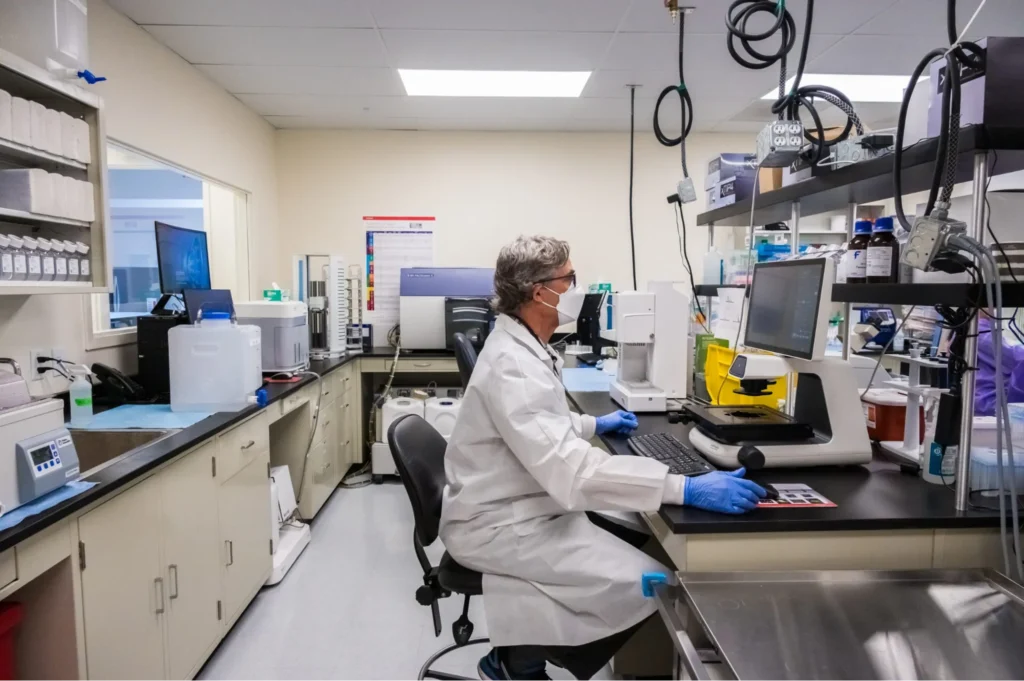
The broader portfolio combines early research with medicines already in China’s market. Their timelines and operational needs differ substantially.
ZL-1503 targets IL-13 and the IL-31 receptor pathway, aiming to address inflammation and itch in atopic disease. The October 14 announcement scheduled initial healthy-volunteer findings for November 2026. Those findings would cover drug exposure, biological markers, safety, and immune responses to treatment.
Early volunteer data cannot demonstrate treatment benefits in people with atopic dermatitis. The immediate task is to establish a sound basis for patient studies and subsequent development decisions.
China’s National Medical Products Administration approved KarXT, the xanomeline and trospium chloride combination for adult schizophrenia, in December 2025. The company reported its mainland China commercial launch in June 2026.
Its stated launch priorities included physician education, real-world evidence, and preparation for possible reimbursement inclusion in 2027.
A launch therefore brings a different management agenda: helping clinicians understand appropriate use, supporting access, and generating evidence from routine care.
Regulatory approval, hospital adoption, and reimbursement represent separate commercial milestones. The company’s 2026 filings show why access planning needs its own financial assumptions.
Its second-quarter Form 10-Q attributed weaker VYVGART revenue partly to a pricing adjustment following renewal in the National Reimbursement Drug List, or NRDL. It also linked lower ZEJULA revenue to shifts in hospital use after volume-based procurement of generic olaparib, a competing medicine.
This provides a concrete lesson in China market access: a competing product’s procurement terms can affect commercial performance. Teams need to assess the economics of the treatment category alongside their own product’s coverage.
A useful launch model should separate patient volume, net selling price, hospital availability, and treatment duration. Higher use can coexist with pricing pressure. Revenue forecasts need to show how those variables interact, with clear assumptions for the period before reimbursement begins.
Zai Lab Limited reported second-quarter 2026 total revenue of $106.3 million, compared with $110.0 million a year earlier. Research and development expenses reached $61.8 million, while net loss totaled $50.8 million. These reported results show the financial demands alongside pipeline progress.
On October 22, the company announced an agreement for a private placement expected to generate approximately $250 million before fees. It designated global Zoci development as the primary intended use. The announcement alone should not be treated as confirmation of completed funding.
Asset selection also carries costs. The June-quarter filing disclosed $25 million in license fees for a preclinical program the company subsequently decided to terminate. That specific expense reinforces the need to evaluate technical risk alongside deal access.
This model’s practical value lies in the operating questions it raises. A credible partner assessment should examine three responsibilities:
Ask potential partners for a documented example of how they resolved a protocol, supply, or quality issue across countries. The answer can reveal how their teams make decisions under pressure and how much direct oversight a new program will require.
Zai Lab raises useful questions about the capabilities behind cross-border innovation. ChoZan offers China research, expert dialogues, and tailored learning expeditions to investigate business models and local execution. Our China reports provide a starting point for broader research.
Book a consultation to define the questions that matter to your China strategy and identify a suitable research or learning format.
Samantha Du serves as founder, chairperson, and chief executive officer. Rafael G. Amado serves as president and head of global research and development. The official leadership page distinguishes their responsibilities and identifies the wider executive team.
The company trades on Nasdaq under ZLAB and in Hong Kong under 9688. Its October 2026 financing announcement states that each American Depositary Share represents ten ordinary shares, an important distinction when comparing share counts.
Use the company’s official contact page, which lists Shanghai, Beijing, and Suzhou locations alongside other offices. It provides separate channels for business development, medical inquiries, and adverse event reporting, helping you reach the appropriate team.
Start with the official study website and its linked ClinicalTrials.gov record. Check recruitment status, participating locations, eligibility, and study contacts. The DLLEVATE website provides a current example; a treating clinician can help assess suitability for participation.
Fast Track designation supports development and review for qualifying medicines; it does not authorize sales. The FDA’s April 2026 policy states that the designation preserves the normal statutory requirements for evidence of safety and effectiveness.
Yes. Its portfolio includes Novocure’s Tumor Treating Fields medical devices. The February 2026 company update discusses Optune Pax for pancreatic cancer, which received U.S. FDA approval that month. Device indications and country approvals require specific checks.
Yes. Infectious disease is one of its stated therapeutic areas. Its 2025 annual report, published in 2026, records the January 2025 launch of XACDURO in mainland China, adding a hospital antibiotic business to the broader portfolio of specialist treatments.
The investor relations website links to SEC filings, Hong Kong announcements, and annual reports. Read the complete filing alongside earnings releases, checking the reporting period, accounting measure, and currency before comparing figures or repeating financial claims.
The company scheduled third-quarter 2026 financial results for November 5, 2026. Its October 21 announcement provides the webcast details. Check the investor relations calendar for changes, since scheduled events can move after an article’s publication.