CONTENT

Insilico Medicine is a global biotechnology company that uses generative AI to identify disease targets, design molecules, and advance drug candidates into human trials. Its lead candidate, rentosertib, reached Phase III patient dosing in September 2026.
The company offers a concrete case study of AI moving into pharmaceutical development, with China playing an important role in its research operations.
Its business significance rests on three questions: what the software contributes, what clinical studies establish, and how partners pay for the resulting capabilities.
Insilico combines software services, collaborative research, and internally developed drug programs. Its 2026 corporate update describes a business built around both AI technology and pharmaceutical research.
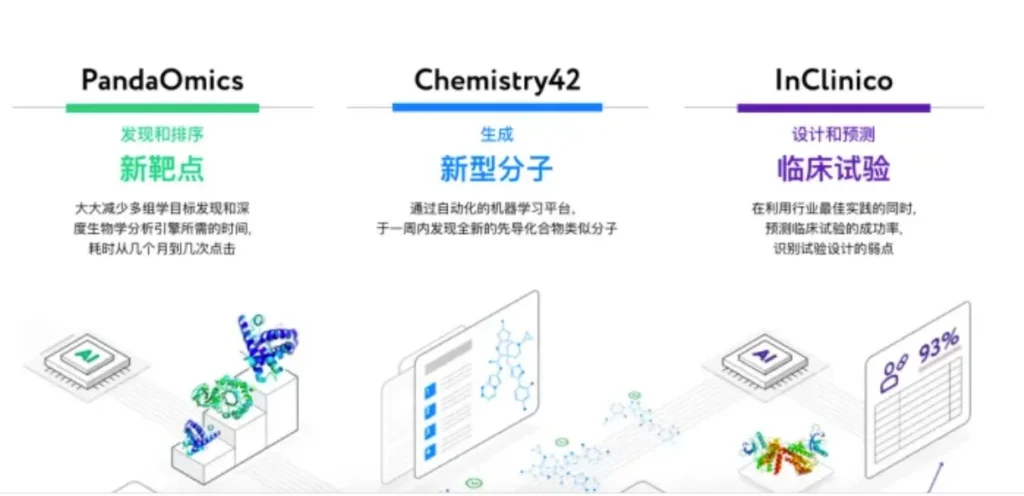
Its core asset is Pharma.AI, an end-to-end generative AI platform. Insilico’s current materials list four modules:
Reuters reported in July 2026 that the company conducts frontier AI research in Montreal and Abu Dhabi, while experimental drug validation and scaling take place in China. Its Shanghai laboratory automates biological sampling and screening.
This structure illustrates a practical contribution China can make to global innovation: the experimental work that turns computational proposals into testable drug candidates. It also underscores the company’s international character.
In the same interview, CEO Alex Zhavoronkov reported a typical 13-month timeline to a development candidate. That company-reported figure describes early discovery and excludes the subsequent human trials and regulatory review needed to bring a medicine to market.
Pharma.AI connects several research tasks. Each component addresses a different decision, from selecting biological targets to assessing proposed clinical studies.
PandaOmics analyzes molecular datasets and scientific evidence to prioritize relationships between genes and diseases. Researchers can adjust criteria such as novelty, safety, and existing drug activity, then examine the evidence behind a proposed target.
The practical value lies in a more focused experimental agenda. A research team still needs to establish that changing a target produces a useful effect in the relevant disease.
Chemistry42 designs and optimizes small molecules. Its tools cover molecular generation, possible synthesis routes, predicted drug properties, and interactions with unintended biological targets.
This stage introduces constraints that a plausible molecular structure alone cannot resolve. A candidate must combine activity with properties that allow researchers to make, test, and develop it. Project evaluation should therefore track experimentally confirmed improvements across successive design cycles.
The company’s March 2026 update describes Nach01, a chemistry model that processes molecular structures and language, and MMAI Gym, a framework for adapting AI models to drug research tasks. These developments extend the platform’s computational capabilities.
Insilico also offers model training and benchmarking services. These create opportunities to work with AI developers seeking domain expertise, alongside pharmaceutical customers seeking research applications. Management described both customer groups in its 2026 interim earnings call.
Another tool, inClinico, estimates trial success probabilities and supports comparisons between study designs. Such estimates can inform clinical development decisions, but they remain predictions that must be evaluated against actual outcomes.
Rentosertib targets TNIK, a protein kinase implicated in fibrosis. A June 2025 Nature Medicine paper reported a randomized, placebo-controlled study involving 71 patients with idiopathic pulmonary fibrosis and 12 weeks of treatment.
The highest-dose group, receiving 60 mg once daily, showed a mean increase of 98.4 milliliters in forced vital capacity, compared with a 20.3-milliliter decline in the placebo group. This measure assesses how much air a person can forcefully exhale.
The primary endpoint assessed safety; lung function was secondary. The findings provided an encouraging signal from a small, short study and required confirmation over longer treatment periods.
On September 10, 2026, the company announced the first patient dosing in GENESIS-IPF-3. The trial plans to enroll 320 participants across 47 centers in China and evaluate treatment over 52 weeks.
Its primary endpoint is the annual rate of decline in forced vital capacity. The larger study will test the durability and clinical significance of the earlier findings. Rentosertib remains investigational and has no regulatory approval.
Other programs extend the clinical portfolio into intestinal disease and cancer. The following snapshot combines the company’s March 2026 program update with its 2026 interim clinical discussion.
| Candidate | Target and intended use | Reported clinical stage |
| Garutadustat, ISM5411 | Gut-restricted PHD1/2 inhibition for inflammatory bowel disease | Phase IIa, BETHESDA study |
| ISM6331 | Pan-TEAD inhibition for solid tumors | Phase I, dose escalation |
| ISM3412 | MAT2A inhibition for MTAP-deleted cancers | Phase I, dose escalation |
These programs test the company’s research approach across different biological mechanisms. Each requires its own evidence on patient selection, dosing, and treatment effects. A useful pipeline review also identifies the next dataset that could justify further investment or a change in direction.
Recent agreements show several ways pharmaceutical companies can access the technology and resulting assets.
In November 2025, Insilico announced a research collaboration with Eli Lilly. In March 2026, Lilly extended an agreement to an exclusive worldwide license covering certain preclinical oral drug candidates, along with a research collaboration. The agreement includes a $115 million upfront payment and potential milestones that could bring its value to approximately $2.75 billion, plus royalties.
The company also reported a January 2026 oncology discovery collaboration with Servier worth up to $888 million. A July agreement with Takeda carried approximately $600 million in potential value. These headline amounts include conditional future payments and should not be treated as cash already earned.
Clinical progress can trigger specific payments. The interim release reported that first-patient dosing of Menarini-licensed MEN2501 in February 2026 triggered a $5 million milestone. This disclosure connects income to a completed development event.
The revenue mix adds useful perspective. In the first half of 2026, Insilico Medicine reported $106.3 million in total revenue, including $103.1 million from drug discovery and pipeline development and $2.70 million from software solutions.
This mix makes licensing and research economics central to evaluating the business. Payment timing, milestone delivery, and continuing partner commitments deserve close attention alongside software adoption.

Insilico’s progress suggests a practical evaluation framework for AI-designed drugs and the platforms behind them.
A software pilot should test performance on a defined research problem, using data excluded from model training. The comparison needs a relevant baseline and an agreed measure of improvement.
A discovery contract should specify the experiments, acceptance criteria, and rights attached to delivered compounds. A drug license needs an asset-specific assessment of clinical evidence, competitive treatments, and remaining development costs.
These distinctions help companies choose the right collaboration model. They also make the lesson from China actionable: research infrastructure contributes value when partners connect it to clear scientific questions, reliable experimental feedback, and disciplined investment decisions.
Insilico Medicine raises practical questions about how China’s research capabilities can fit into international innovation strategies. ChoZan helps teams examine these questions through China research, digital transformation workshops, learning expeditions, and expert calls.
Whether you are evaluating partnership opportunities, assessing competitive threats, or building a China strategy, ChoZan’s on-the-ground expertise connects policy, capital, and execution.
Explore its China reports, or book a consultation to discuss a focused research or learning program.
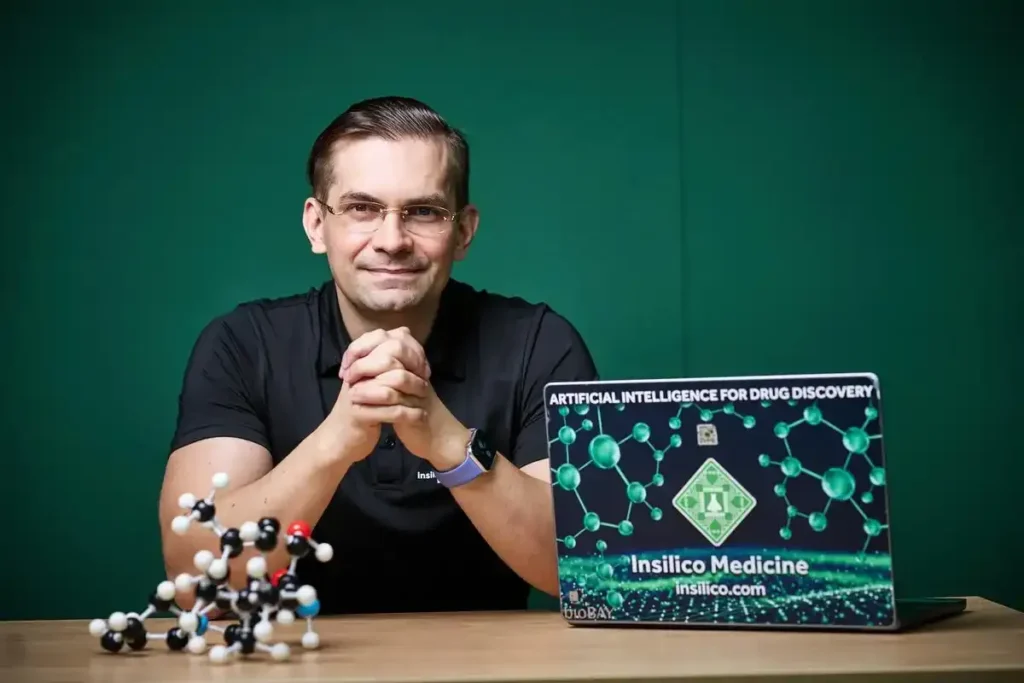
Alex Zhavoronkov is the founder and CEO. Feng Ren serves as co-CEO and chief scientific officer, while Alex Aliper is president. Their backgrounds combine AI research with pharmaceutical discovery and development experience.
Yes, Insilico Medicine trades on the Hong Kong Stock Exchange under stock code 3696. It was listed on December 30, 2025. Investors can review financial reports and corporate announcements through the company’s investor relations website.
Yes, rentosertib also appears as ISM001-055 and INS018_055 in research documents. These names identify the same investigational compound. Check the formulation and study number when comparing records, since separate trials can investigate different delivery methods.
Yes, its February 2025 collaboration with Harbour BioMed covers AI-supported antibody design and early discovery. The partners combine computational tools with antibody datasets and laboratory expertise. The announcement does not report clinical outcomes from these programs.
Yes, PandaOmics advertises academic subscriptions, and Chemistry42 lists academic and startup access. Researchers should confirm institutional eligibility, included tools, data handling terms, and publication rights before choosing a plan for a specific research project.
Yes, PandaOmics Box supports deployment on an organization’s premises with local data processing. Prospective customers should confirm network requirements, access controls, software update procedures, and contract terms against their institution’s own research security standards.
Current evidence does not establish that claim. A September 2026 study found changes in protein-based aging estimates, but researchers could not fully separate aging effects from changes linked to lung disease in the trial population.
Patients can ask their respiratory specialist about GENESIS-IPF-3 and search ClinicalTrials.gov using NCT07687459. Trial sites determine eligibility after screening. A study listing or recruitment announcement does not guarantee that an individual patient can enroll.
The 2025 paper reported liver toxicity and diarrhea among events leading to treatment discontinuation. These findings make ongoing monitoring important. Larger studies are needed to characterize less common risks and safety during prolonged treatment.
Management’s 2026 interim earnings call projected topline results in 2029. That remains a company forecast. Recruitment, follow-up, and data analysis can affect timing, and a trial results announcement is a separate step from marketing approval.
The NMPA encourages AI applications in clinical drug development and is conducting regulatory science research. The 2025–2030 Pharmaceutical Industry Digitalization Plan calls for guidelines on AI drug discovery, virtual trials, and real-world data.