CONTENT
Walk into any serious discussion about lithium batteries or global energy storage today. The conversation lands in Ningde faster than you expect. This city in Fujian Province no longer plays a quiet second-tier role. It now commands the center of China’s new energy universe.
Ningde, China, transformed from a coastal prefecture into the world’s most important battery production cluster. One company started this shift. That company is CATL.
Today, the region hosts a complete supply chain for electric vehicle batteries, stationary energy storage systems, and battery recycling. Investors, automakers, and policymakers watch Ningde, Fujian, China closely. They should.
Ningde lies in northeastern Fujian Province on the west bank of the Taiwan Strait. Fujian provincial data updated in May 2026 shows that the city covers 13,452 square kilometers of land and has a sea area of 44,600 square kilometers.
The city has a 1,046-kilometer coastline and borders Wenzhou to the north, Fuzhou to the south, and Nanping to the west. Its marine economy includes large yellow croakers, shrimp, cockles, oysters, and seaweed. By the end of 2025, Ningde’s permanent resident population reached 3.17 million.
These conditions gave Ningde a practical base for industrial upgrading. Port access, available land, local resources, and provincial policy support helped the city transition from a resource- and tourism-based economy to advanced manufacturing. Fujian’s regional overview now identifies Ningde as a national hub for the new energy sector.
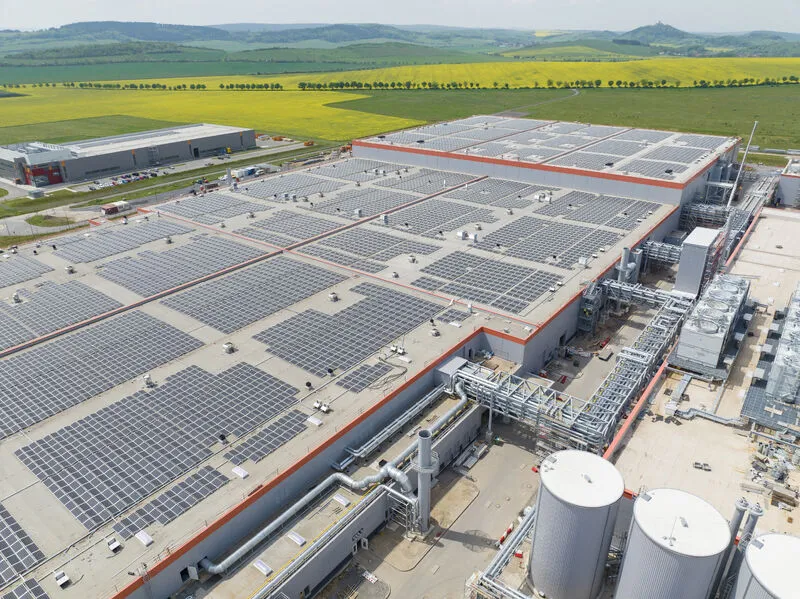
Contemporary Amperex Technology Co. Limited, or CATL, is headquartered in Ningde, Fujian. Founded in 2011, it has become the world’s largest supplier of lithium-ion batteries for electric vehicles and energy storage systems.
CATL’s 2025 annual report, released on 10 March 2026, shows the scale of its growth. Revenue reached approximately $62.6 billion, up 17 percent year on year. Net profit reached approximately $10.7 billion, up 42 percent.
Lithium-ion battery sales rose to 661 GWh in 2025, a 39 percent increase. CATL also retained a 39.2 percent share of the global power battery market, ranking first for the ninth consecutive year.
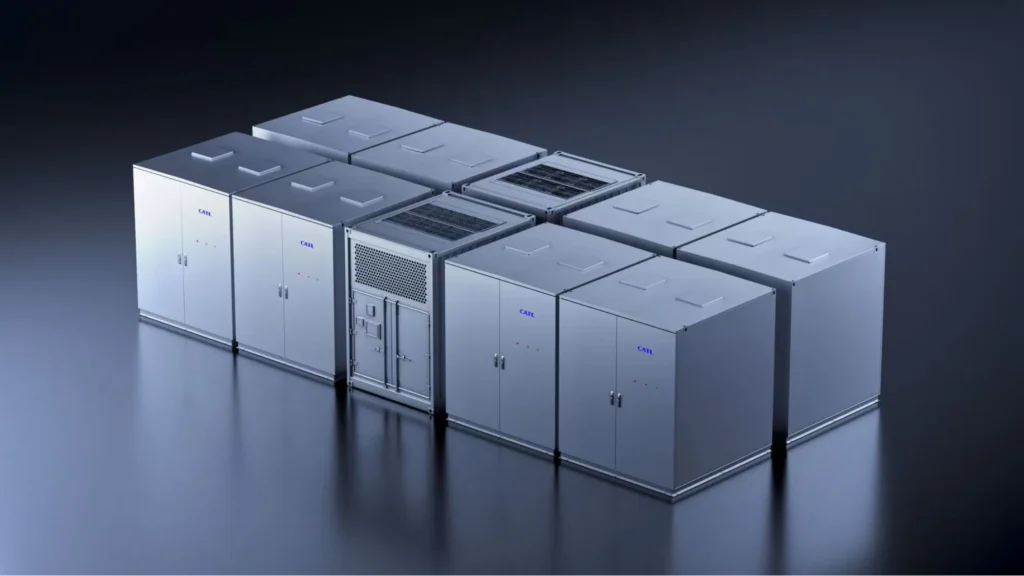
The Ningde industrial cluster has grown around CATL into the world’s largest lithium battery manufacturing cluster. China Advanced Manufacturing Hubs identifies Ningde as a tier-3 rapid-growth hub with a complete battery supply chain. The cluster covers cathodes, anodes, electrolytes, separators, copper foil, and equipment suppliers, including Sikeqi.
In 2026, the Ningde cluster recorded 475 GWh in annual battery sales, approximately $24.5 billion in output value, more than 200 companies, and 80,000 employees. This depth gives the city a practical advantage in supply chain coordination, cost control, and faster production cycles.
CATL is still expanding capacity. In July 2025, the company announced a 10 GWh capacity addition to its Times FAW project in Ningde, focused on Phase I upgrades and new Lithium Iron Phosphate capacity.
At the end of 2025, CATL’s global production capacity reached 772 GWh, with another 321 GWh under construction. These figures keep Ningde CATL central to China’s battery supply.
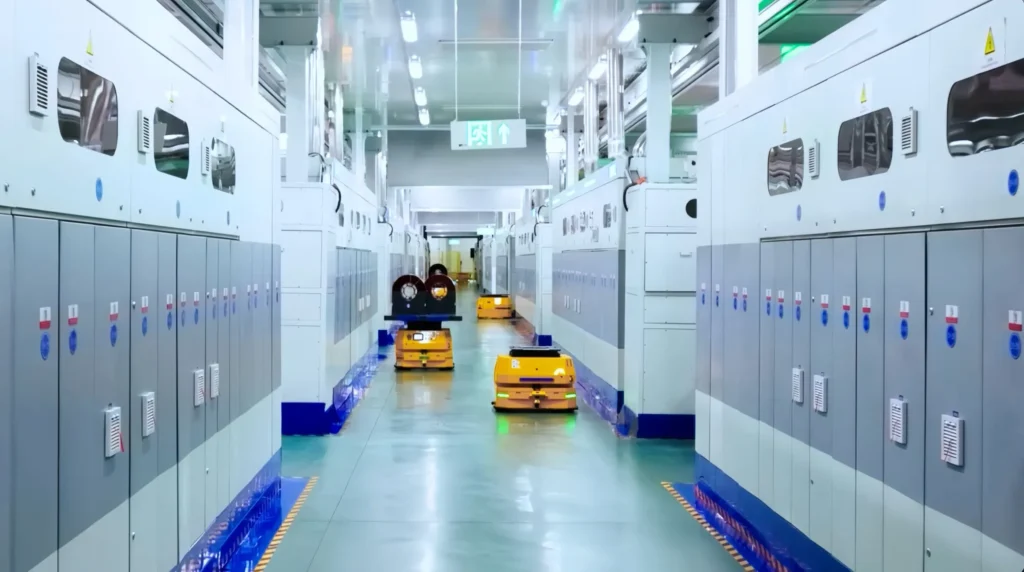
Reuters reported in June 2026 that energy storage makes up about 25% of CATL’s sales today. A company executive expects the category to reach half of global sales by 2030.
That signal matters for Ningde because storage demand pulls more value into cell design, system integration, safety validation, software, power electronics, and recycling.
CATL also opened a 10-hectare energy storage validation site in Xiamen with an investment of around 3 billion yuan. The site targets grid simulation, safety testing, and performance validation, which are major pain points for energy storage projects.
China’s energy storage market expanded rapidly in 2025. Carbon Brief reported that investment in grid-connected batteries grew 50 percent. Total electricity storage capacity exceeded 213 GW, including 145 GW of battery storage. China added 66 GW of new battery storage capacity in 2025, which represented more than 40 percent of global capacity additions.
Growth accelerated in the second half of the year as policy shifts gave way to a more market-driven boom. Energy storage and transmission upgrades together accounted for 40 percent of the clean energy sector’s contribution to China’s GDP in 2025.
In this market, CATL Ningde has strengthened its role in innovation. Its storage technology powers SenseTime’s AI data center in Shanghai. The system reduces electricity costs by 7 percent and avoids about 3,000 tonnes of CO2 emissions each year. CATL also operates the Choco Swap battery-swapping network.
In 2025, it had built more than 1,000 passenger-vehicle swap stations across 45 cities and more than 300 heavy-truck stations across 26 provinces. These networks delivered more than 1.15 million battery-swapping services and support faster adoption of electric transport.
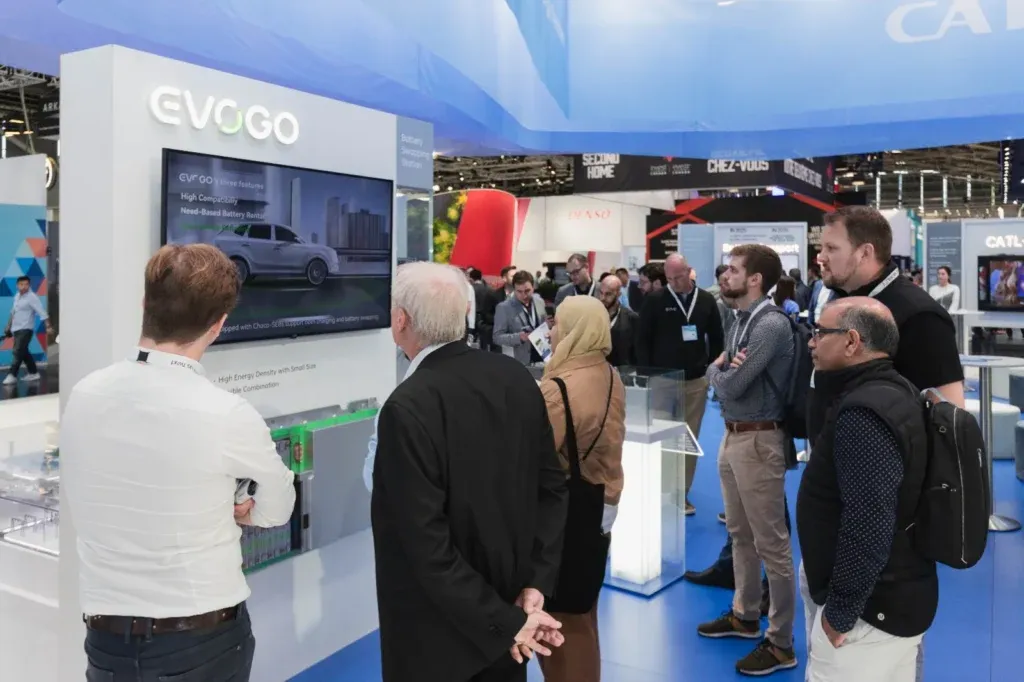
Innovation remains central to CATL Ningde. CATL’s 2025 annual report stated that the company operates six R&D centers, employs approximately 23,000 R&D staff, and holds 54,538 domestic and international patents as of the end of 2025.
In 2025, CATL launched the second-generation Shenxing Superfast Charging Battery, Shenxing Pro, Freevoy Dual Power, Naxtra, and Super Hybrid batteries. It also expects sodium-ion batteries to gain wider adoption from 2026 across battery swapping, passenger vehicles, commercial vehicles, and energy storage.
CATL is expanding beyond EVs. Its subsidiary, AutoFlight, completed the first public flight of a 5-ton-class eVTOL aircraft. In shipping, CATL battery systems have type approval from five major international classification societies and are used in nearly 1,000 electric vessels worldwide. The company also launched Ship Shore Cloud, a zero-carbon shipping and smart port solution.
Sustainability is now part of the Ningde battery story. CATL reported carbon neutrality across its core operations in 2025, built more than 1,000 Choco Swap stations, recycled 210,000 tonnes of spent batteries, and regenerated 24,000 tonnes of lithium salts through its Global Energy Circularity Commitment. It also received an AA ESG rating from MSCI and was added to the FTSE Emerging Index.
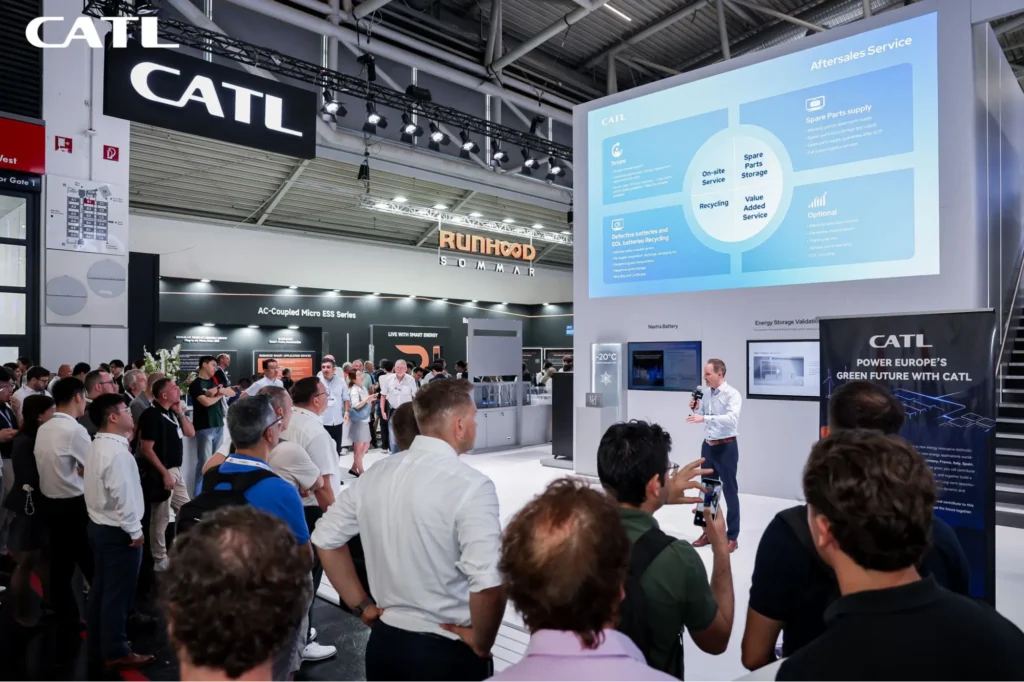
Understanding Ningde requires more than reading battery market headlines. It means seeing how China builds industrial clusters, scales supply chains, and turns local ecosystems into global competitive advantage.
ChoZan helps leaders decode China’s new energy economy through executive briefings, China innovation research, expert calls, workshops, and learning expeditions. For teams tracking CATL, energy storage, EV batteries, or China’s next industrial growth zones, ChoZan provides the context needed to make smarter strategic decisions.
Book a consultation with ChoZan to explore what Ningde reveals about China’s battery future.
No. Amperex Technology Limited, or ATL, is a separate lithium-ion battery company with roots in consumer electronics. CATL was later formed by the founding team as a new venture focused on EV and energy storage batteries.
Ningde is more specialized than Shenzhen or Hefei. Its global relevance stems from the density of battery manufacturing, CATL’s headquarters, upstream materials, equipment suppliers, and energy storage applications clustered within a single industrial ecosystem.
EV battery buyers track Ningde Fujian, China, because it gives early signals on CATL capacity, LFP production, energy storage demand, supplier availability, and pricing pressure across China’s battery supply chain.
Ningde’s coastal location supports easier movement of materials, equipment, and finished battery systems. For battery manufacturers, port access can reduce logistics friction and strengthen links with downstream EV and energy storage markets.
Yes. Foreign companies can engage Ningde CATL suppliers through technology partnerships, procurement relationships, industrial park channels, and China-based advisory support. Due diligence matters because supplier capability and export compliance vary by product category.
ATL adds depth to Ningde’s battery ecosystem through consumer lithium-ion battery expertise. CATL focuses on EV and energy storage batteries. ATL is better known for rechargeable cells and packs used in electronics.
Ningde’s next growth area is integrated clean energy infrastructure. Fujian’s 2026 regional plan highlights clean energy, advanced energy storage, photovoltaic storage integration, and electrified applications as future development priorities across the city.
Battery passport rules could make traceability a bigger export requirement for Ningde battery companies. Buyers may need verified data on materials, carbon footprint, recycling, safety, and lifecycle performance before cross border procurement.
Ningde is useful because it shows how a smaller city can scale through anchor companies, policy support, supplier concentration, talent formation, and local infrastructure. It offers a practical case for China’s cluster led growth model.