CONTENT
China’s robotics expansion is putting a new spotlight on robot motion control. Robot bodies attract attention, yet commercial performance depends on how accurately machines plan movement, coordinate joints, respond to feedback, and repeat a task across thousands of cycles. China produced 773,074 industrial robots in 2025, up 28 percent from the previous year.
Policy is moving in the same direction. China’s 2025 Government Work Report named embodied AI as an industry of the future. Local programs now target motion control models, core controllers, servo motors, and robot operating systems. The result is a wider contest around the control layer that links AI decisions to physical action.
The control layer translates a task into movement. It manages motion planning, trajectory planning, acceleration, joint synchronization, and corrections generated through feedback loops.
In factories, the business effect appears in repeatability, throughput, scrap, tool wear, energy use, and recovery after a disturbance. High-quality motion control for industrial robotics can reduce the mechanical margin used to compensate for poor control.
China’s production scale gives suppliers more opportunities to tune products against real factory conditions. It also increases pressure on component makers to provide a complete stack rather than isolated hardware.
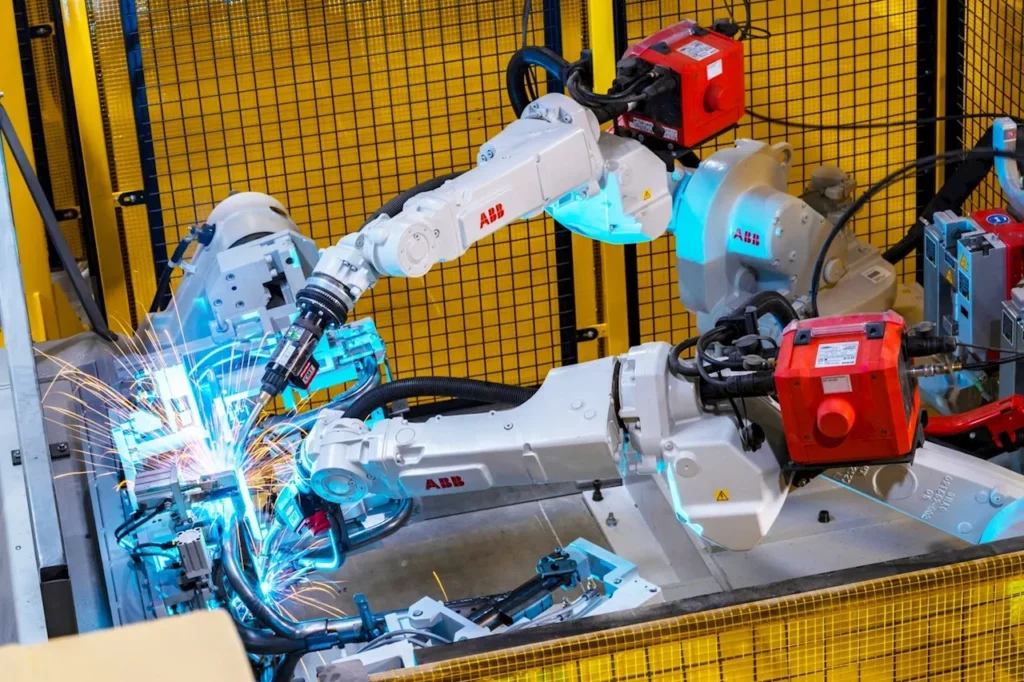
A robot controller interprets the task and generates a movement path. Motion planning decides how the robot should move through space. Trajectory planning adds timing, speed, acceleration, and joint constraints.
The commands then move into the drive layer. Servo control compares the target with encoder feedback and corrects position, speed, or torque in real time. Motor controllers regulate current and convert commands into physical output. The quality of these loops affects vibration, overshoot, settling time, and repeatability.
This is the foundation of precision motion control. Fast movement has limited value when the robot cannot stop at the required point or maintain a stable path under changing loads.
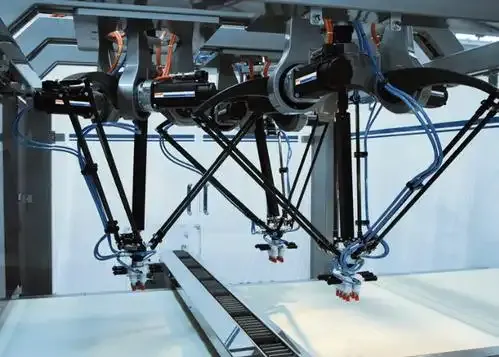
PLCs manage machine logic, interlocks, sensors, conveyors, and process sequences. Robot controllers handle kinematics, path generation, and robot functions. Industrial networks connect these layers so that several axes can act as one coordinated system.
The boundary between PLCs and motion controllers is becoming less rigid. Leadshine says its S6 PLC supports up to 64 axes of EtherCAT control with a 500-microsecond bus cycle. The company reports applications in logistics sorting, semiconductor sorting, lithium battery winding, and chip placement equipment.
This architecture supports coordinated axes across a machine or production line. It can also reduce the number of separate devices that integrators must configure.
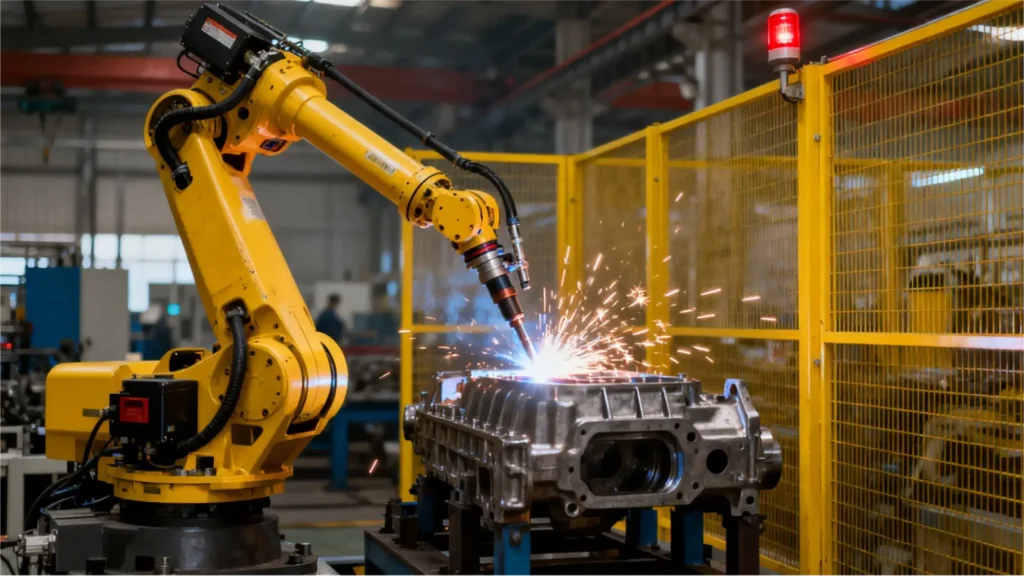
China’s major automation companies are connecting drives, motors, controllers, robots, CNC systems, and software into broader portfolios. This changes the competitive question from component price to system fit.
At SPS 2025, Inovance presented what it calls a Total Automation Solution covering AC drives, servos, motion-control products, HMIs, industrial robots, CNC systems, and associated software.
The company also previewed INO AIR, a wireless real-time servo-control system that it plans to add to its portfolio. Claimed as the world’s first industrial wireless synchronous motion control solution, it achieves 1ms communication cycles, 1μs end-to-end synchronization jitter, and 99.9999% reliability. Wireless motion control removes the physical constraints that have limited the flexibility of robot deployment.
Estun follows a similar model. Its portfolio spans motion controllers, servo drives, servo motors, CNC systems, industrial robots, automated workstations, and digital products.
The commercial value of this approach lies not simply in the fact that one company can supply more parts. Shared engineering interfaces, compatible configuration tools, and common application knowledge can reduce troubleshooting across the stack.
This is especially important during commissioning. A low-cost servo or controller can quickly lose its price advantage when an integrator spends additional days resolving protocol conflicts, tuning problems, firmware mismatches, or unclear fault codes.
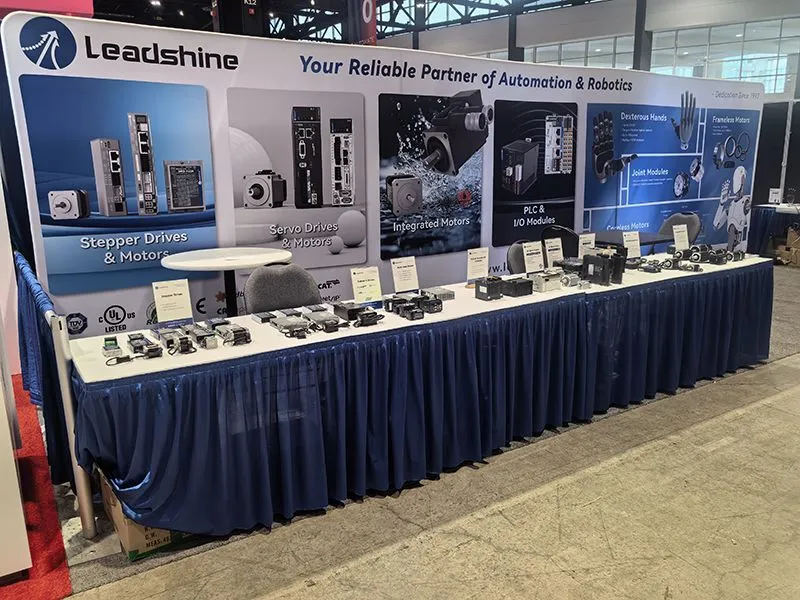
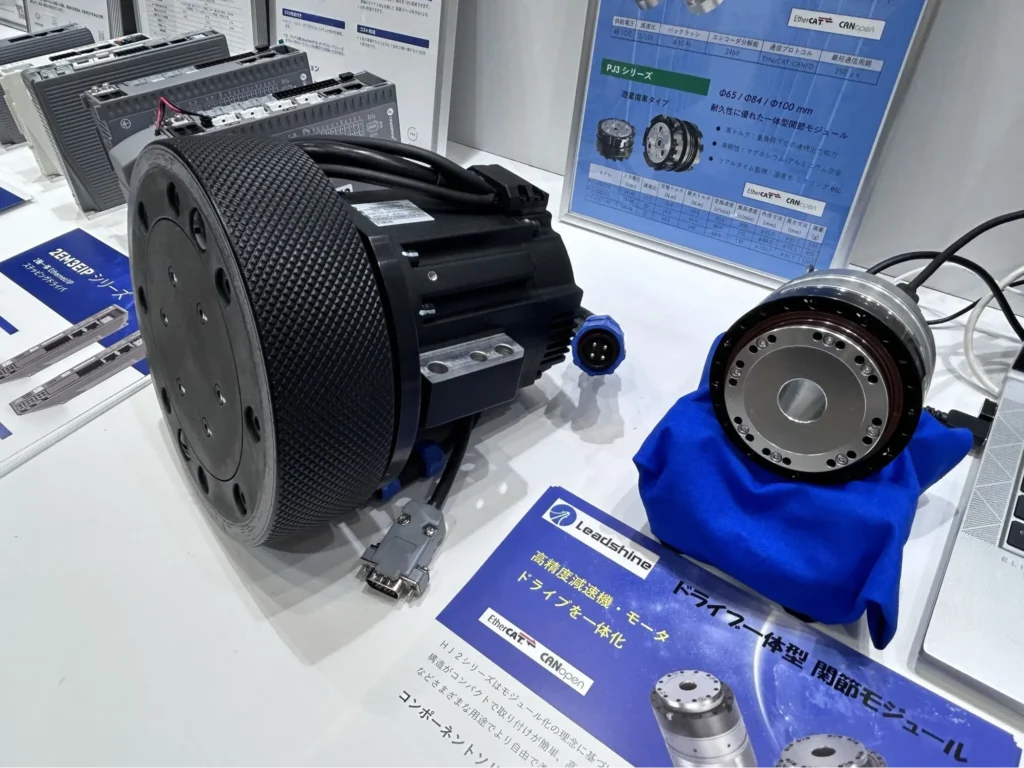
Leadshine is expanding from its established industrial motion-control business toward more complex robotic components.
At Automate 2025, the company presented multi-axis servo products and a dexterous robotic hand with 20 degrees of freedom. The system uses combined force and position control with haptic feedback, reflecting a broader industry shift from simple position-based automation toward contact-sensitive manipulation.
That matters for tasks such as assembly, gripping delicate components, tool handling, and humanoid robotics, where a robot must regulate not only where it moves but also how much force it applies.
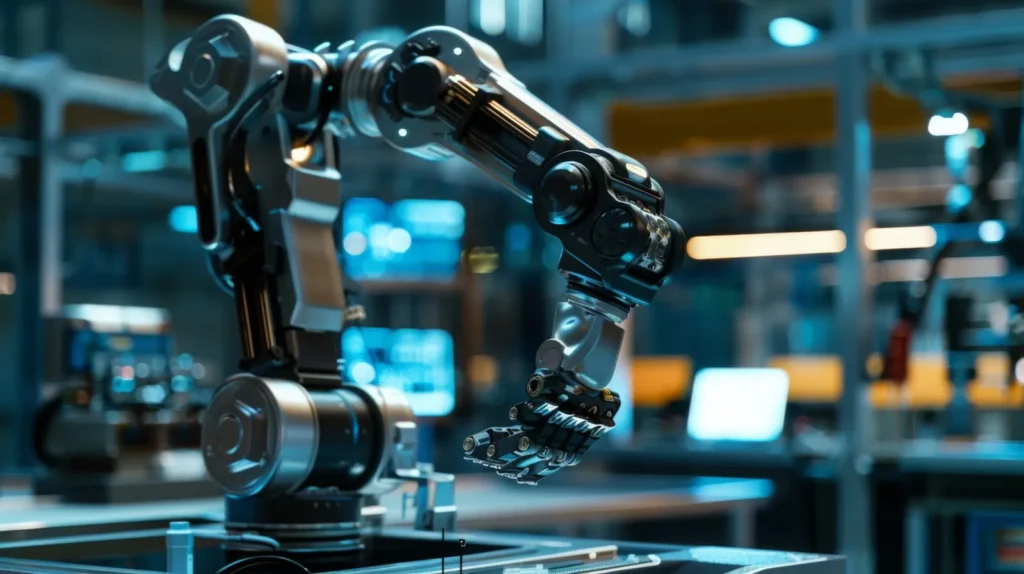
For robotic arms, control quality affects path accuracy, cycle time, and tool interaction. In CNC tending, the robot must coordinate door opening, part loading, chuck interaction, unloading, and inspection with the machine tool. Small timing errors can reduce machine use or trigger stoppages.
Welding needs a stable path speed. Dispensing needs smooth trajectories. Polishing needs force regulation. Assembly needs an accurate approach and a compliant contact.
Buyers should evaluate application tuning rather than compare nominal speed alone. A controller that performs well in palletizing may need different algorithms, sensing, and drive settings for precision assembly.
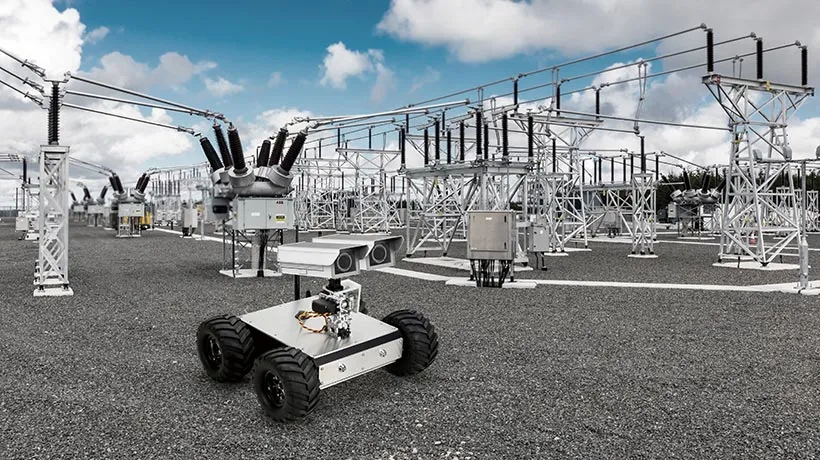
Inspection robots combine locomotion, sensing, and data capture. Their control system must keep cameras, LiDAR, or thermal sensors stable as the platform moves through uneven or constrained environments.
For wheeled robots, the control problem centers on localization, steering, braking, and path tracking. For legged machines, quadruped gait control coordinates balance, foothold placement, body posture, and disturbance recovery.
The practical metric is task completion under real operating conditions. Buyers need data on intervention frequency, recovery behavior, battery use, and sensor stability during motion.
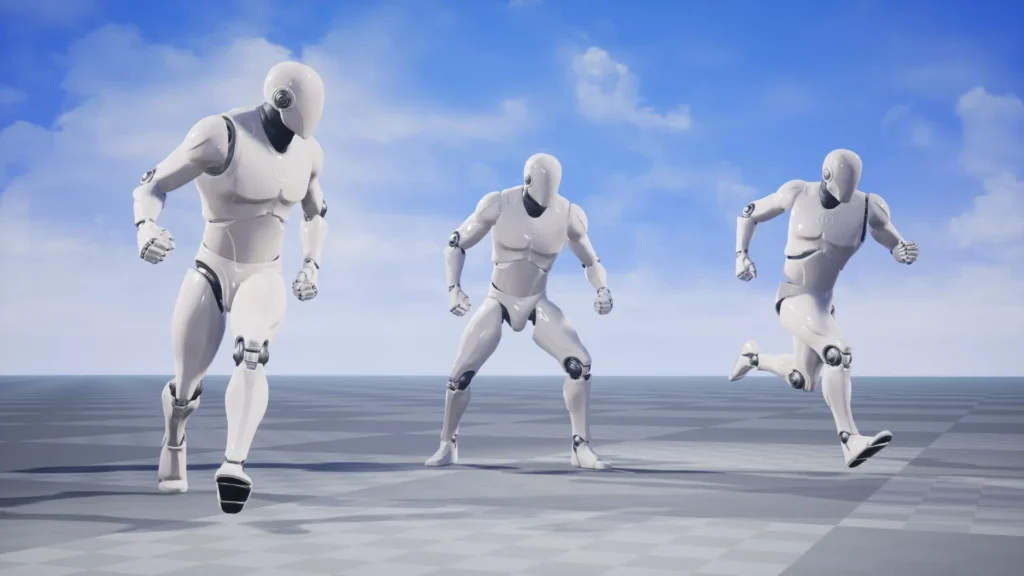
Humanoid locomotion adds whole-body balance and continuous coordination across the legs, torso, arms, and hands. China’s 2025 humanoid robot half marathon exposed these systems to long-duration outdoor movement. The Tiangong team said it optimized motion-control algorithms for joint coordination, gait stability, and navigation in complex terrain.
Shanghai’s 2025 embodied intelligence plan calls for general motion control systems and manipulation skill libraries. It supports coordination across upper and lower limbs, hand and eye systems, and brain and body systems.
In March 2026, Beijing introduced OmniXtreme, a general motion framework developed by the Beijing Institute for General Artificial Intelligence. The city reported success rates above 90 percent across several highly dynamic motion tasks.
Shanghai’s embodied intelligence plan identifies motion control as a priority technology. Approved projects can receive support equal to 30 percent of the investment, capped at 50 million yuan. The plan promotes digital twin training, pilot testing, operating systems, and application scenarios in manufacturing and logistics.
Shenzhen’s Guangming District introduced support for bottlenecks in servo motors, reducers, and controllers. Eligible challenge-based projects can receive up to 5 million yuan, which is up to 50 percent of the actual research and development investment.
China’s first national standards project for the technical requirements of humanoid robots was approved for development in 2025. They cover perception, planning, robot motion control, and task execution. The Beijing Humanoid Robot Innovation Center led the drafting work for motion control requirements.
These policies support a more structured route from research to testing and deployment. They also raise expectations around interoperability, safety, evaluation, and measurable performance.
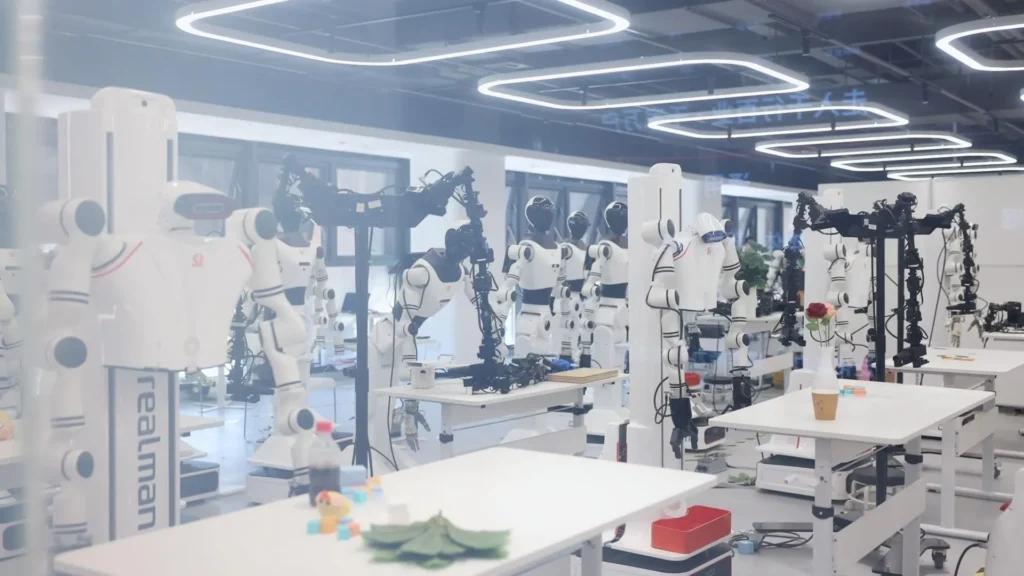
A strong sourcing review should examine the complete control chain.
This approach gives a clearer view of motion control systems than a component price comparison. It also exposes dependencies that appear during commissioning or expansion.
The next stage of motion control robotics in China will combine deterministic industrial control with more adaptive models. Conventional servo loops will remain central because factories need predictable timing and stable safety behavior. AI-based planning will sit above or beside those loops to improve task adaptation, skill transfer, and recovery.
China’s advantage comes from close links between automation suppliers, robot makers, equipment manufacturers, factories, local policy programs, and embodied intelligence platforms. The strongest suppliers will integrate precision motion, reliable hardware, usable software, and process knowledge into a single deployable system.
For global companies, the key question is how well a control stack performs in real-world processes. The strongest evaluation starts with the task, then works backward through the controller, network, drive, motor, sensor, software, and service model.
Understanding robot motion control requires more than tracking product specifications. Policy incentives, component ecosystems, factory requirements, integration capabilities, and local deployment models all influence commercial value.
ChoZan helps organizations examine China’s technology development through China innovation research, strategy programs, workshops, expert discussions, digital transformation consulting, and learning expeditions. These services connect technology signals with practical business questions and direct market context.
Book a consultation to explore China’s robotics ecosystem and identify the developments most relevant to your technology, innovation, or investment priorities.
A motion controller coordinates axes, timing, speed, and position. A robot controller adds kinematics, path logic, tool functions, and robot specific programming. Some modern platforms combine both roles within a single control architecture.
EtherCAT supports fast, synchronized communication between controllers, servo drives, sensors, and input/output devices. Its short cycle times enable multiple axes to receive commands simultaneously, supporting accurate coordination in complex machines and robotic cells.
AI can improve planning, adaptation, and skill learning, but deterministic servo control still handles fast position, speed, and torque corrections. Most practical systems combine adaptive intelligence with proven real-time control at the drive level.
Request repeatability, path accuracy, settling time, jitter, cycle time, payload response, fault recovery, and long-duration test results. Ask for data from a process close to the intended application rather than a generic demonstration.
Payload changes inertia, required torque, stopping behavior, vibration, and joint response. A well-tuned system adjusts control parameters for the tool and workpiece so accuracy remains stable across the robot’s intended operating range.
Position control targets a specific location, velocity control regulates movement speed, and torque control manages applied force. Many robots switch between these modes or combine them according to the process, contact conditions, and safety requirements.
Latency delays the exchange of commands and feedback. Excess delay can reduce synchronization, increase path error, and weaken disturbance response. Teams should evaluate total system latency across controllers, networks, drives, sensors, and software.
Safety functions can limit speed, torque, position, or workspace and can trigger controlled stops. Their design should match the application risk assessment and remain compatible with the controller, drives, sensors, and cell logic.
Useful tools include offline programming, digital twins, trajectory simulation, servo tuning, signal tracing, fault logs, and remote diagnostics. Strong tools shorten commissioning and help engineering teams isolate control, mechanical, and communication problems.
Ask about comparable deployments, controller and drive compatibility, fieldbus support, programming tools, firmware policy, spare parts, local service, cybersecurity, safety certification, and performance under the target payload, speed, environment, and duty cycle.