CONTENT

Siasun Robotics sits at a useful point in China’s automation story. The company, known in Chinese as 新松, gives executives a view into how Chinese robotics companies are shifting from equipment supply to factory-level problem-solving.
Its current portfolio spans industrial robots , mobile robots, collaborative robots, semiconductor equipment, intelligent logistics, and full system integration. That breadth matters because China’s manufacturing upgrades now depend on robots that fit real production constraints.
For global leaders studying Siasun Robotics, the key question is practical. How does this company integrate robot hardware, software platforms, industry expertise, and deployment services into a broader smart manufacturing stack?
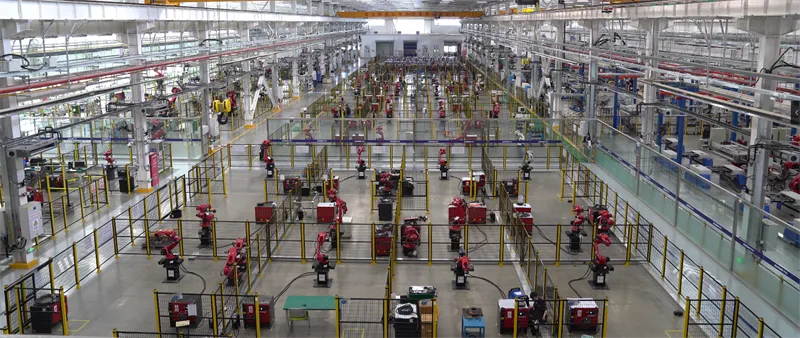
In its current company materials, SIASUN describes its business in terms of robot core technologies, components, robot products, and industry solutions. Its 2025 annual report gives the clearest operating picture.
The company says its robot chain work covers motion controllers, servo motors, servo drives, six-axis industrial robots, mobile robots, special robots, welding automation, assembly automation, and logistics automation.
This structure fits the demand pattern in China. Manufacturers want automation across welding, handling, assembly, inspection, warehousing, and factory transport. They also want fewer gaps between hardware, software, commissioning, and service. That is where Siasun Robot & Automation has built its current relevance.
The current Siasun Robotics stack is best read as three layers.
This matters for buyers because robot adoption often fails at the integration stage. A six-axis arm alone does not solve line balance, tooling, safety layout, dispatching, data capture, or uptime.
Siasun Robot and Automation has positioned itself around the full factory problem, which gives the company a different role from smaller hardware suppliers.
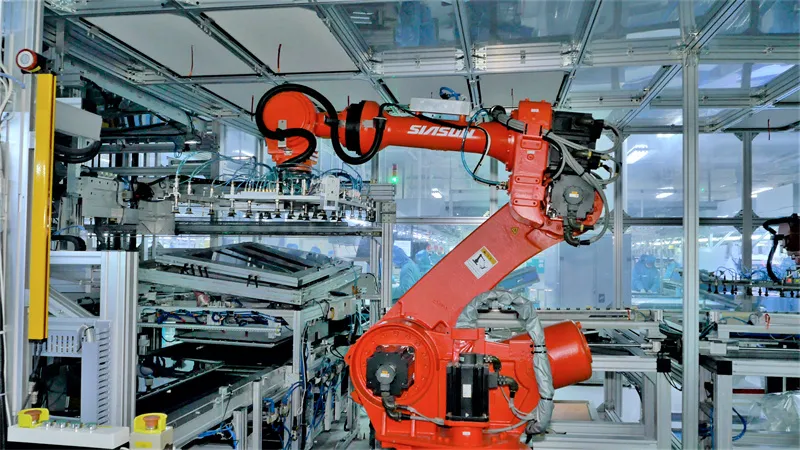
On the industrial robot side, Siasun Robotics offers SCARA, desktop-type, small-payload, large-payload, and ultra-high-payload robots. The official product page lists payloads ranging from light SCARA use cases to large robots weighing hundreds of kilograms. That portfolio suits sectors that need different motion profiles across the same plant.
The strategic point is process depth. In automotive welding, electronics, new energy, metal processing, and general manufacturing, a robot must work with fixtures, software, sensors, quality checks, and operators.
Siasun Robotics links industrial robots with arc welding, laser welding, spot welding, grinding, and automated assembly solutions. This tells us the company is selling repeatable production capability, not a single piece of equipment. For China’s factory automation market, this process knowledge is a serious advantage.
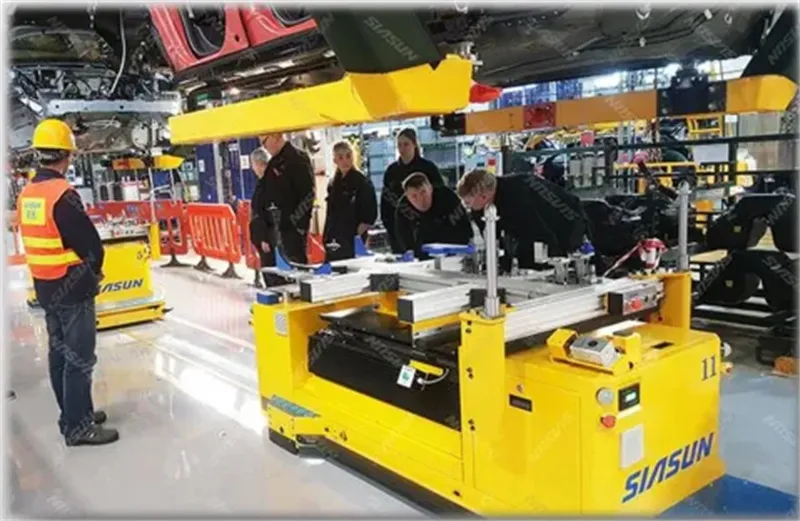
Within Siasun AGV and mobile robot systems, the company’s offerings include forklift mobile robots, tote- and box-handling robots, under-ride lift units, outdoor autonomous robots, heavy-duty platforms, conveyor mobile robots, and automotive assembly mobile robots. Its IMRS 2.0 platform supports multi-robot dispatching, route planning, data analytics, and digital twins.
This is one of the strongest commercial angles for the company. Many factories hit productivity limits in internal logistics before they hit limits on production machines. Materials arrive late. Finished goods wait in buffer zones.
Workers walk too far. Forklifts create a safety risk. Mobile robots solve these problems only when they are connected to warehouse systems, production schedules, and shop-floor rules.
For buyers, the value of a Siasun AGV project depends on workflow redesign. The robot route matters. The charging cycle matters. The dispatching logic matters. The software link to MES, WMS, and ERP matters.
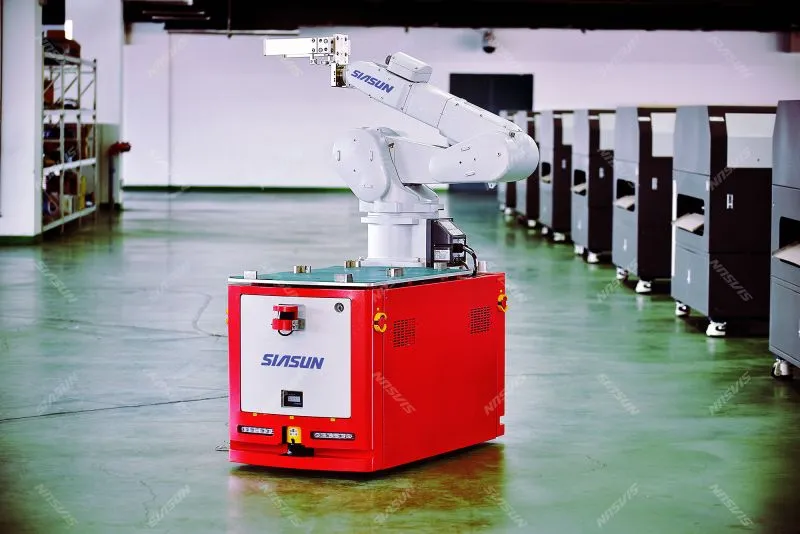
Siasun Cobot solutions sit in a different part of the factory floor. Collaborative robots are useful in tasks that need flexible handling, gluing, screw driving, polishing, inspection, palletizing, and welding support.
Official materials list the DUCO GCR series with payloads up to 30kg, as well as explosion-proof models, welding workstations, palletizing workstations, and mobile cobot systems.
Safety matters. The larger value comes from automation that can support smaller batches, mixed production, and new capabilities without a full line rebuild. The Siasun Cobot portfolio is relevant for manufacturers that need a middle path between manual work and fixed automation.
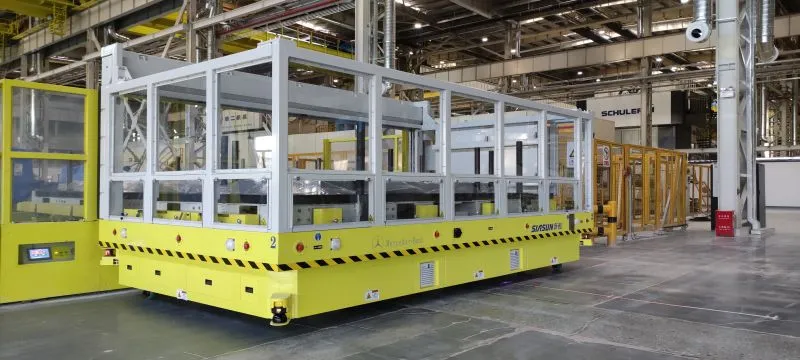
System integration is the center of the company’s proposition. Its system service pages cover welding, assembly, and logistics automation.
The company describes turnkey logistics projects that include consulting, design, manufacturing, installation, commissioning, after-sales service, automated warehouses, conveyors, AGVs, RGVs, palletizing robots, EMS, WMS, and digital twins.
This is the part that global executives should study closely. China’s strongest robotics companies compete on deployment speed, application engineering, localization, total cost of ownership, and the ability to customize around real factory constraints.
That is also why Chinese robotics companies have become more important in new energy, electronics, semiconductors, and automotive supply chains.

The company is tied to the Shenyang robotics ecosystem, which remains important for understanding its identity. Current company disclosures list the office address in Shenyang and show a wider structure of domestic parks, overseas subsidiaries, and regional centers. This gives 新松 a Chinese industrial base with a global service ambition.
The company says its products have reached more than 40 countries and regions, serving more than 4,000 companies and handling more than 18,000 project cases. The buyer’s question covers robot capability, response time, spare parts access, software support, and local commissioning skills.
The 2025 milestones also show how SIASUN is moving into AI-linked robotics. The company announced the opening of its embodied intelligence research institute, the release of new humanoid robot products, upgrades to desktop and SCARA robot lines, and a new subsidiary in Thailand for regional expansion.
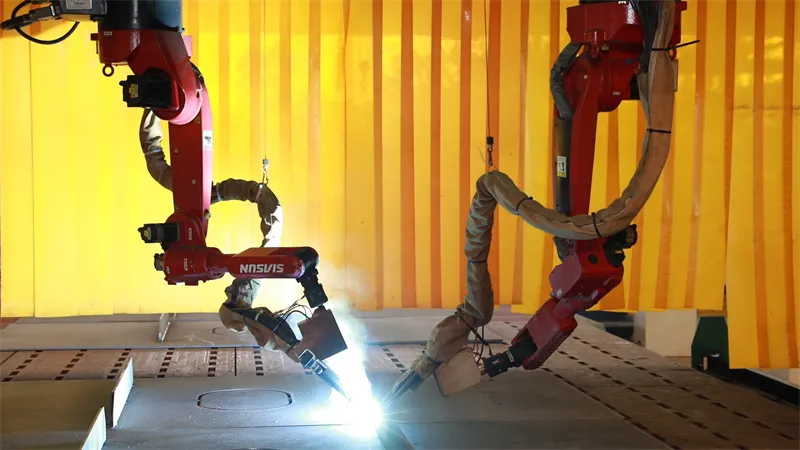
For 2026, the company’s plan points toward a more productized, intelligent, and international operating model. The annual report outlines a 3+3+N strategy. The three core product fields are industrial robots, mobile robots, and special robots. The three application technologies are welding automation, assembly automation, and logistics automation. The N layer refers to strategic industries.
The most important shift is productization. SIASUN says it will raise the share of standardized products, improve product modularity, push mature products across more sectors, and reduce exposure to project volatility. That direction matters because system integration can produce large contracts, yet standardized products give robotics firms better economies of scale.
AI is the other strategic layer. The company plans to deepen AI model integration, embodied intelligence, machine perception, ERP, MES, WMS, factory data platforms, and analytics. This is where the company moves from traditional automation toward adaptive manufacturing systems.
For global executives, Siasun Robotics is worth watching because it shows how China is building automation firms that integrate hardware, software, applications, and services into a single structure. It shows how Chinese robotics companies are using domestic supply chains to improve cost control. It also shows how mobile robots and cobots are moving into flexible factory workflows.
The next proof point will come from execution. Siasun Robotics needs to convert AI, embodied intelligence, and standardized robot platforms into scalable revenue. The company already has the product range, market references, and Shenyang industrial base. Its next challenge is repeatable commercialization across high-value factory scenarios.
That is why Siasun Robotics belongs in any serious China automation watchlist. It reflects the next phase of smart manufacturing in China, where robots are judged by deployment quality, process fit, data connection, and production impact.
China’s robotics ecosystem is moving fast, and surface-level market tracking is no longer enough. ChoZan helps executive teams understand Chinese automation, AI, digital transformation, and smart manufacturing through research, workshops, keynotes, learning expeditions, and expert calls.
Book a consultation to explore how these shifts affect your strategy, partnerships, and innovation agenda.
Yes, SIASUN Robot & Automation Co., Ltd. is a listed Chinese robotics company, with ticker 300024 on the Shenzhen market. For investors, it belongs more to automation infrastructure than consumer robotics.
SIASUN also sells mobile robot software, intelligent warehouse systems, assembly test lines, welding automation, and semiconductor-related equipment. This wider scope makes the company relevant for buyers planning factory-level automation upgrades.
Siasun supports new energy battery factories through mobile robot scheduling, assembly automation, warehousing links, and process-specific handling systems. The main search intent is usually lithium battery production, not household battery products.
Yes, Siasun systems can integrate with factory software, such as ERP, WMS, and production management platforms, in suitable projects. The integration scope depends on site data quality, interfaces, process mapping, and commissioning resources.
iMRS 2.0 is SIASUN Mobile Robotics’ platform for dispatching, route optimization, device links, simulation, analytics, and digital twin control. It matters when factories run mixed fleets across storage and production areas.
Siasun industrial robot pages show a range from light SCARA models for small parts to heavier six axis robots for handling and process work. Buyers should match payload, reach, accuracy, and duty cycle.
Yes, SIASUN lists 3C electronics among its industry areas, with automation use cases around assembly, handling, testing, gluing, and production flow. This is relevant for electronics makers facing short product cycles.
Global buyers should ask about the pilot scope, acceptance criteria, local service coverage, spare parts lead times, software ownership, data security, and training. A small pilot should test uptime, operator adoption, and expansion logic.
The main skill gaps are robot programming, maintenance, data analysis, line balancing, and safety management. As Siasun projects become more software-led, factories need teams that can improve systems after launch.
Siasun Robotics compares best as a broad automation integrator, not a narrow robot arm maker. Buyers usually evaluate it against Chinese robotics companies on product range, project delivery, service coverage, and experience in complex factory scenarios.
The most relevant industries are automotive, new energy, electronics, semiconductor equipment, logistics, and advanced manufacturing. These sectors need robotic systems that integrate motion control, inspection, material flow, and production data within demanding plants.