
CONTENT

Xiaomi EV has become one of China’s most important smart mobility stories because it integrates cars, phones, AIoT, retail, and software into a single consumer system. In 2025, Xiaomi reported 411,082 vehicle deliveries and RMB 103.3 billion (US$15.2 billion) in smart EV revenue.
For 2026, the company set a 550,000-unit delivery target, making Xiaomi Auto a serious force in China’s crowded EV market.
The point for global executives is clear. Xiaomi EV is leveraging consumer electronics discipline, founder-led brand trust, rapid product cycles, software familiarity, and a large connected-device base to reshape expectations for smart EVs in China.
Xiaomi EV matters because it shows how a consumer technology company can move into cars quickly, with pricing confidence and ecosystem depth. The company’s smart EV, AI, and new initiatives segment reached RMB 106.1 billion (US$15.6 billion) in 2025, with a gross margin of 24.3 percent and positive operating income of RMB 0.9 billion (US$132.4 million).
That financial shift changes the discussion around Xiaomi’s electric vehicles. Many new EV entrants struggle to move from attention to scale. Xiaomi reached a large volume quickly, then placed its auto business inside a wider technology platform that already includes phones, wearables, home appliances, internet services, and AI-enabled user interfaces.
This is why Xiaomi EV car demand differs from that of a normal car launch. Buyers respond to design and range, yet they also respond to a familiar Xiaomi logic. The company has trained consumers to expect strong specifications, accessible premium features, and frequent software improvements across devices.
Xiaomi Auto has a structural advantage because it already understands screen-based behavior, app-based services, online buzz, offline retail traffic, and product community management. In December 2025, Xiaomi reported 754.1 million global monthly active users and 1.0792 billion connected AIoT devices, excluding smartphones, tablets, and laptops.
This scale gives Xiaomi EV a route into daily life that many automakers cannot copy quickly. A Xiaomi EV can fit into an ecosystem where users already manage phones, tablets, watches, TVs, air conditioners, and home devices. As a result, the vehicle becomes another high-value terminal inside Xiaomi’s customer relationship.
HyperOS is central to that strategy. Xiaomi presents its connected world as a Human x Car x Home system, where personal devices, smart home products, and cars share a more unified experience. For software-defined vehicles, this matters because the cockpit becomes a living interface for services, upgrades, AI features, and user data.
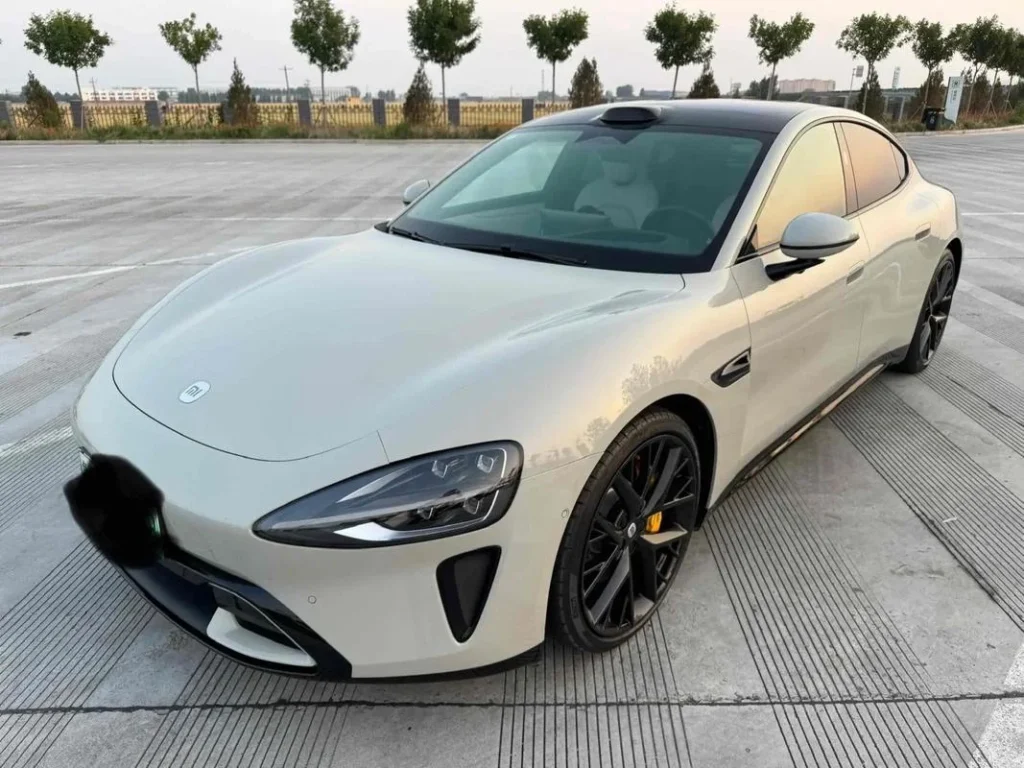
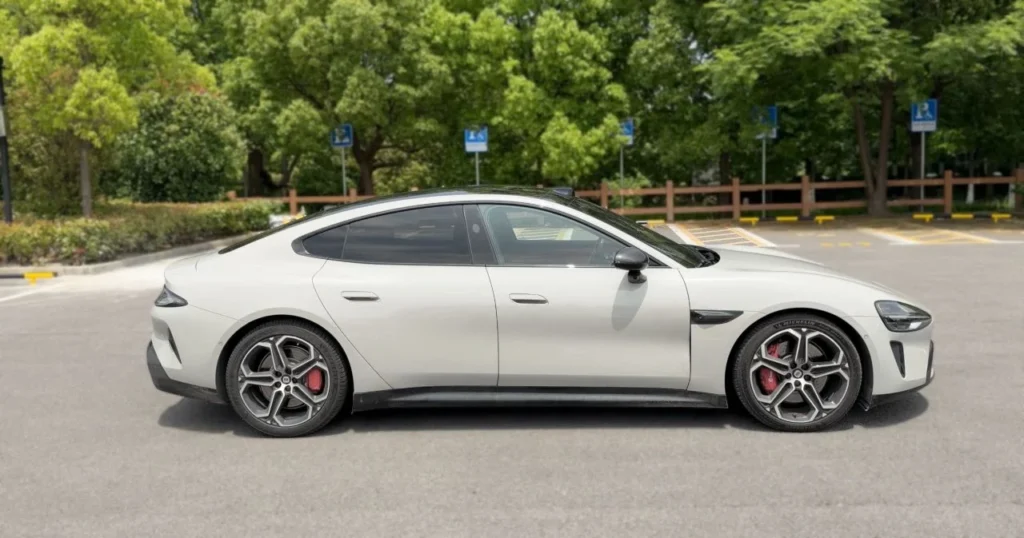
Xiaomi SU7 gave the company a credible premium EV entry point by combining design appeal, strong specifications, and a clear brand story. In 2025, Xiaomi said the SU7 Series ranked first in sales among sedans priced at RMB200,000 (US$29,400) or above in mainland China.
The 2026 update strengthens that position. Xiaomi launched the new-generation Xiaomi SU7 in March 2026, featuring upgrades across safety, driving performance, intelligent experience, and comfort. Xiaomi also said the Pro model can achieve up to 902 km of CLTC range, using a silicon carbide high-voltage platform and upgraded energy-flow management.
That gives Xiaomi electric vehicles a stronger position in the sedan ladder. The Xiaomi SU7 serves as the core volume and brand-credibility model, while the performance editions build aspiration. This matters in China because premium EV buyers increasingly compare cabin intelligence, range, software feel, charging experience, and brand energy together.
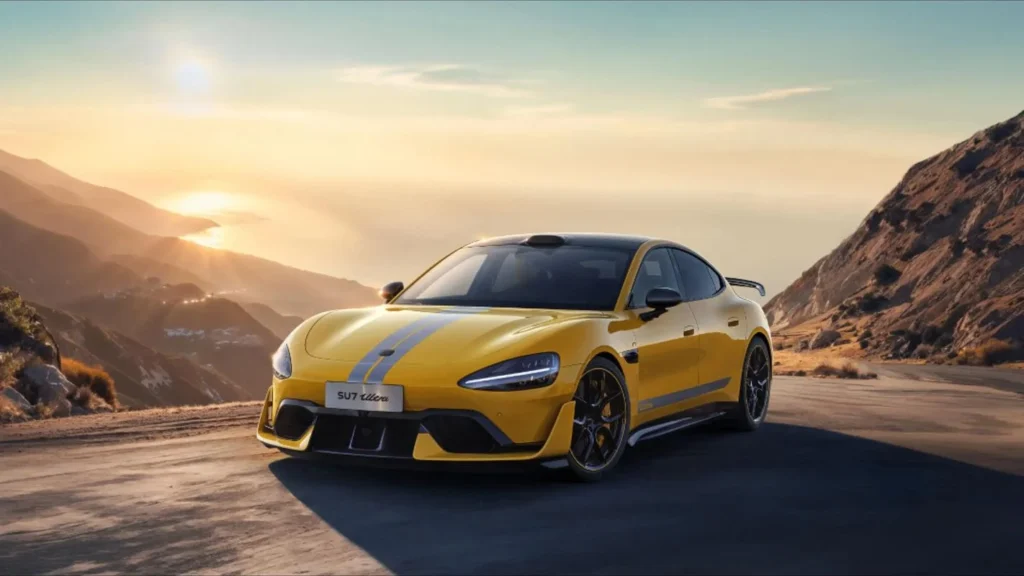
Xiaomi SU7 Ultra plays a different role. It is a halo product that pulls Xiaomi further into premium performance territory. Xiaomi announced official sales of Xiaomi SU7 Ultra in February 2025 with a starting price of RMB529,900 (US$77,900).
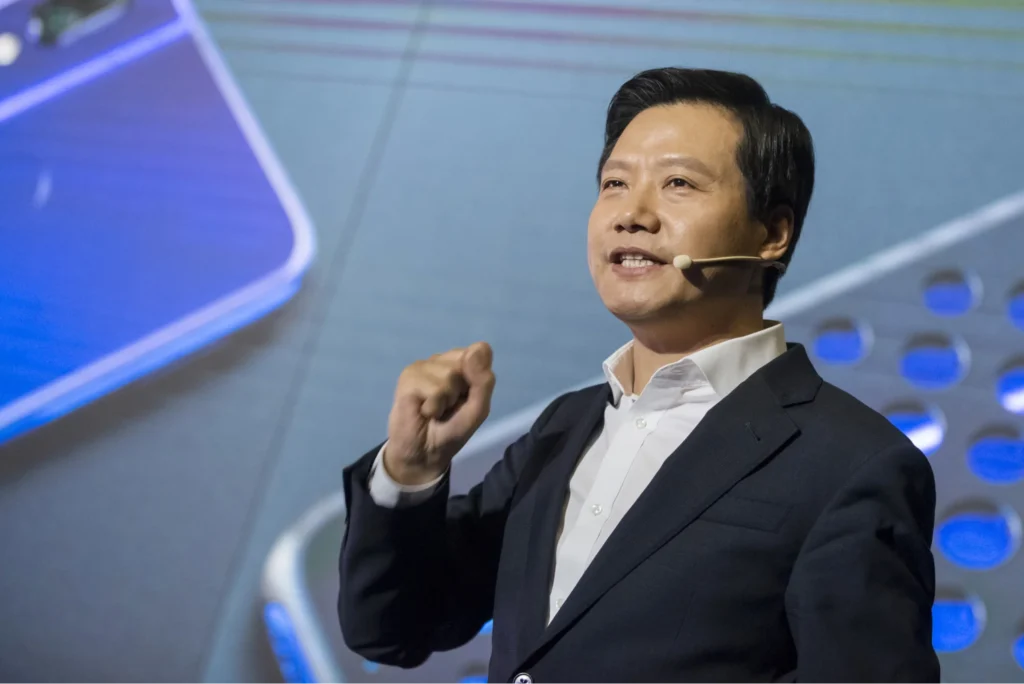
The pricing was strategically sharp because Reuters reported it was about 35 percent below the earlier-promoted presale price. That move gave Lei Jun a way to frame high performance in terms of value, rather than copying older luxury performance codes. In China’s EV market, that is a powerful message.
The wider impact sits in brand architecture. Xiaomi SU7 Ultra helps Xiaomi Auto tell consumers that 小米汽车 can deliver engineering drama, track-style ambition, and smart-cockpit appeal in one product family. It also gives Xiaomi social content, showroom traffic, and performance credibility beyond standard commute use cases.
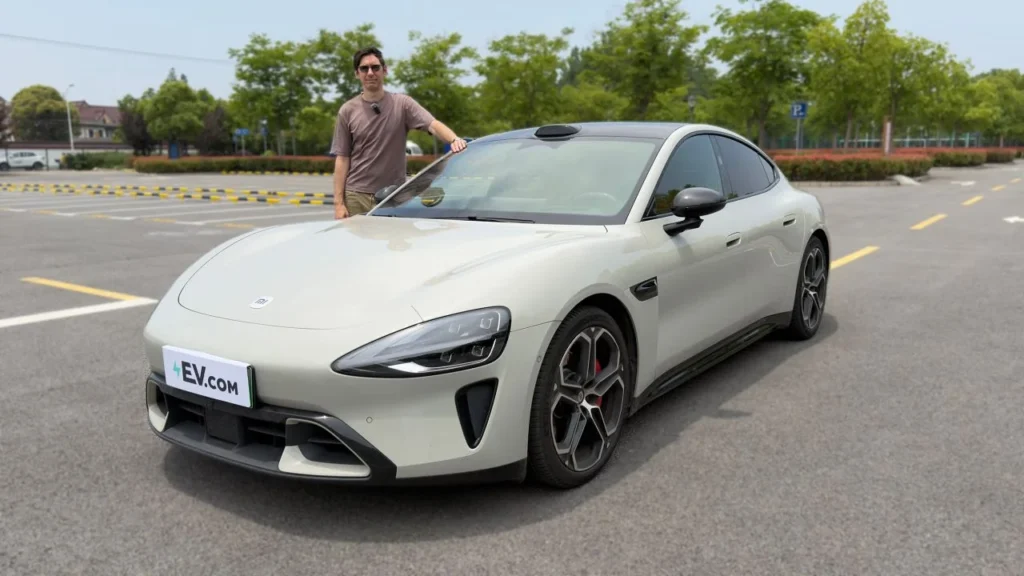
Xiaomi YU7 changed the scale of the story because SUVs carry broader family and lifestyle demand in China. Xiaomi began official sales of the Xiaomi YU7 in June 2025, priced at RMB253,500 (US$37,300) for the Standard version, RMB 279,900 (US$41,200) for the Pro version, and RMB 329,900 (US$48,500) for the Max version.
Reuters reported that the YU7 started nearly 4 percent below Tesla China’s Model Y and received 200,000 orders within three minutes. It also reported a driving range of up to 835 km, above the redesigned Model Y figure cited in the same report.
This was not a quiet second model. Xiaomi YU7 turned Xiaomi EV into a stronger competitor in the most visible part of China’s smart electric SUV market. It also gave Xiaomi Auto a clearer challenge against Tesla China because the comparison was simple for consumers to understand: price, range, design, and ecosystem familiarity.
In April 2026, third-party delivery tracking from CnEVPost showed Xiaomi EV delivered 36,702 vehicles during the month. The new generation SU7 contributed 26,826 units, and the YU7 contributed 9,876 units. This indicates that Xiaomi is managing a two-model volume story rather than relying on a single launch cycle.
Lei Jun remains central to the Xiaomi EV story because the brand carries a founder-led communication rhythm. In China, this matters. Consumers follow launch events, social posts, price reveals, and product explanations throughout the buying journey.
The Xiaomi Auto strategy uses Lei Jun as a trust bridge between consumer electronics and cars. That bridge reduces the perceived distance between a smartphone brand and a vehicle brand. It also gives Xiaomi a direct storytelling channel during fast-moving moments, such as YU7 orders, SU7 Ultra pricing updates, and SU7 delivery updates.
This approach has limits. A car carries higher stakes in safety, service, financing, insurance, and regulations than a phone. Because of that, founder visibility must connect with operational proof. Delivery discipline, after-sales quality, software safety, parts supply, and transparent communication will matter more as volume grows.
Xiaomi EV affects the market by introducing a new kind of pressure. BYD already pushes scale, battery integration, and broad price coverage. Tesla China still carries strong brand recognition and manufacturing depth. Xiaomi enters with smartphone ecosystem power, premium-value positioning, and launch-event momentum.
The China EV price war gives this strategy more urgency. In 2025, Reuters reported that BYD incentives triggered broader market tension, and China’s Ministry of Industry and Information Technology urged the sector to stop price-warring behavior. Tesla also faced pressure from Chinese rivals in what Reuters called a relentless smart EV price war.
Xiaomi does not need to become BYD to matter. It needs to pull attention, compress premium pricing expectations, and make the intelligent cockpit experience feel normal at aggressive price points. That creates pressure on legacy brands and EV specialists because consumers are starting to expect phone-like speed within automotive product cycles.
The next phase for Xiaomi EV will depend on safety credibility as much as demand. Reuters reported that Xiaomi launched a safety advisory committee in February 2026 after EV accidents in China. A prior SU7 crash in assisted driving mode remained under investigation, and official accounts had not yet been released.
The broader regulatory environment is tightening as well. Reuters reported in 2025 that Xiaomi planned a software update for more than 115,000 SU7 sedans due to safety issues related to assisted driving. China later issued draft Level 2 driver-assistance rules that require stronger attention monitoring and safety-response mechanisms.
This does not erase Xiaomi’s momentum, but it raises the standard. Software-defined vehicles must prove reliability in edge cases, not only delight users with screens and features. For 小米汽车, the strategic challenge now is to convert smartphone speed into automotive-grade trust.
Xiaomi EV offers a clear lesson for global leaders studying China. The car is becoming a platform for ecosystem competition. In China, the winner may not be the company with the oldest automotive heritage. The winner may be the company that integrates product, software, retail, community, price, and service into a single, repeatable system.
This is why Xiaomi electric vehicles deserve attention beyond auto industry reporting. They show how China’s consumer technology companies can move into heavy industries by using brand communities and software habits built over many years. They also show how fast Chinese buyers can reward a company that frames cars through lifestyle relevance and digital familiarity.
For Xiaomi, the main question in 2026 is execution. The company has demand, visibility, and a clear product ladder across Xiaomi SU7, Xiaomi YU7, and Xiaomi SU7 Ultra. Now it must prove manufacturing consistency, safety discipline, service coverage, and global readiness. Reuters reported that Xiaomi plans to enter Europe as its first overseas EV market in 2027, so China will remain the proving ground before expansion.
Xiaomi EV shows how quickly China’s innovation ecosystem can turn consumer technology, software, manufacturing, and mobility into one connected growth story. For global leaders, the real value lies in understanding the system behind the success.
ChoZan helps executives, strategy teams, and innovation leaders study China’s fast moving business landscape with more context and less noise. Through China learning expeditions, innovation tours, executive briefings, expert calls, and custom research, ChoZan connects market signals with practical business implications.
For teams studying smart EVs, AI, robotics, retail technology, or digital transformation, ChoZan provides structured access to China’s most important innovation shifts. The goal is not only to follow companies like Xiaomi, BYD, or Tesla China, but to understand what their strategies reveal about future competition.
If your team wants deeper insight into China’s EV ecosystem and what it means for global strategy, book a consultation with ChoZan.
As of 2026, official Xiaomi EV sales remain focused on China. Overseas buyers should treat grey imports carefully because software access, warranty support, registration rules, charging compatibility, and after sales service can vary by country.
Yes, some exporters list Xiaomi EV car models for overseas buyers, but private imports carry practical risks. Buyers must check local homologation rules, insurance eligibility, charging standards, warranty limits, software access, and repair support before paying.
Xiaomi electric vehicles use different battery setups by model and trim. The Xiaomi YU7 has been linked with CATL and BYD battery supply, while higher performance versions focus on faster charging and higher power delivery.
The Xiaomi YU7 supports very fast charging in China, with Xiaomi stating 10 to 80 percent charging in as little as 12 minutes. That makes charging speed a key search point for SUV buyers.
Yes, Xiaomi Auto uses over the air updates through its connected software system. This matters because smart EV buyers increasingly compare cars by software improvement, cockpit upgrades, driving assistance updates, and long term digital support.
Xiaomi EV charging in China relies on broad third party charging integration, not only brand owned chargers. Buyers can use Xiaomi’s charging map to check station availability, pricing, power output, and route based charging options.
Delivery times matter because demand has outpaced early production capacity. For buyers, a long wait can affect purchase tax timing, financing plans, resale expectations, color choices, trim availability, and final delivery cost.
A Xiaomi EV car can suit families that value space, smart cabin features, app connectivity, and long range. The Xiaomi YU7 is the stronger family focused option because SUV buyers prioritize seating comfort, storage, and ride height.
HyperOS matters because it connects the car with Xiaomi phones, tablets, wearables, and smart home devices. This gives Xiaomi EV a familiar interface advantage for buyers already inside the Xiaomi ecosystem.
Businesses should read 小米汽车 as a signal that China’s EV competition now includes consumer tech ecosystems. The bigger lesson is about software, community, speed, and cross device loyalty moving into the car industry.