CONTENT
The latest Xiaomi news is not about a new phone. It is about a company that has quietly redrawn the rules of what a technology brand can be. Xiaomi has grown from a Beijing startup into one of the most strategically significant companies in the world. The decisions it is making right now say something important about China’s entire tech economy.
For global business leaders, this is not a story about consumer electronics. It is a masterclass in platform thinking.
Xiaomi was founded in April 2010 in Beijing by Lei Jun and seven co-founders. In its early years, the company sold high-spec Android phones at prices that undercut rivals by wide margins. That positioning worked.
By 2025, Xiaomi had maintained its position as a top-three global smartphone vendor for 19 consecutive quarters according to Canalys, holding a 13.5% global market share and shipping 43.5 million units in Q3 2025 alone.
In the 2025 Fortune Global 500, Xiaomi ranked 297th, marking its seventh consecutive year on the list and its largest single-year ranking jump since its first appearance in 2019.
The smartphone story is now a foundation, not the headline. Xiaomi today operates across smartphones, wearables, smart TVs, tablets, electric vehicles, and hundreds of connected home devices. It is present in over 100 countries and regions.
At Mobile World Congress (MWC) 2026 in Barcelona, Xiaomi formalised what its leadership has been building toward for years. The “Human × Car × Home” (人 × 车 × 家) framework is Xiaomi’s core strategic vision. It connects personal devices, electric vehicles, and living spaces into one AI-powered experience. All of it runs under a single operating system.
This is not a marketing tagline. It is a structural commitment. Every product Xiaomi launches is designed as a node in one continuous intelligent environment. From a flagship smartphone to an EV, all of it connects. Angus Ng, Director of Communications at Xiaomi International, described it at MWC 2026: “AI is designed to serve people in real life.”
Staying current with Xiaomi news means tracking not just product launches, but the infrastructure being built underneath them. Here is what that looks like in practice.
HyperOS is Xiaomi’s proprietary operating system, replacing MIUI as the software backbone of its entire device ecosystem. The latest version, HyperOS 3.0, is built on Android 16. It is rolling out globally across smartphones, tablets, TVs, wearables, and smart home devices.
The performance gains are meaningful:
HyperOS is the single software layer that makes the ecosystem possible. Without it, Xiaomi is just a hardware brand. With it, every device becomes part of a coordinated intelligence platform.
In January 2026, Lei Jun announced what he called the “Great Convergence” (大会师, dà huì shī) at Xiaomi’s “Million-Dollar Technical Award 2025” ceremony. For the first time, a Xiaomi device will carry three fully in-house technologies: its own chip, its own OS, and its own large AI model.
The chip at the centre is the Xuanjie O1 (Xring O1), made by TSMC on a 3nm process. This places Xiaomi alongside Apple, Samsung, and Huawei. Only four companies globally have 3nm mobile chip capability.
Combined with HyperOS and the self-developed MiMo-V2-Flash AI model, Xiaomi is engineering intelligence at every layer, from silicon to software.
Xiaomi’s EV results have been extraordinary. The YU7 received 289,000 pre-orders in its first hour, including a large share of non-refundable locked deposits. This set a record for the fastest order volume in China’s EV market.
The company targets 550,000 EV deliveries in 2026, a 34% increase on the 410,000 units delivered in 2025. What makes this relevant beyond automotive news is how Xiaomi thinks about its cars. The SU7 and YU7 are not standalone products. They are “mobile living spaces” designed as connected nodes in the broader ecosystem:
This is ecosystem design at a scale no other automotive brand is currently attempting.
Xiaomi’s AIoT (人工智能物联网, rén gōng zhì néng wù lián wǎng) platform is the connective tissue of its entire strategy. The connected IoT devices on Xiaomi’s AIoT platform reached approximately 904.6 million, excluding smartphones, tablets, and computers.
By Q3 2025, this number exceeded 1 billion for the first time in Xiaomi’s history, representing a year-on-year increase of over 20%. The platform’s broader user base reached 754.1 million global monthly active users as of December 2025, per Xiaomi’s official annual figures.
XiaoAI, Xiaomi’s AI voice assistant, sits at the centre of this network. It enables device-to-device coordination across the full product range. New 2025 and 2026 ecosystem additions include the Robot Vacuum 5 Pro, Xiaomi Smart Band 10, and TV S Pro Mini LED 2026.
Each new device feeds behavioural data back into the platform. The network effect is real: more devices mean a smarter, more indispensable ecosystem.
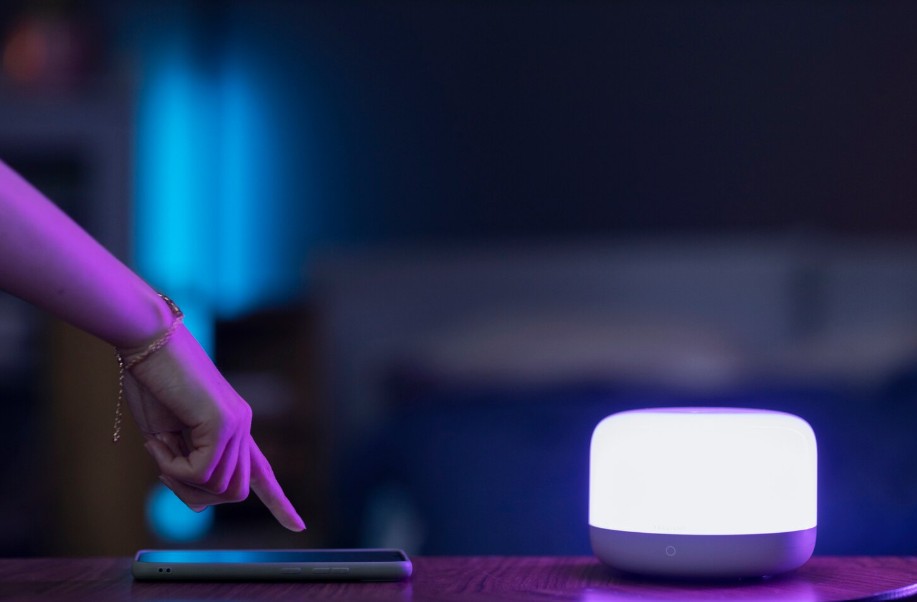
Xiaomi operates under a self-imposed cap of 5% net profit on hardware. This is not a cost problem. It is a deliberate strategy to lower the barrier to ecosystem entry. Real margins come through software subscriptions, advertising, content services, and data analytics.
Full-year 2025 internet services revenue reached a record RMB 37.4 billion. That is up 9.7% year-on-year (Xiaomi Annual Report, March 2026). In Q3 2025 alone, internet services generated RMB 9.4 billion, up 10.8% year-on-year. GetApps, its official app store, is available in over 100 markets with 260 million monthly active users. It has achieved 90% annual revenue growth in gaming alone. The platform layer, not the hardware, is where Xiaomi earns.
Xiaomi’s ecosystem retention is organic, not coercive. Users who connect five or more Xiaomi devices to the AIoT platform show deep, sustained engagement. Cross-device AI personalisation becomes genuinely useful at that density. Leaving feels inconvenient rather than impossible.
The EV business reinforces this further. The SU7 and YU7 integrate directly with a user’s existing HyperOS devices. This creates natural continuity between the car and the home.
Tracking Xiaomi news is one of the clearest ways to understand what China’s tech sector is building at a structural level.
Xiaomi is not an outlier. It is a pattern:
Even China’s B2B platforms follow this model, building interconnected service layers rather than standalone transaction tools. The consistent theme across China’s most successful technology companies is a refusal to build isolated products.
China’s competitive advantage is integration speed. Its regulatory environment, manufacturing scale, and domestic market size let companies move from concept to deployed platform faster than almost anywhere else.
Most Western tech companies add AI as a feature layer on top of existing products. Xiaomi, alongside peers like Huawei, is building AI into the hardware architecture itself. The Xring O1 chip is designed from the ground up for AI processing efficiency.
HyperAI, developed in partnership with Google Gemini, delivers system-level intelligence that works consistently across devices. The MiMo-V2-Flash model is open-source, lightweight, and optimised for on-device inference. AI runs locally, with clear benefits for speed, privacy, and offline functionality. It is not a cloud subscription. It is part of the device.
Xiaomi’s “Robo-Realm” factory in China covers 81,000 square metres. It operates 24 hours a day, seven days a week, with no humans on the production floor. One smartphone rolls off the line every second. This is powered by the Hyper Intelligent Manufacturing Platform (HyperIMP), an AI-driven system that monitors operations and corrects defects autonomously.
Xiaomi has committed to investing 200 billion yuan in R&D over the next five years. This positions it not just as a consumer electronics brand, but as a vertically integrated technology group.
Individual products commoditise quickly. Ecosystems compound. Xiaomi’s strategy shows that price, integration depth, and platform cohesion can build a durable competitive moat. No premium brand status required. By the time users have five connected Xiaomi devices, switching costs are built around habit, not loyalty.
HyperOS is more than an operating system. It is why a customer chooses a Xiaomi TV over a generic Android TV, and considers a Xiaomi EV when upgrading. Any company that lets a third party own the user experience is renting its customer relationships. Xiaomi’s investment in HyperOS is a long-term claim on daily life.
The “Great Convergence” of chip, OS, and AI in a single device is a model for vertical integration across industries. China is executing this strategy at speed and scale. Companies that study this approach are better positioned to anticipate where their own sectors are heading.
Understanding what Xiaomi is building is easier when you have seen it firsthand. ChoZan helps global business leaders get closer to the companies reshaping China’s technology landscape.
Xiaomi’s evolution from a budget smartphone brand into a full-stack AI ecosystem company is one of the clearest examples of what China’s technology sector is building at scale. The latest Xiaomi news tells a consistent story. From the “Human × Car × Home” showcase at MWC 2026 to the “Great Convergence” of proprietary chip, OS, and AI model, this is a company that has moved beyond products entirely. It is building the infrastructure of daily life.
For global business leaders, the question is no longer whether Xiaomi’s strategy is impressive. The more useful question is what your organisation can take from it, and how quickly you are willing to move.
It is Xiaomi’s strategic framework connecting personal devices, electric vehicles, and smart homes into one AI-powered experience. All products function as nodes in a single environment managed through HyperOS.
HyperOS is Xiaomi’s proprietary OS based on Android 16. It unifies phones, tablets, TVs, wearables, and EVs under one software layer, enabling cross-device AI integration.
Hardware net profit is capped at 5% by design. Real revenue comes from software, advertising, content, and data services. In full-year 2025, Xiaomi’s internet services revenue reached a record RMB 37.4 billion, up 9.7% year-on-year, with a gross profit margin of 76.5%.
Total adjusted net profit for 2025 reached RMB 39.2 billion, up 44% year-on-year, on record total revenue of RMB 457.3 billion.
No. Xiaomi operates in over 100 countries and holds a top-three global smartphone ranking. It has a growing presence in Europe, Southeast Asia, and Latin America.
ChoZan offers China Innovation Tours, tech trend research, and expert consulting. These services help global leaders apply lessons from China’s ecosystem-first companies. Explore ChoZan’s services.