CONTENT

SAIC Motor matters in 2026 because it shows how a large Chinese automaker can rebuild around electric-vehicle scale, export reach, and intelligent-vehicle platforms. The group has moved from a joint-venture-led model toward a broader portfolio led by MG, IM Motors, Wuling, Roewe, and SAIC Maxus. Its challenge now sits in execution. Each brand needs a clear role because China’s EV market remains intense, crowded, and price sensitive.
In 2025, SAIC Motor sold 4.507 million vehicles, up 12.3 percent. New energy vehicle sales reached 1.643 million units, up 33.1 percent. Overseas sales reached 1.071 million units. The company reported 2.928 million in sales from its self-owned brands, accounting for 65 percent of total sales.
SAIC Motor Corporation is important because it combines a deep manufacturing heritage with a rapidly evolving electric portfolio. Many Chinese EV players are built around a single brand or price band. SAIC Group has a broader task. It must defend mass-market volume, push intelligent premium vehicles, and scale exports simultaneously.
That structure makes SAIC cars strategically different from many new EV entrants. Wuling gives the group access to affordable mobility. MG gives it a recognizable export brand. IM Motors gives it a premium smart EV platform. Roewe supports domestic demand for hybrid and family cars. Maxus gives the group relevance in commercial and multi-purpose vehicles.
The latest data shows why this portfolio matters. In the first quarter of 2026, SAIC Motor reported 973,000 wholesale sales and 1.008 million retail sales. Self-owned brands sold 657,000 vehicles, equal to 67.6 percent of company sales. Overseas sales reached 325,000 units, up 48.3 percent. NEV sales reached 270,000 units.
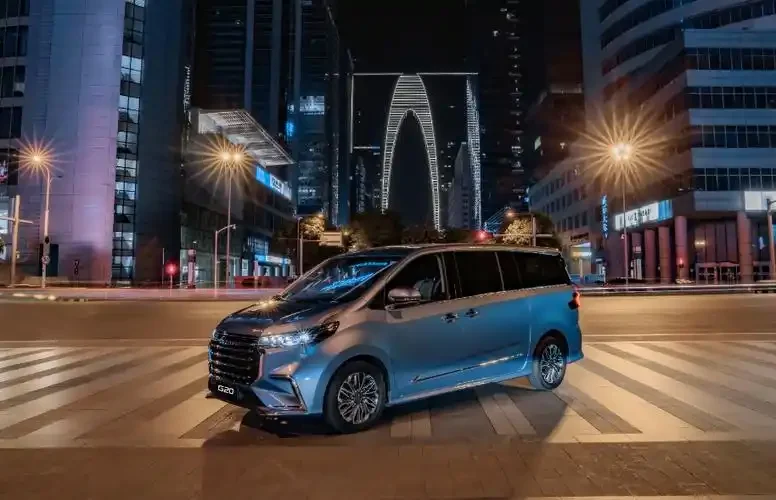
The SAIC EV strategy begins with volume discipline across several brands. In April 2026, the group reported 1.302 million vehicles sold year-to-date. NEV sales reached 412,301 units. Exported vehicles and overseas base sales reached 459,200 units. That export figure grew by 50.22 percent compared with the same period in 2025.
This matters because China’s domestic EV race has become structurally difficult. Reuters reported in 2025 that Chinese officials had moved to curb price wars in sectors including EVs and solar. The same report described industry oversupply as a pressure point for automakers. For SAIC Motors, global growth gives management a pressure valve beyond domestic sales.
The lesson is clear for global executives watching China. Chinese EV competition now rewards companies that integrate battery supply, software, dealer networks, after-sales capacity, and overseas localization into a single operating system.
MG SAIC Motor is the clearest example of how a Chinese automaker can use a familiar global badge to reduce market-entry friction. In Europe, MG gives SAIC Motor a stronger starting point than a newly created Chinese brand. Buyers still compare price and range, yet brand recognition lowers the barrier to consideration.
That advantage showed up in 2025. SAIC Motor reported that MG sold more than 300,000 units in Europe, up nearly 30 percent. The company said cumulative European MG sales were close to one million units. Europe became the group’s largest overseas regional market. Overseas products and services are covered in more than 170 countries and regions.
The next stage for MG centers on product renewal. At Auto China 2026, SAIC Motor presented the 2026 MG4 as a battery electric smart hatchback with OPPO cockpit upgrades and intelligent driving assistance in the 80,000 yuan segment. This signals a sharper move toward affordable intelligent electric vehicles.
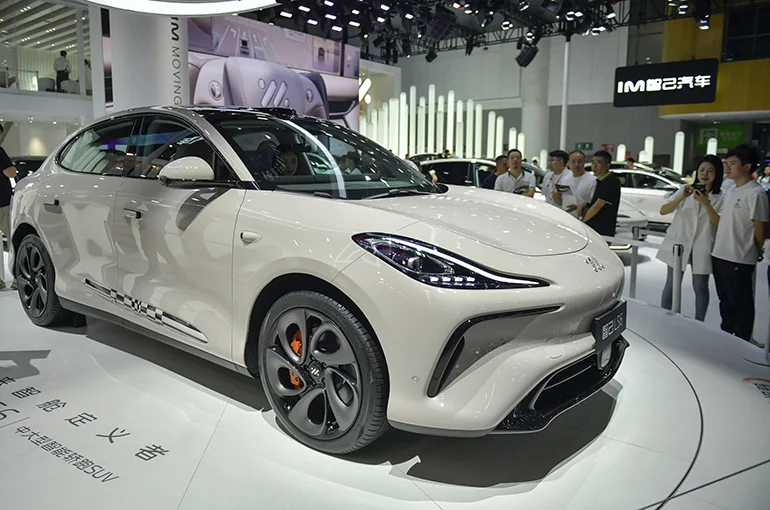
IM Motors gives SAIC Group a role in China’s premium intelligent EV segment. In this segment, cockpit intelligence, driving assistance, digital chassis control, and range confidence shape buyer perception.
The SAIC IM LS6 has become an important symbol of that effort. SAIC Motor said the new generation IM LS6 uses the IM Digital Chassis with a third-generation central integrated electronic and electrical architecture. It highlighted a 4.79-meter turning radius, which helps the model combine large car space with compact car agility.
The broader momentum in IM Motors became clearer in 2026. Official April 2026 sales data showed IM Automotive Technology sold 23,867 vehicles in the first four months, up 130.35 percent against the same period in 2025. April sales reached 10,016 units, up 201.14 percent.
This is strategically important because IM Motors can carry technologies that later support other SAIC cars. Premium smart EVs often serve as test beds for steering systems, digital chassis, cockpit design, and assisted-driving models.
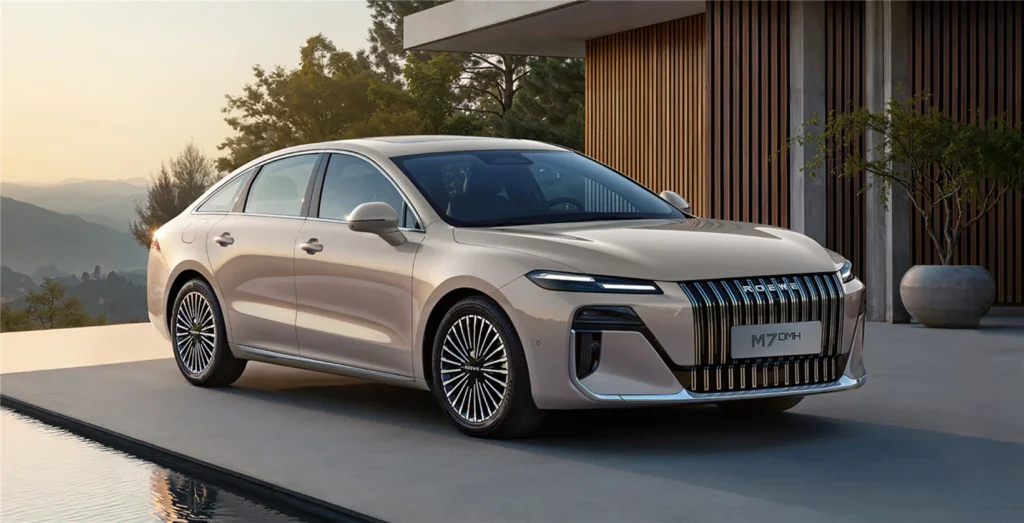
SAIC GM Wuling remains essential because China’s EV transformation still needs affordability. Premium EVs attract attention, yet mass adoption depends on practical models that fit daily budgets, family needs, and use in dense cities.
In 2025, SAIC GM Wuling sold 1.615 million vehicles, up 20.52 percent, according to SAIC Motor sales data. In the first quarter of 2026, SAIC GM Wuling sold 328,000 units. The group described Wuling as a steady contributor to the performance of its self-owned brand.
At Auto China 2026, Wuling moved further into family-sized NEV territory. The Wuling Starlight L debuted as a long-range six-seat SUV. The Huajing S appeared as a flagship six-seat SUV equipped with Huawei Qiankun intelligent driving technology. This tells us Wuling is building a broader family mobility platform inside SAIC Motor.
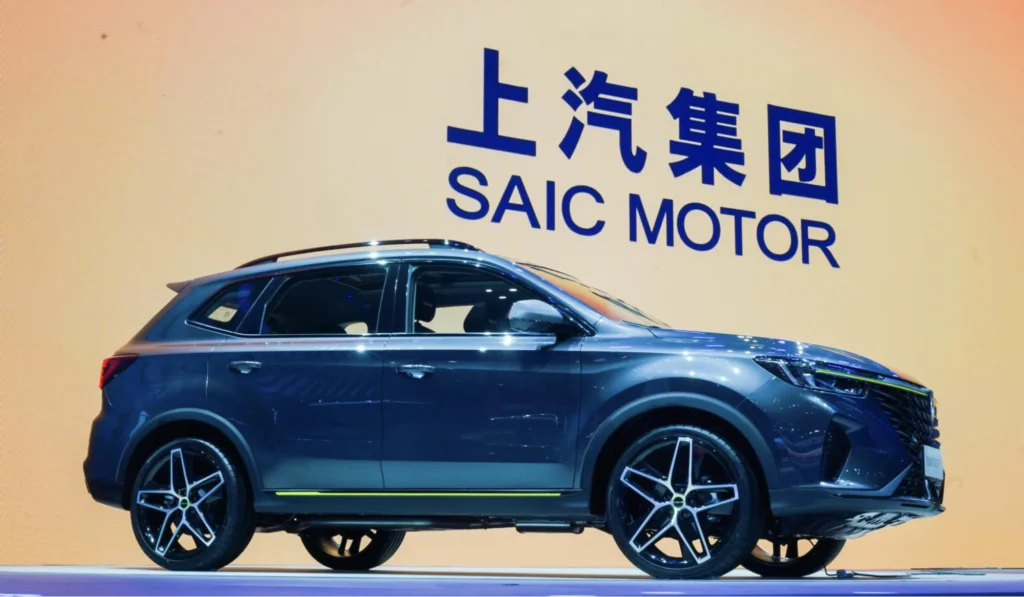
SAIC Maxus gives SAIC Motor a commercial vehicle route into electrification. This matters because fleet buyers evaluate cost of ownership, uptime, payload, after-sales service, and regulation exposure more than consumer styling.
The 2025 sales base looked solid. SAIC Maxus sold 222,286 vehicles in 2025, up 25.14 percent. In April 2026, SAIC Maxus sold 23,860 vehicles, up 34.79 percent. Its year-to-date sales reached 83,157 units, up 19.48 percent.
The commercial EV story appeared again at Auto China 2026. SAIC Motor showcased the SAIC Maxus eDeliver super-range extended van. The company described it as the industry’s first large light commercial vehicle with super range extender technology. For global fleet operators, this points to a practical route between pure electric vans and range-sensitive logistics use cases.
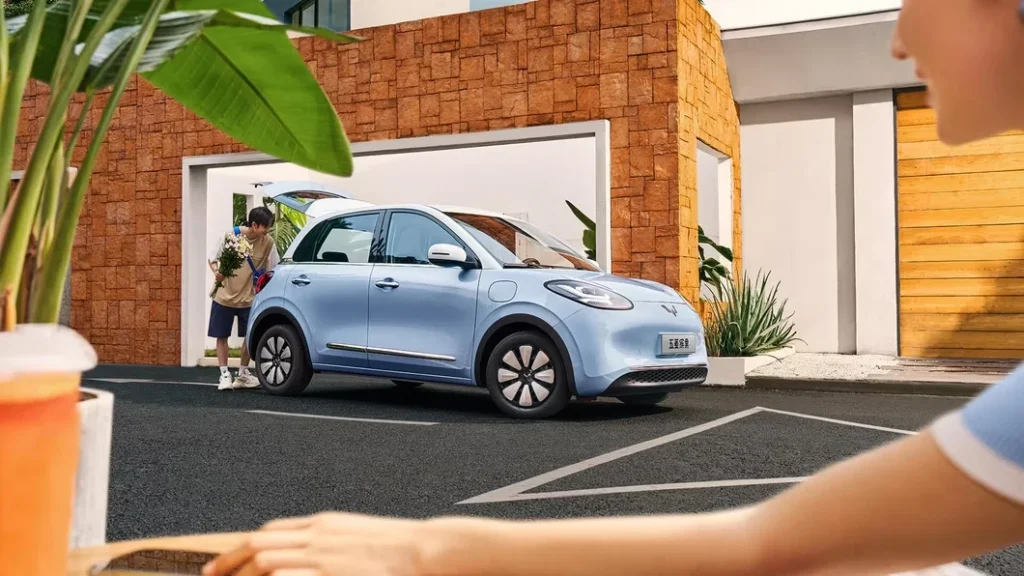
The next stage of SAIC Motor’s strategy depends as much on partnerships as on internal scale. In January 2025, Reuters reported that SAIC Motor deepened cooperation with CATL in battery after-market parts, components, and overseas business. CATL would support SAIC’s overseas push through after-sales networks and supply from nearby overseas production bases.
In February 2025, Reuters reported that SAIC Motor and Huawei agreed to develop globally competitive smart electric vehicles. The cooperation covers manufacturing, supply chain management, and sales services. That partnership later became visible through Huawei-related intelligent vehicle technologies shown across SAIC launches.
Battery technology is another signal. SAIC Motor said the MG4 semi-solid AnXin version was a mass production semi-solid battery model. The company listed solid-state batteries, digital chassis, DMH super hybrids, super range extenders, and end-to-end intelligent driving models among its intelligent electric technologies in 2025.
SAIC Motor now reflects a wider shift in China’s auto industry. The winning formula is moving toward portfolio clarity, technology partnerships, export resilience, and disciplined localization. Scale still matters. Without software, battery access, and brand focus, scale can become a burden.
The group’s strongest advantage is its brand architecture.
Together, these brands give SAIC Group several paths through the China EV price war.
The risk is complexity. Too many brands can dilute investment, confuse buyers, and slow decision cycles. This is why the next phase will test management discipline. SAIC Motor Corporation must keep each brand clear, each technology reusable, and each export market locally grounded.
For global leaders, SAIC Motor deserves attention because it signals that China’s EV sector is entering a more mature phase. The story now centers on platform reuse, intelligent vehicle ecosystems, battery partnerships, and overseas operating depth.
SAIC Motor shows how China’s auto sector is scaling through electric vehicles, smart mobility, battery partnerships, global brands, and overseas market building. For global leaders, the real value lies in understanding the system behind that growth.
ChoZan helps executive teams learn from China through curated innovation tours, China learning expeditions, market research, expert briefings, and strategy consulting. Its programs give leaders direct exposure to China’s technology ecosystem, including green tech, new energy vehicles, smart manufacturing, AI, and industrial transformation.
For teams tracking China’s EV race, ChoZan offers a practical way to move past surface-level headlines. Through field visits, expert dialogue, and structured briefings, ChoZan helps leaders translate China’s fast-moving mobility landscape into clearer strategic decisions.
Book a consultation with ChoZan to explore how China’s EV and mobility ecosystem can inform your next strategy conversation.
SAIC Motor stands for SAIC Motor Corporation Limited, the listed Shanghai automaker behind several Chinese vehicle brands. Searchers usually use SAIC Motor when looking for its corporate profile, stock code, sales data, and brand portfolio.
Yes, MG is owned by SAIC Motor. For buyers, this means modern MG cars come from a Chinese automotive group, even though the MG name still carries British brand heritage in many markets.
SAIC Motor is the parent-listed automaker, while SAIC-GM-Wuling is a major joint venture focused on affordable cars and NEVs. Searchers often confuse the two because Wuling products appear inside SAIC’s wider sales structure.
SAIC cars have limited direct presence in the United States. Most global buyers encounter SAIC cars through MG, Maxus, or regional joint ventures in Europe, Asia, Australia, Latin America, and selected emerging markets.
The MG iSMART app connects eligible SAIC EV models with remote vehicle functions. Depending on the model, drivers can check vehicle status, locate the car, manage comfort settings, and access connected features from a smartphone.
MG electric cars can perform strongly in safety testing, but results vary by model. The MG4 EV Urban received a five-star Euro NCAP rating in 2025, which supports buyer confidence in selected MG SAIC Motor models.
Buyers should check the battery, motor, electronics, and the vehicle’s general warranty terms before choosing an SAIC EV. MG Ireland lists 84 months or 150,000 km coverage for key new energy vehicle components.
No, Roewe and MG are separate brands inside the SAIC Group. Roewe focuses more on China’s domestic market, while MG has become SAIC’s more visible international passenger car brand.
Fleets should assess SAIC Maxus vans based on payload capacity, charging needs, service access, parts support, and after-sales coverage. Maxus highlights electric and diesel options, plus dedicated fleet and aftersales contact routes in the UK.
SAIC Motors matters because the group connects consumer EVs, commercial vehicles, connected apps, premium intelligent models, and global sales channels. That mix makes it useful for tracking China’s next phase of automotive competition.