CONTENT
Li Auto entered China’s new‑energy vehicle market in 2019 and quickly distinguished itself with extended‑range electric vehicles (EREVs) designed for families. In April 2026, the company had delivered more than 34,085 vehicles and established a network of over 511 retail stores in 160 cities, plus 4,077 supercharging stations with 22,509 stalls in China.
Unlike battery‑only rivals, Li Auto builds vehicles around a petrol‑powered range‑extender that charges an onboard battery. This arrangement blends long‑distance capability with zero‑emission city driving. The company is now expanding globally, opening overseas stores in Central Asia and planning moves into Europe and Asia‑Pacific.
In a turbulent EV market where price wars and oversupply have crushed margins, Li Auto Cars continues to refine its family‑oriented product line and invest in proprietary technology.
Li Auto’s story now hinges on one question: can range extenders remain a strength as China’s EV market accelerates toward pure-electric platforms?
Li Auto’s core idea is simple. Many families want to drive electric in the city, but they still worry about long trips, holiday travel, charging queues, and uneven charging access outside major urban centers. Extended-range electric vehicles resolve that tension by using electric motors for propulsion, while a petrol engine serves as a generator when needed.
This gives Li Auto a clear product answer. Its vehicles can cover daily commutes on battery power while still supporting longer intercity travel without the same charging dependence as many battery-electric vehicles. For large SUVs, that matters even more because families expect space, comfort, luggage capacity, and predictable range.
In China, this is not just a technical choice. It is a consumer behavior strategy. Families often buy large SUVs for children, elderly parents, weekend trips, and peak season travel. A pure-electric SUV can work well in cities with reliable charging infrastructure, but range anxiety still influences purchase decisions in lower-tier cities and for long-distance trips.
That is why Li Auto’s EREV strategy has remained resilient. The company does not sell electrification as an abstract technology promise. It sells a practical family use case: city electric driving during the week and long-range flexibility when journeys become less predictable.
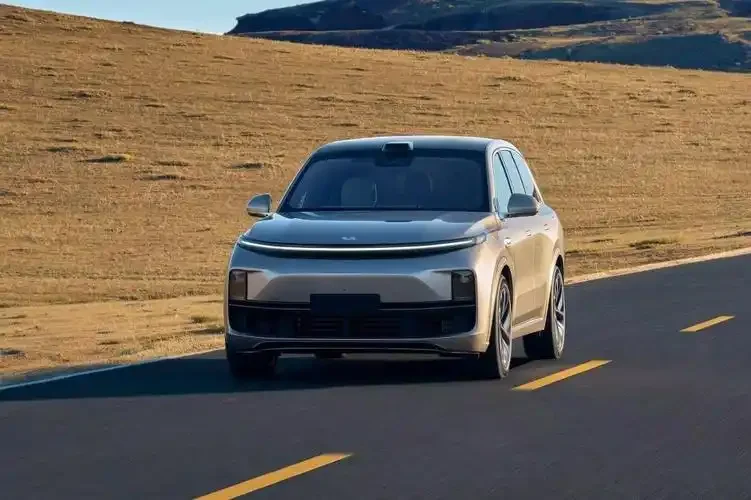
The Li L7 targets buyers who want L Series comfort without needing a third row. It gives Li Auto a strong option for urban families, couples, and premium SUV buyers who prioritize space, range, and intelligent driving hardware.
Key specs include:
The Li L7 strengthens Li Auto’s position in the premium family SUV segment. It gives buyers long range and cabin comfort without forcing them into a larger six-seat model.
The Li L6 gives Li Auto a lower entry point to its extended-range SUV lineup. It matters because China’s EV buyers have become more price sensitive, while family users still expect range, comfort, and smart technology.
Key specs include:
The Li L6 brings the core Li Auto formula to a wider buyer base. It gives families electric city driving, long-distance flexibility, and premium cabin features without the higher price of the larger L8 or L9.
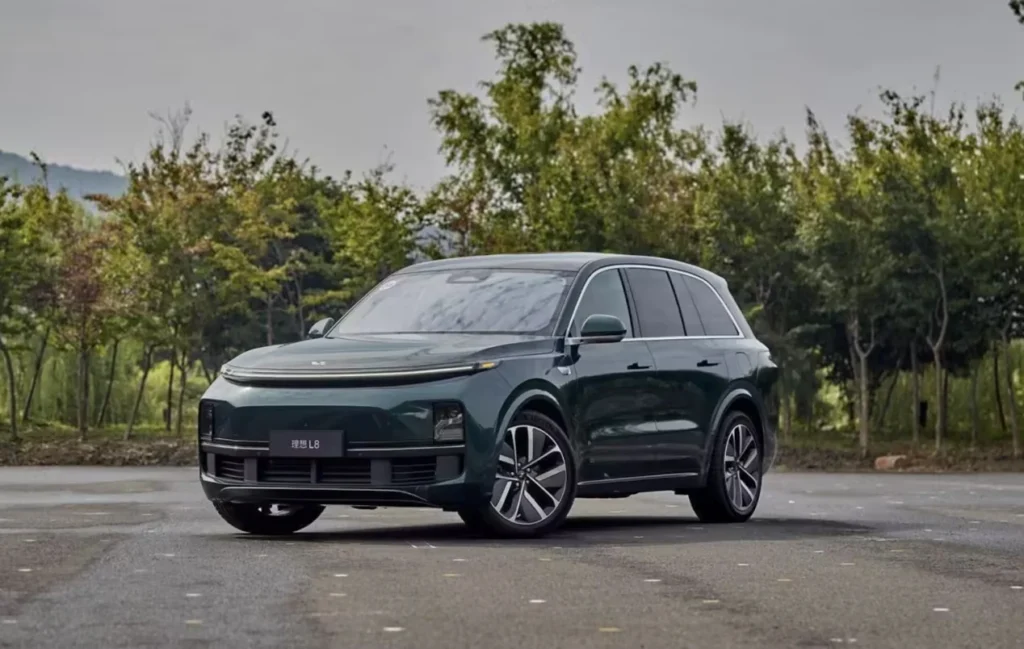
The Li L8 sits between the Li L7 and Li L9, which makes it one of the most important models in the lineup. It targets families that need three rows, premium comfort, and long range without moving into the flagship price band.
Key specs include:
The Li L9 remains the flagship of the L Series. It carries Li Auto’s strongest family SUV identity, while the latest version adds a stronger technological story through upgrades to computing, perception, suspension, and chassis.
Key specs include:
The L Series remains Li Auto’s clearest business advantage because it matches a real family use case. These SUVs give buyers electric driving for daily travel, long-range confidence for road trips, and enough cabin comfort to justify premium pricing.
This is also why the L Series matters strategically in 2026. Li Auto’s BEV products still need time to prove themselves, but the L Series already has a clear audience, a clear use case, and a clear reason to exist in China’s crowded EV market.
Li Auto cannot rely on range extenders forever. China’s EV market continues to move toward pure electric platforms, faster charging, larger batteries, and more intelligent digital cabins. That is why the company has expanded into battery-electric vehicles with the Mega, i6, and i8.
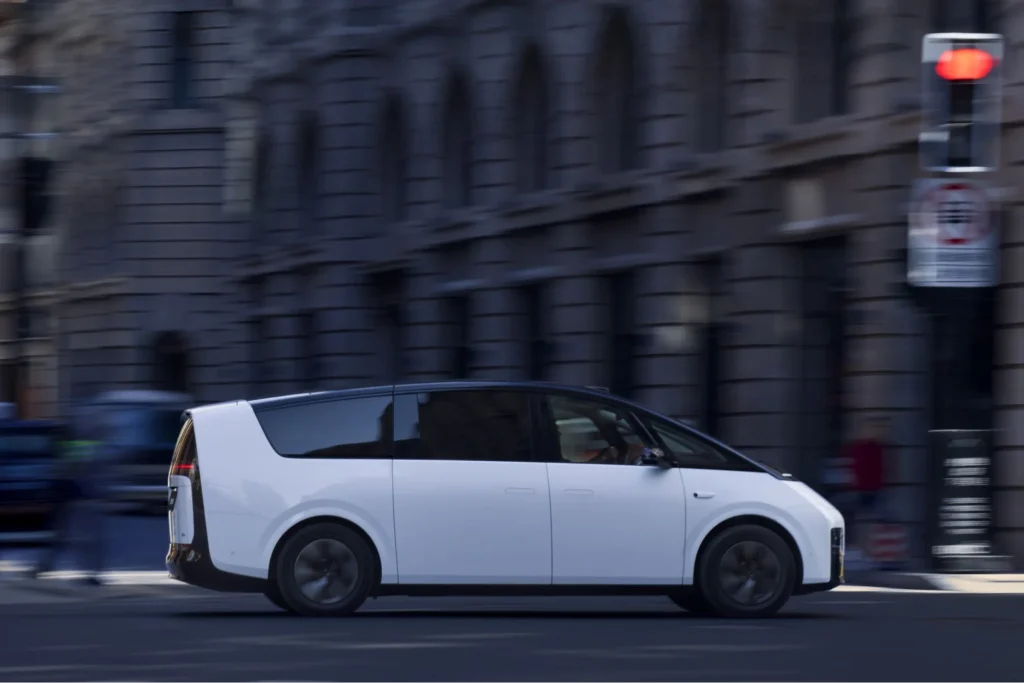
The Li Mega gave Li Auto a high-end electric MPV, but it also exposed the brand to tougher competition. MPVs are harder to scale than SUVs, and premium BEV buyers judge safety, design, charging speed, and brand trust very closely. The 2025 recall of 11,411 Mega 2024 vehicles over concerns about coolant corrosion resistance added pressure to that trust equation.
The Li i8 became a more important test because it sits closer to Li Auto’s family SUV identity. Yet its launch also highlighted the difficulty of entering the pure-electric market. Li Auto simplified the i8 lineup one week after launch, moving to a single version priced at RMB339,800 following customer complaints about the complex variants.
This was not just a pricing adjustment. It revealed a deeper challenge. Li Auto understands family SUV buyers in the EREV segment, but BEV buyers compare models more aggressively across range, charging speed, software, autonomous driving hardware, and price. In that field, Li Auto faces stronger direct pressure from brands such as XPeng, NIO, Zeekr, Xiaomi, and BYD.
China’s EV market entered 2026 under heavy pressure. More than seventy models launched discounts after New Year’s Day, with BYD, Aito, Xiaomi, and Tesla cutting prices. Some entry-level EVs fell below 100,000 yuan, pushing the market into a deeper price war.
The demand shock was clear. In the first 11 days of January 2026, new energy passenger vehicle sales fell 38 percent year on year and 67 percent month on month. NEV penetration also dropped from nearly 60 percent at the end of 2025 to 35.5 percent.
Li Auto felt this pressure directly. The company reportedly reviewed underperforming retail stores, including high-rent mall locations, after rapid network expansion became harder to justify. Its 2025 deliveries fell 18.8 percent to 406,343 units, while revenue dropped 22.3 percent to 112.3 billion yuan. Net income also fell sharply to 1.1 billion yuan.
The deeper issue is margin pressure. Average deliveries per store fell to 741 vehicles, and mall outlet conversion rates dropped below 5 percent. At the same time, rivals gained momentum. XPeng orders rose 95 percent, NIO orders climbed 60 percent, while Li Auto orders fell 18 percent.
For Li Auto Cars, this market reset makes product clarity more important. The brand can no longer rely on network expansion or category growth alone. Its next phase depends on refreshed EREV SUVs, stronger retail efficiency, and a clearer reason for families to choose Li Auto over BYD, NIO, XPeng, or Xiaomi.
Li Auto competes in a market where each major EV brand has a clear lane. BYD leads in scale, battery integration, and aggressive pricing across mass-market and premium segments. NIO focuses on premium positioning, battery swapping, and brand experience. XPeng leans on assisted driving software, competitive pricing, and faster product cycles.
Li Auto has a different center of gravity. It targets families who want large SUVs, long range, and a more practical ownership experience. Its range-extender strategy gives buyers daily electric driving without the same charging dependence as many BEVs.
The company also supports this shift with its 5C charging network, which includes over 4,000 stations and 1,000 highway locations. This infrastructure matters as Li Auto expands both EREV and BEV models.
The challenge is execution. Li Auto must refresh its models more quickly, protect its margins, and sharpen its family SUV positioning. In China’s price war, scale alone will not be enough. The brand needs clear product reasons for buyers to choose it over BYD, NIO, and XPeng.
Li Auto Cars now depends on three priorities: stronger EREV SUVs, faster model upgrades, and better retail efficiency. The refreshed Li Auto L9 and lower-priced Li Auto L6 give the brand its clearest path back to growth.
The i Series adds BEV coverage, but it has not replaced the L Series as Li Auto’s core business. Li Auto still performs best when it serves family buyers who want long range, space, comfort, and lower charging stress.
Overseas expansion can reduce pressure from China’s crowded EV market. Yet Li Auto will need local trust, after-sales support, and clear positioning before Central Asia, Europe, the Middle East, or the Asia Pacific become meaningful growth engines.
The main risk is competition. BYD, NIO, XPeng, and Xiaomi are moving fast. Li Auto must protect its family SUV advantage while improving sales momentum and cost control.
Li Auto’s range extender strategy shows why China’s EV market cannot be understood through sales numbers alone. The real lesson lies in consumer behavior, infrastructure gaps, family mobility needs, software competition, and the speed of product execution.
ChoZan helps global leaders decode these shifts through China innovation tours, executive briefings, research, and expert-led learning programs. From EVs and AI to retail, robotics, and digital ecosystems, ChoZan connects market signals with practical business meaning.
If your team wants to understand how Chinese companies drive technology adoption in the real world, ChoZan can help you see the ecosystem up close and translate those insights into strategy.
Book a consultation with ChoZan to explore China’s innovation landscape with sharper context, stronger access, and clearer strategic direction.
An EREV is an electric vehicle that uses a small petrol engine to recharge its battery when it is depleted. Li Auto’s EREVs, such as the Li L6 and Li L7, deliver pure‑electric driving for daily commutes while offering a long combined range of more than 1,300 km.
Li Auto has built a 5C supercharging network with around 3,000 stations across China, including 1,000 on major highways. This network supports ultra‑fast charging for both EREVs and BEVs, adding 500 km of range in 10 minutes on certain models.
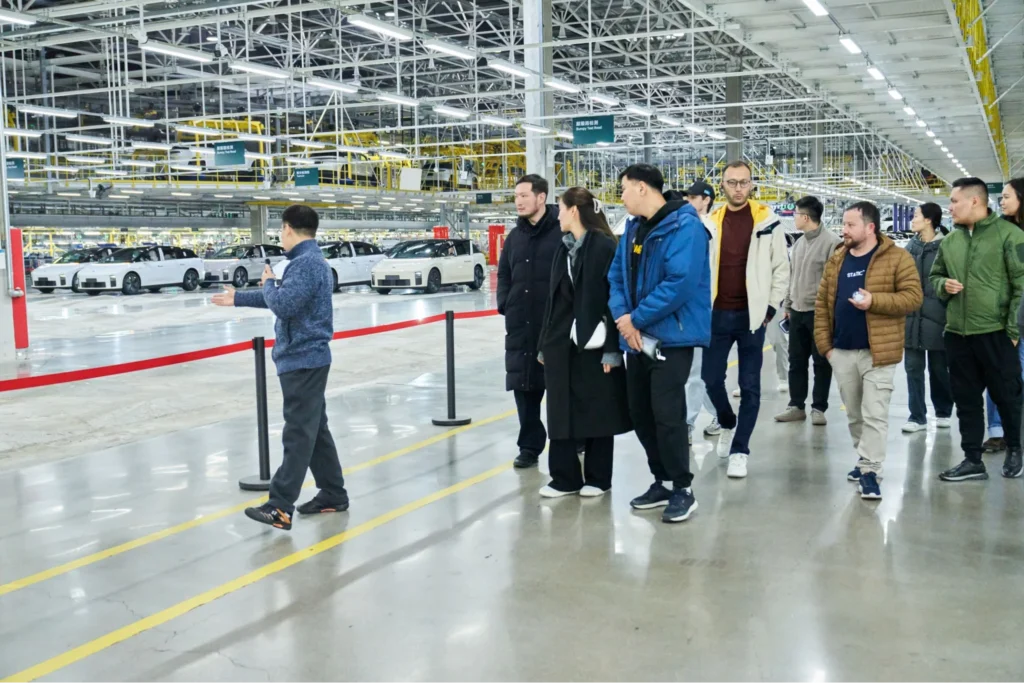
Li Auto cars are manufactured in China through the company’s smart manufacturing bases in Changzhou and Beijing. This supports tighter control over stamping, welding, painting, final assembly, quality testing, and logistics.
The Li Auto app supports remote vehicle functions, including mobile control for parking and narrow-space access on models such as the L9. This helps owners manage daily convenience features beyond basic locking and unlocking.
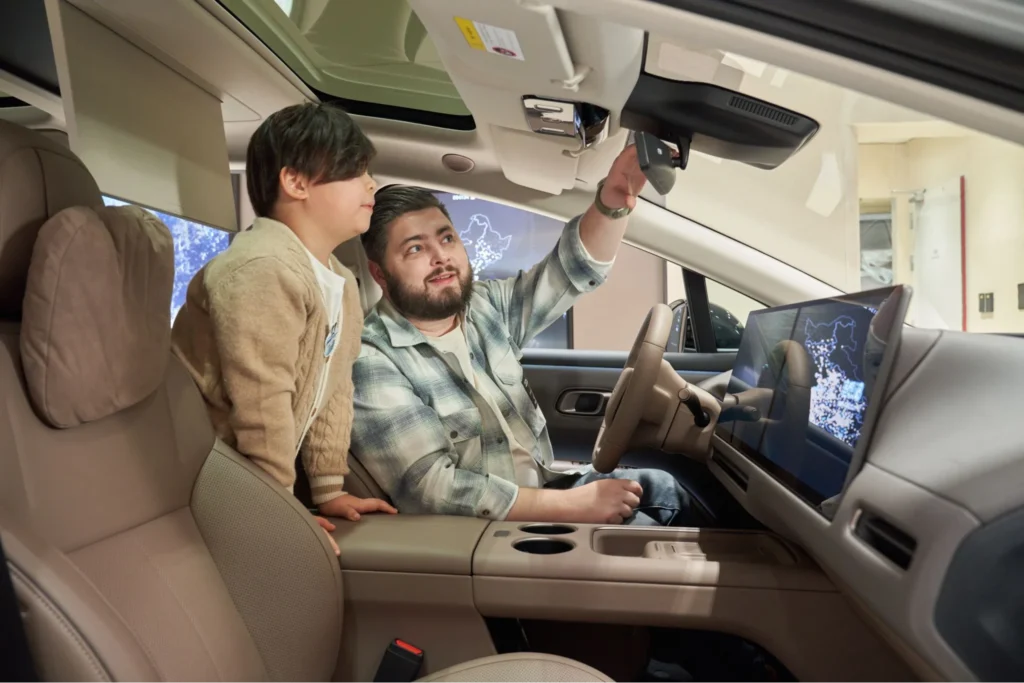
Li Auto Smart Space refers to the brand’s digital cabin experience, using screens, voice, gesture, and touch controls. It matters for family buyers because passengers can manage comfort, media, navigation, and trip functions more easily.
Yes. Li Auto supports OTA updates, and authorized overseas retail channels may also provide OTA support for eligible vehicles. That makes software updates part of ownership, not just a post-purchase technical detail.
Yes, but buyers should use authorized channels. Li Auto’s support page lists an official retail and service center in Armenia, while reports on Central Asia expansion mention official warranties, inspections, repairs, spare parts, and technical support.
Yes, Li Auto has market-specific official or distributor sites in selected markets, including the Philippines, where L6, L7, L9, and Mega pages appear. Buyers should verify authorization, warranty coverage, and servicing before purchase.
Li Auto’s international product pages present pilot assistance as part of its technology package, but feature availability can vary by market, model, and software version. Buyers should check the exact trim before comparing Li Auto models.
Yes. Li Auto trades on Nasdaq under the symbol LI and on the Hong Kong Stock Exchange under the symbol 2015. This matters for readers tracking the company’s financial performance, not only its vehicle launches.
Compare Li Auto reviews by separating cabin comfort, charging access, assisted driving behavior, service coverage, and long-distance use. This gives a clearer view than relying only on headline range numbers or launch prices.