
CONTENT

China’s surgical robotics sector entered a more demanding phase. Product approvals still matter, but the harder tests now concern hospital use, service capacity, payment, clinical training, and overseas expansion. The Toumai Surgical Robot, developed by Shanghai MicroPort MedBot, has become one of the clearest examples of this shift.
Toumai moved beyond a domestic localization story during this period. The platform gained new regulatory approvals, expanded its installation base, and pushed remote surgery toward commercial use.
These developments place the company inside a larger Chinese effort to turn advanced medical equipment into scalable clinical infrastructure. The strategic question now concerns repeat use, operating economics, and trust across health systems.
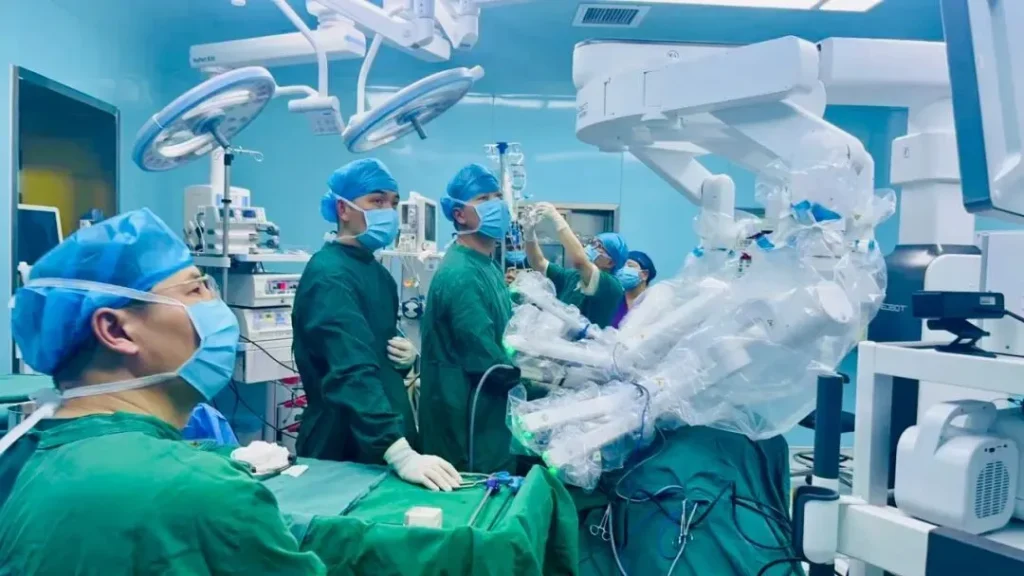
Toumai is a multi-arm laparoscopic surgical robot designed for minimally invasive surgery. It combines high-definition three-dimensional visualization with flexible robotic instruments and integrated remote surgery capability.
Its current clinical scope covers urology, general surgery, gynecology, and thoracic surgery. The remote platform can operate across 5G, broadband, dedicated fiber, and satellite networks.
This architecture gives the MicroPort MedBot Toumai platform a broader strategic role than that of a single operating room device. The system connects surgical hardware, communications infrastructure, clinical workflows, and specialist expertise. That combination fits China’s push to link advanced equipment with digital health systems and regional medical capacity.
The product family expanded in 2025. Toumai SP received NMPA market approval for urology, general surgery, and gynecology. Its single-port design can place three flexible instruments and an endoscope through a 2.5-centimeter umbilical incision.
The MedBot surgical portfolio now covers multi-arm and single-port approaches. Hospitals can assess each format against their specialty mix, operating room space, surgeon experience, and expected case volume.
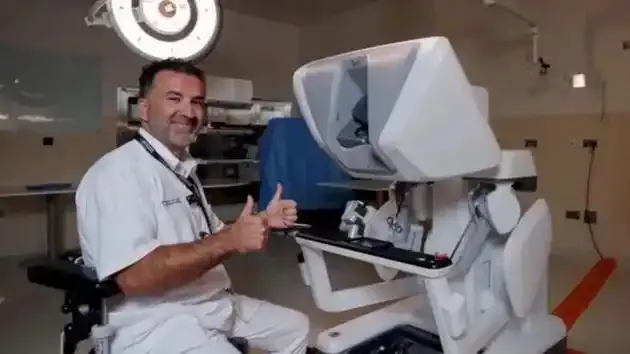
Commercial execution became more visible in 2025. MicroPort’s surgical robot business recorded US$77.6 million in revenue, an increase of 114.2 percent year on year. Toumai signed more than 100 new overseas orders and added 80 commercial installations during the year. The business also reported stronger revenue from supporting consumables as the installed base grew.
The pace continued into 2026. A June company filing reported more than 300 commercial Toumai orders worldwide and the 200th commercial installation at HM Hospitales in Spain. All 200 installations had received customer acceptance reports.
The filing also stated that Toumai had installations across more than 60 countries and regions. These figures were based on preliminary internal information, so later audited reporting may differ.
Acceptance reports carry more commercial weight than conference displays or evaluation placements. Each accepted site can support training, procedure growth, instrument demand, service revenue, and local clinical references.
The next measure of progress will be utilization depth. Procedure volume per site and repeat instrument consumption will reveal how quickly installations become durable operating businesses.
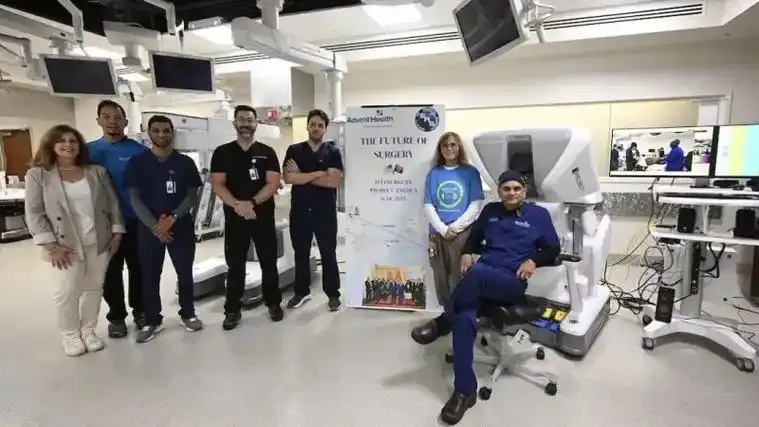
The adoption of robotic surgery is an organizational project. Hospitals need trained surgeons, credentialing processes, nursing education, case selection rules, instrument logistics, maintenance support, and operating room redesign. The technology may enter through one department and then expand once local teams establish reliable workflows.
The Gibraltar Health Authority offers a useful 2026 example. It launched robotic-assisted surgery at St Bernard’s Hospital with a structured training pathway. General surgery formed the first phase, with expansion planned across other specialties.
A later remote prostatectomy connected a surgeon in London with the patient in Gibraltar. The local clinical team remained present as part of the operating model.
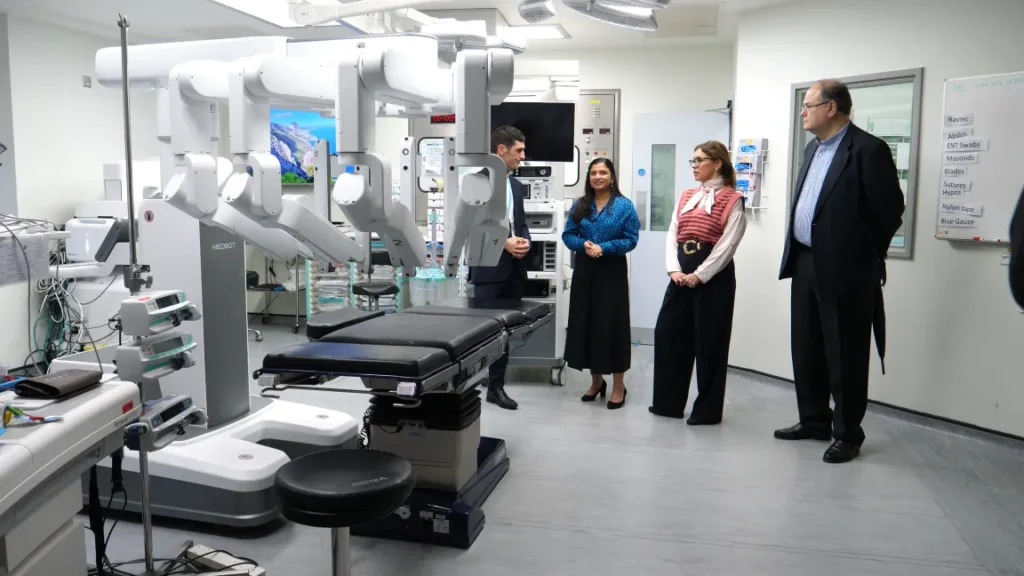
Cleveland Clinic Abu Dhabi has installed both single-port and multi-port systems, marking the first time a Chinese surgical robot has been deployed in a top-tier global medical institution.
The hospital’s clinical experts have rated the system highly for operational precision, system stability, clinical maturity, and the unique force feedback component that creates a differentiated competitive advantage.
China is building more similar network effects at a greater geographic scale.
Remote surgery became a formal commercial proposition in 2025. China’s NMPA approved the Toumai remote system for commercial clinical use. MicroPort described it as the first teleoperated surgical robotic system to receive such authorization. The approval moved remote operation from experimental cases toward a regulated product category.
In May 2025, the system enabled the first-ever intra-European telesurgeries, with procedures conducted between Orsi Academy in Belgium and AZORG Hospital. The bidirectional latency was only 20 milliseconds, achieving the responsiveness required for remote surgical precision. The procedures included a radical prostatectomy and a hysterectomy performed by a female surgeon, marking a first for telesurgery in Europe.
In July 2025, the Toumai Surgical Robot performed the world’s first intercontinental ultra-remote liver resection, with a surgeon in Strasbourg operating on a patient in Hangzhou, China—a distance of over 10,000 kilometers. The procedure was completed in 50 minutes with stable system performance. A separate transcontinental prostatectomy between Europe and Asia was completed in under two hours, with network latency peaking at just 106ms.
In June 2025, Dr. Vipul Patel performed a remote prostatectomy from Florida on a patient in Africa, a distance of 7,000 miles, using the Toumai Surgical Robot under an FDA-approved Investigational Device Exemption. This was the world’s first FDA-approved robotic telesurgery on a human subject. The system is currently the only robotic surgical platform with US FDA study approval for telesurgery.
These milestones are not publicity stunts. They demonstrate that the Toumai Surgical Robot can perform complex surgical procedures across continents with latency low enough to maintain safety and precision.
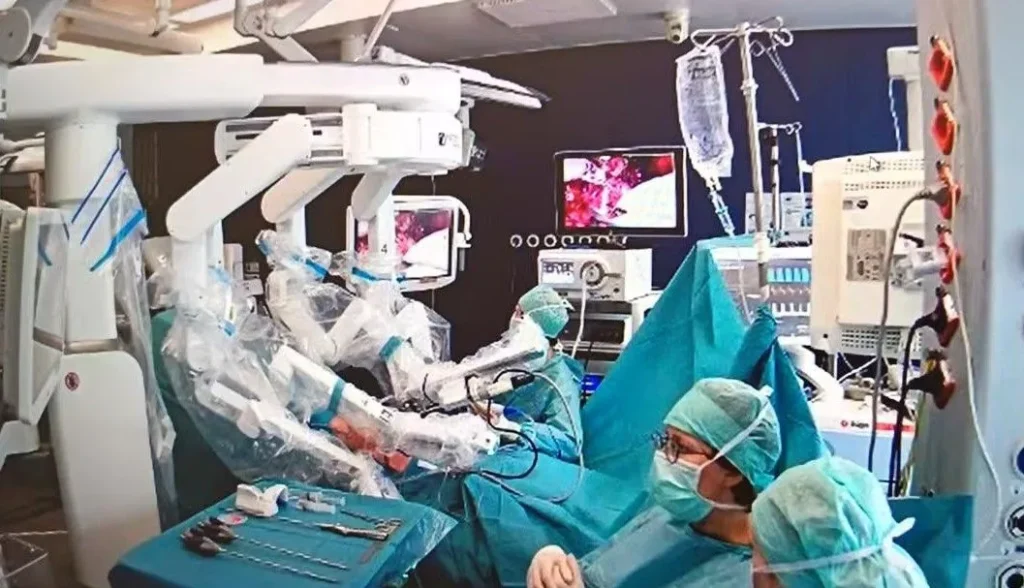
Intuitive Surgical ended 2025 with an installed base of 11,106 da Vinci systems. Toumai will have reached 200 accepted commercial installations by June 2026. The difference reflects the depth of Intuitive’s clinical evidence, surgeon familiarity, training network, instrument ecosystem, and service experience.
For a Chinese surgical robot, the immediate contest is not unit parity. The opportunity lies in building a credible alternative grounded in local engineering, regulatory responsiveness, remote surgery, service access, and alignment with regional health systems. The MedBot business must also prove dependable instrument supply, responsive maintenance, stable procedure outcomes, and attractive lifetime economics.
Global hospitals will compare approved indications, clinical evidence, training capacity, operating room fit, instrument availability, service response, cybersecurity, and total ownership cost. National origin may shape policy and procurement, but daily clinical reliability will shape long-term adoption.
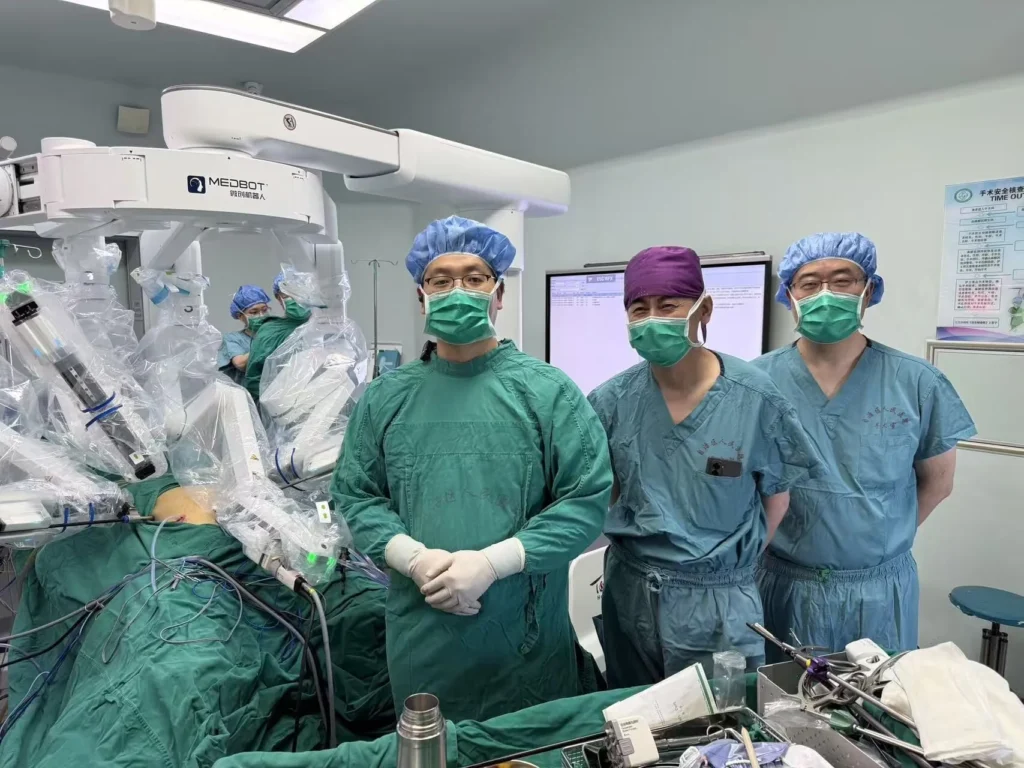
China’s surgical robot exports rose 368.1 percent in 2025, according to Xinhua data from the China Chamber of Commerce for Import and Export of Medicines and Health Products. This growth signals stronger overseas commercialization by Chinese medical equipment companies.
The Toumai Surgical Robot reflects this shift. MicroPort MedBot is integrating product development, regulatory approvals, clinical training, remote surgery, service support, and payment integration. Its next tests will be sustained procedural volumes, recurring demand for consumables, clinical evidence, and wider use across hospital networks.
Toumai’s progress in 2025 and 2026 shows that Chinese surgical robotics companies can enter international hospitals and secure regulatory acceptance. Long-term growth will depend on reliable performance, service quality, and consistent clinical use.
The Toumai Surgical Robot shows how China connects technology, regulation, hospital systems, and global commercialization. ChoZan helps teams interpret these shifts through China innovation research, expert briefings, consulting, and tailored learning expeditions.
Book a consultation to examine the companies, policies, and operating models that matter to your strategy.
The Toumai Surgical Robot has received FDA Investigational Device Exemption authorization for a human remote surgery study. That status supports clinical investigation. It does not equal FDA marketing clearance for routine commercial sale in the United States.
Yes. The Toumai Surgical Robot has received regulatory approvals in over 30 countries, including NMPA approval in China, CE certification in Europe, ANVISA in Brazil, TGA in Australia, and FDA-IDE approval for telesurgery trials in the US
No. Toumai is controlled by a trained surgeon through a console. The system translates the surgeon’s hand movements into instrument actions and provides three-dimensional visualization. Clinical teams remain responsible for the procedure and patient care.
Training time depends on the surgeon’s prior robotic experience, specialty, hospital credentialing rules, and the complexity of planned procedures. Hospitals should request a structured pathway that covers simulation, supervised cases, team training, and competency assessment.
Yes. Toumai Remote is designed to operate through dedicated fiber, broadband, 5G, and satellite networks. The chosen connection still needs technical validation, redundancy, cybersecurity controls, and clinical contingency plans before live remote procedures begin.
An NMPA approval permits a device to be marketed in China for specified indications and configurations. Hospitals must still complete procurement, training, credentialing, maintenance planning, and local clinical governance before routine use can begin.
Hospitals should examine instrument life limits, procedure-specific consumables, replacement schedules, sterilization requirements, service contracts, and expected annual case volume. A lower purchase price can still lead to higher lifetime costs if recurring expenses are misaligned.
Remote surgery programs need predefined responses for connection loss, latency changes, equipment faults, and clinical emergencies. A qualified team remains at the patient site, while technical redundancy and escalation rules should be tested before clinical deployment.
Hospitals should review evidence for the exact specialty, procedure, and approved indication they plan to use. Useful materials include peer-reviewed studies, procedure volumes, complication data, conversion rates, surgeon learning curves, and post-market performance records.
Government procurement contracts in China have shown prices ranging from RMB 9.5 million to 10.3 million per system. International pricing varies by market and configuration.