
CONTENT

China’s robotics race is increasingly a component race. Complete robots attract attention, but cost, reliability, precision, and production speed depend on the parts inside them. According to the National Bureau of Statistics, China produced 773,074 industrial robots in 2025, up 28 percent from the previous year. That scale gives suppliers more opportunities to test products, reduce costs, and move from prototypes into repeatable production.
This is why robot components now matter to business strategy. Actuators, servo motors, reducers, controllers, sensors, robot vision, grippers, and end effectors shape the economics of automation and embodied intelligence.
China’s advantage comes from how these capabilities connect within a dense manufacturing system. Buyers need to assess integration quality, reliability, software compatibility, service capacity, and exposure to material controls.

China identified embodied intelligence as one of the industries of the future in its 2025 Government Work Report. Shenzhen then introduced a 2025 to 2027 action plan targeting core robot components, AI chips, multimodal perception, high-precision motion control, and dexterous manipulation. Policy support is moving deeper into the hardware stack.
A larger market for complete robots creates demand for repeatable component platforms across industrial arms, collaborative robots, mobile robots, humanoids, and specialized machines.
Reuters reported in May 2025 that China could produce up to 90 percent of humanoid components. The same analysis cited an estimate that a mostly China-sourced humanoid bill of materials could fall from about $35,000 in 2025 to $17,000 by 2030.
These figures are projections, but they explain why robot components have become central to China’s robotics strategy. Cost reduction now depends on design standardization, production yield, component life, and easier integration.
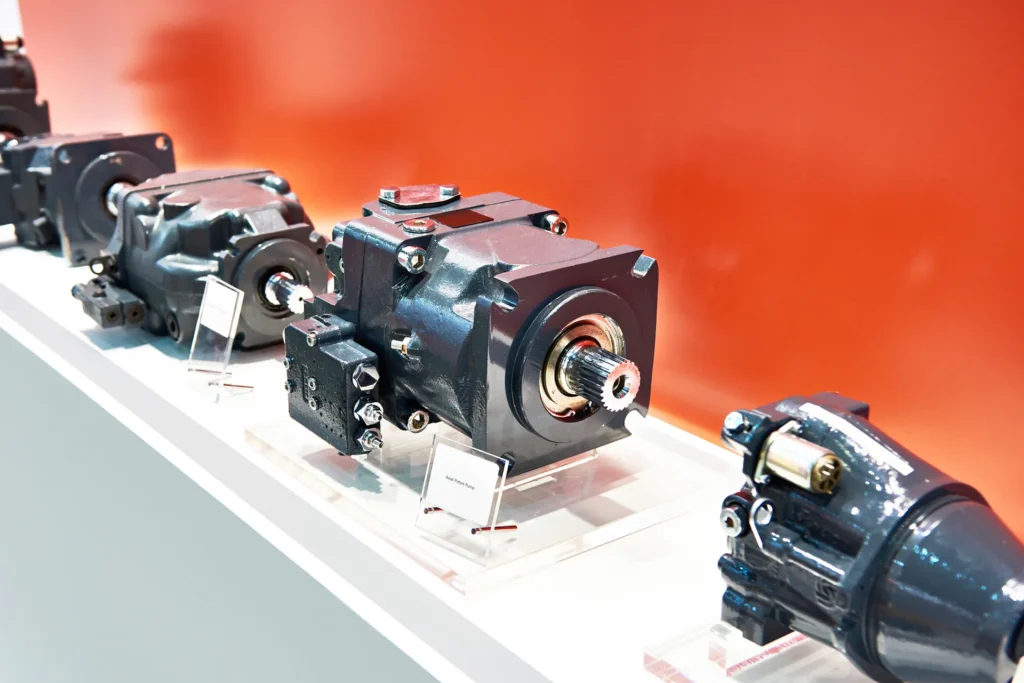
Actuators convert electrical power into controlled movement. In a robotic joint, performance comes from the motor, reducer, encoder, brake, drive electronics, bearings, and thermal design. A low-priced motor cannot compensate for backlash, poor heat management, inconsistent torque, or short reducer life.
Chinese suppliers are moving toward integrated joint modules that package several functions into one assembly. This can shorten development cycles because fewer interfaces need separate validation. It can also concentrate technical risk within a single supplier.
Precision joints may use harmonic drives, RV reducers, or planetary reducers. Each design brings different requirements for load capacity, compactness, impact resistance, accuracy, and maintenance. Component selection should follow the robot’s real operating cycle rather than headline torque figures.
Inovance’s 2025 showcase at the China International Industry Fair illustrated the broader direction. The company presented intelligent motion and drive systems, wireless synchronization control, seven-axis bionic arms with torque sensors, and capabilities across mechanics, drives, control, vision, and pneumatics.
Controllers connect motion planning with real machines. They coordinate axes, process encoder feedback, execute safety logic, and manage timing between the robot, tooling, vision, and production equipment.
China’s controller market is becoming increasingly integrated with domestic servo systems and robot platforms. This can improve commissioning speed because one supplier controls more of the interface. It can reduce flexibility when protocols, programming environments, or diagnostic tools remain proprietary.
In the motion control space, Shenzhen-based Qiaojie Shuwu has emerged as a notable player. At the 2025 World Robot Conference, 16 of 50 exhibiting robot manufacturers, nearly one third, used Qiaojie Shuwu’s motion control systems.
As of the second quarter of 2025, the company’s motion control solutions were deployed at over 40 robot manufacturers. The company’s Sim2real training and reinforcement learning approaches have achieved motion-control transfer success rates of 80 percent and action accuracy of up to 92 percent.
Seer Intelligent Technology has built a business around providing the “robot brain.” Its SRC 5000 series controllers support over 300 component types and more than 1,500 integrators and end customers.
The company’s controllers have been deployed across more than 1,000 robot models in over 20 industries, including 3C, automotive, new energy, and semiconductors.
Zhicheng Technology launched the iRC100 in September 2025, described as the world’s first domestically chip-based general-purpose robot controller.
Built on a 100 TOPS-class system-on-chip platform, it adopts an integrated brain-cerebellum architecture and combines industrial-grade design with automotive-grade experience.
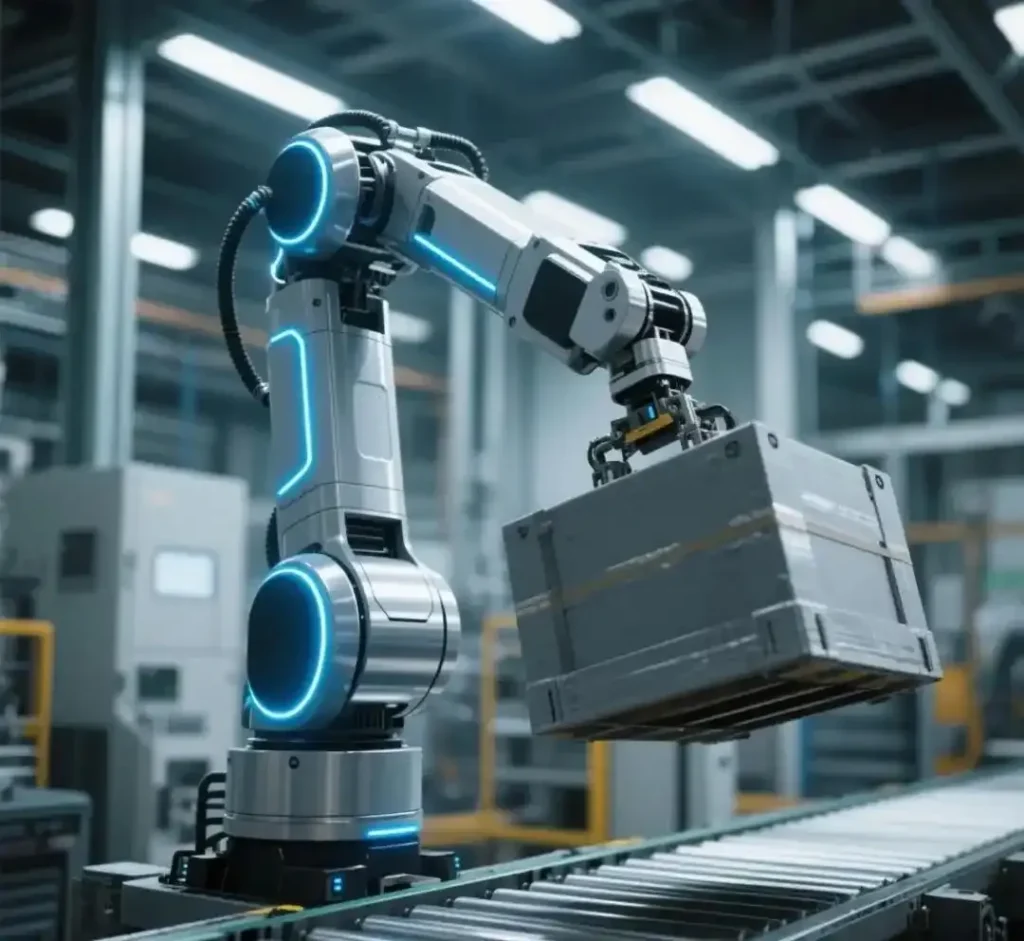
If actuators are the muscles, sensors are the nervous system. China’s sensor sector is experiencing explosive growth, fueled by both industrial automation and the emerging humanoid robot market.
The numbers are striking. In the first half of 2025, China’s robot vision sensor market reached approximately $662 million.
The broader sensor market exceeded $27.8 billion during the same period. Global robot smart sensor markets surpassed $100 billion in 2025, with China accounting for 39 percent of that total.
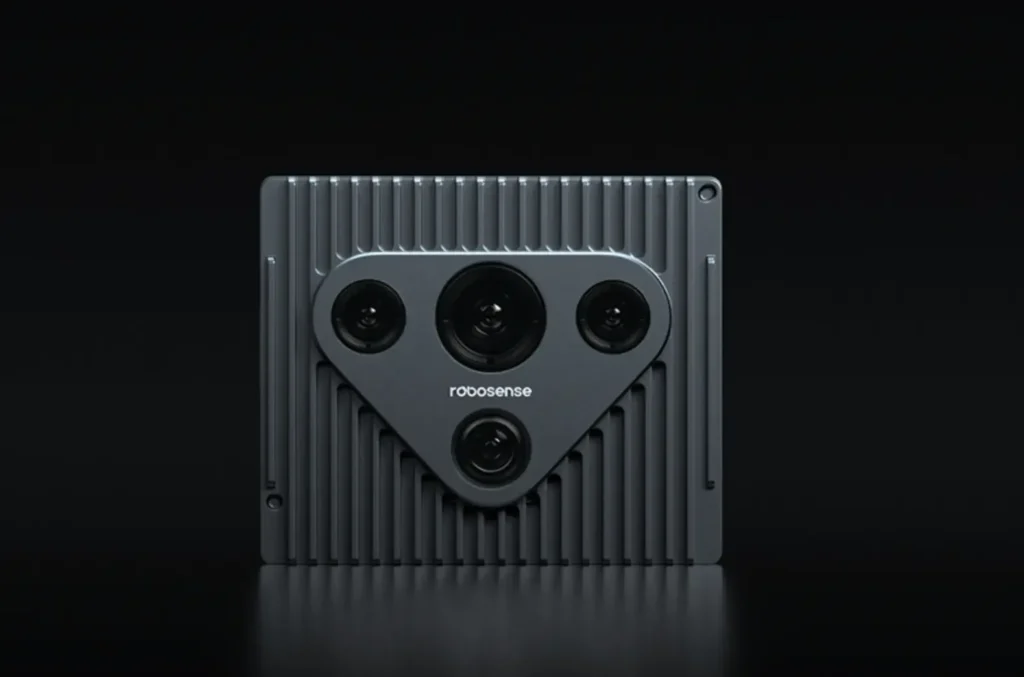
In March 2025, RoboSense launched the AC1 Active Camera, which combines LiDAR, camera, and inertial sensing at the hardware level. The company paired the device with software tools and open-source algorithms for SLAM, semantic segmentation, and three-dimensional scene processing.
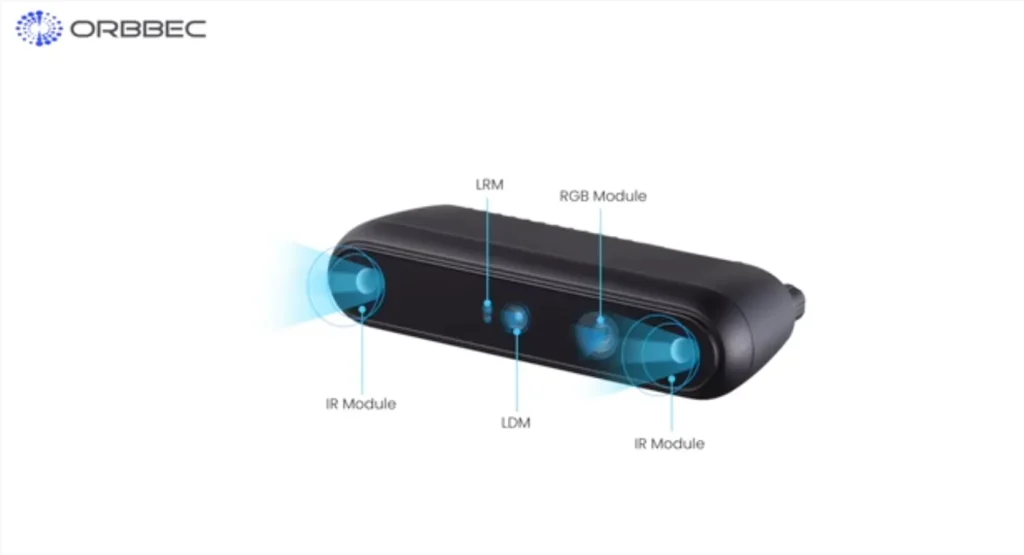
Orbbec also expanded its industrial robot vision portfolio in 2025. Its Gemini 335Le added Ethernet connectivity to a stereo depth camera for robotic arms, mobile robots, and forklifts. At the World Robot Conference, the company introduced the Pulsar ME450 LiDAR with configurable scanning patterns for navigation and detailed three-dimensional reconstruction.
These launches show a wider shift in industrial robot components. Hardware suppliers are adding software development kits, algorithms, synchronization tools, and compute compatibility.
The end effector is where a robot creates direct value. A gripper, welding torch, screwdriver, suction tool, inspection head, or dexterous hand determines which task the machine can complete.
China has a broad base of electric gripper and precision motion suppliers. The next challenge is dependable force control, tactile feedback, tool changing, and application software in electronics assembly, laboratory automation, food handling, and flexible manufacturing.
Robotic arm components should be selected around the task. Payload and reach matter, but contact quality, cycle time, object variation, cleaning needs, and maintenance access can decide the business case. A capable end effector can extend the useful life of a robot platform.
Domestic substitution remains part of China’s industrial direction, but the market is moving beyond simple replacement of imported parts. The stronger opportunity sits in coordinated systems that combine motion, perception, control, tooling, software, and manufacturing support.
Shenzhen’s 2025 to 2027 plan links core parts with AI chips, multimodal perception, motion control, and dexterous manipulation. Inovance’s full-stack presentation points in the same direction. The component supplier is becoming a development partner that can help tune the whole machine.
This changes how a robotics part manufacturer should be evaluated. Buyers need evidence of production yield, traceability, change control, field failure analysis, spare part availability, firmware support, cybersecurity practices, and service outside China.
Permanent magnets used in high-performance motors can depend on rare-earth materials. That connects robot design to trade policy and upstream processing capacity.
On April 4, 2025, China’s Ministry of Commerce and General Administration of Customs introduced export controls on selected medium- and heavy-rare-earth-related items. Reuters reported in June 2025 that licensing delays had held shipments of some magnets at Chinese ports. The affected magnets are used in cars, drones, and robots.
The rare-earth metals robotics supply chain requires more than a country-of-origin check. Buyers need visibility into magnet composition, processing location, licensing requirements, inventory coverage, and approved alternatives. A rare-earth minerals robotics supply chain review should also identify parts that can use different motor architectures or lower material intensity.
China’s domestic robot makers may gain better access to local processing and magnet supply, but export customers can face documentation and licensing friction. Supply chain resilience depends on transparency at the material and subcomponent level.
China can offer rapid iteration, broad supplier choice, strong manufacturing capacity, and close links between robot makers and component producers. Those strengths become valuable when sourcing decisions start with deployment requirements.
A practical review should cover five areas. Define the duty cycle, accuracy, payload, environment, and service life before comparing prices. Request test data from production units. Check software interfaces, update policies, and compatibility with the target control and compute stack.
Map critical subcomponents, including encoders, bearings, chips, magnets, and connectors. Compare total deployment cost, including integration, certification, spares, training, downtime, and local support.
China’s robotics supply chain is becoming more capable at the system level. The strongest opportunity lies in combining component depth with disciplined qualification. Companies that understand the full robotics BOM can capture cost and speed advantages without treating every domestic alternative as interchangeable.
Chozan helps global companies interpret China’s technology ecosystem through market intelligence, innovation research, competitive analysis, and strategic advisory services.
Understanding robot components requires more than a supplier list. Chozan connects policy direction, manufacturing capability, emerging technology, and commercial relevance so teams can evaluate China’s robotics opportunities with stronger context.
Explore Chozan’s China strategy and innovation services to turn market signals into informed business decisions. Book a consultation to explore China’s robotics ecosystem.
Core parts include actuators, servo motors, reducers, encoders, controllers, sensors, cabling, safety hardware, and end effectors. Their relative importance changes with the robot’s payload, precision, speed, environment, and required operating life.
There is no universal cost split. High-precision reducers, servo systems, controllers, sensors, and specialized end effectors can all be costly. The largest pressure depends on robot architecture, production volume, accuracy targets, and supplier qualification.
Review production test data, quality systems, traceability, engineering change controls, field failure processes, software support, and spare part capacity. Factory audits should confirm that performance observed on engineering samples can be replicated in normal production batches.
A servo motor produces controlled rotary motion, while an actuator is the broader motion assembly. An actuator may combine the motor with a reducer, encoder, brake, bearings, drive electronics, housing, and thermal management.
Integration is possible when mechanical interfaces, voltage, communication protocols, safety requirements, and software tools are compatible. Buyers should request interface documents and run system tests before committing to volume orders or long-term platform decisions.
Encoders report position, speed, and sometimes absolute joint location to the control system. Their resolution, accuracy, mounting quality, and vibration resistance directly affect repeatability, motion stability, fault recovery, and safe operation.
Check depth accuracy, field of view, latency, calibration drift, lighting tolerance, environmental rating, synchronization, data formats, and compute compatibility. A technically strong camera can still underperform when software tools or integration support is weak.
IP ratings describe protection against dust and water ingress. The required level depends on the operating site. Food plants, outdoor logistics, metalworking, and washdown areas can need different housings, connectors, seals, and maintenance routines.
Rare-earth-free motor designs can reduce exposure to controlled materials, but they may change size, weight, efficiency, torque density, cooling needs, or control requirements. Engineering teams should compare system-level trade-offs before redesigning a robot platform.
Resilient sourcing combines qualified alternatives, upstream material visibility, controlled engineering changes, realistic safety stock, repair capacity, and software continuity. A second supplier adds limited protection when both vendors depend on the same magnet, chip, or subassembly.