CONTENT

Trina Solar competes through a coordinated module and system design strategy. Its commercial Vertex N G3 reaches 760 W and 24.5% efficiency, while compact Vertex S+ G3 products bring the same efficiency drive to space-constrained rooftops.
The real advantage comes from combining n-type cell improvements, 210 mm formats, low-voltage architecture, bifacial construction, and equipment compatibility.
This matters because high-wattage solar panels create value only when they reduce total project costs, improve energy yield, or fit more capacity into limited space. A larger wattage number alone does not settle the procurement decision.

The company’s design logic starts with power density, then moves outward to the full solar system. In 2025, Trina Solar began the large-scale rollout of 740 W Vertex N i-TOPCon Ultra modules. Its 2026 Vertex N G3 increased commercial output to 760 W at 24.5% efficiency.
According to the company, the newer design can cut balance-of-system costs and levelized electricity costs by about 2% to 3% against standard module configurations.
That estimate depends on project assumptions, yet it shows what Trina is selling: fewer modules, stronger string power, and lower supporting cost per installed watt, rather than wattage in isolation. Trina’s current Vertex N G3 specifications provide the design basis for that claim.
Vertex N G3 uses n-type i-TOPCon Ultra cells with multi-cut edge passivation, fine metallization, and high-density interconnection. These features reduce optical and electrical losses inside the module. Trina has kept the module within an industrial format of 2,384 by 1,303 mm, which supports familiar manufacturing, shipping, mounting, and tracker practices.
This approach reflects a core Chinese manufacturing strength. Process improvement matters as much as a single laboratory breakthrough. The company can move gains from cell architecture into a repeatable Trina Solar module that works with established project equipment.
High current can create compatibility and loss concerns if electrical design lags behind cell power. Trina’s low-voltage architecture aims to deliver more power within string and inverter limits. Procurement teams still need to model the exact module, inverter, cable, and tracker combination.
Vertex N G3 also uses bifacial dual-glass construction. The current specification gives an 85%, plus or minus 5%, bifaciality ratio and estimates 10% to 20% additional generation from the rear side. Actual gain depends on ground reflectivity, row spacing, mounting height, shading, and site conditions. Trina’s 2026 technical summary also lists a 30-year power output warranty for the utility module.
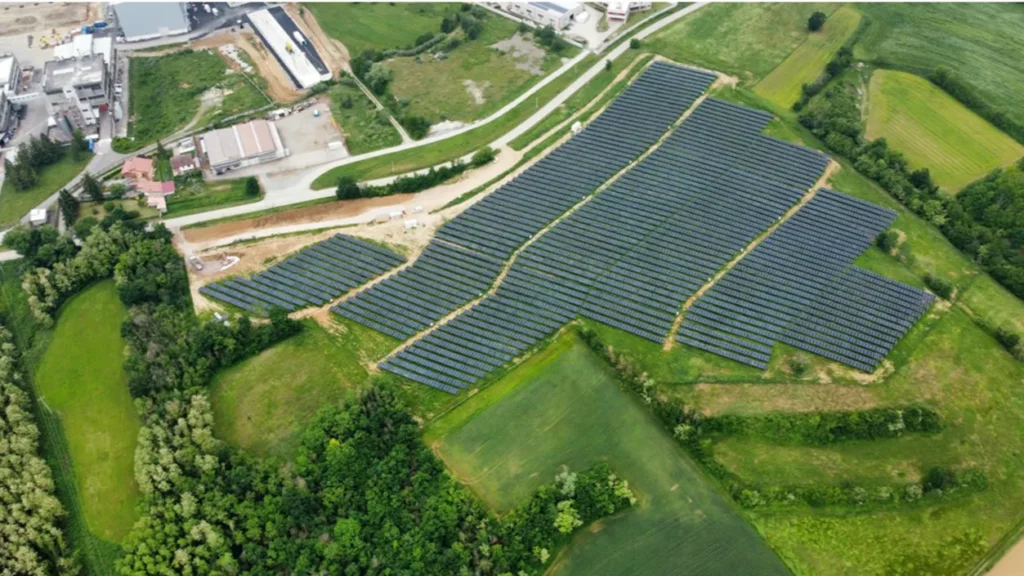
A Trina Solar solar panel should be compared within its intended application. The utility product maximizes project-scale output, while Vertex S+ prioritizes rooftop dimensions, handling, and power density. Regional model codes and specifications matter.
| Project setting | Current reference product | Verified specification | Commercial relevance |
| Utility-scale solar | Vertex N G3 NEG21C.20Q | Up to 760 W and 24.5% efficiency | Fewer modules and higher string power can reduce supporting equipment per watt |
| Commercial and residential rooftops | Vertex S+ G3 NEG9RP.28Z | Up to 485 W in a 1,762 by 1,134 mm format | More capacity fits into a familiar rooftop footprint |
| Australia-specific rooftops | Vertex S+ G3 NEG10R.28Z | Up to 515 W and 24.7% efficiency | A regional design raises watts per square meter while retaining standard rooftop proportions |
| Advanced research | Perovskite and TOPCon tandem module | 907 W and 29.2% certified efficiency | Shows the research direction, but it should not be treated as a volume product specification |
The Australia-specific Vertex S+ launch shows why a single global wattage claim can mislead. A Trina Solar panel sold in one market may differ in size, certification, output, or warranty from a similarly named product elsewhere.
Trina’s research program also reached a TÜV SÜD-certified 907 W tandem module in 2026. The module combines a TOPCon silicon bottom cell with a perovskite top cell to capture a broader part of the solar spectrum.
It signals future design potential, while the 760 W Vertex N G3 remains the relevant commercial benchmark. The company’s tandem announcement describes the result as an industrial-format achievement with commercial potential.
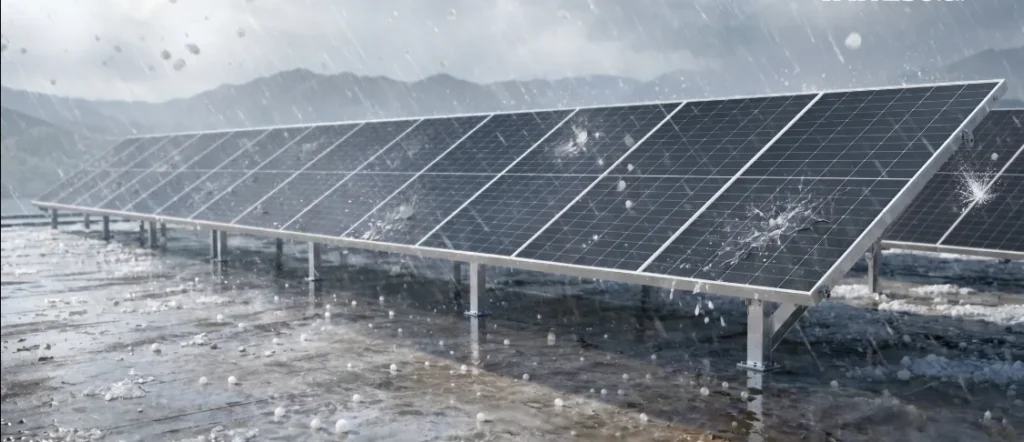
The current Kiwa PVEL scorecard lists Trina Solar as a Top Performer across six test categories: thermal cycling, mechanical stress sequence, hail stress sequence, potential-induced degradation, light-induced degradation and elevated-temperature degradation, and PAN performance.
The model-level scorecard also shows that results vary by product family. Buyers should match each test result to the exact model code on a proposal.
Tier 1 status answers a different question. Trina appeared on BloombergNEF’s Tier 1 module list in Q1 2025 and on the S&P Global Energy Tier 1 Cleantech list for PV modules and storage in 2026. BloombergNEF’s own 2026 methodology says its classification measures industry acceptance and does not directly assess product quality or financial strength.
Tier 1 status can support an initial bankability screen. Product reliability still requires model-specific testing, certification, degradation terms, warranty review, and service capability.
Trina Solar Co., Ltd. shipped more than 67 GW of modules in 2025, while cumulative shipments exceeded 320 GW by year-end. This scale supports procurement reach, product iteration, and a broad installed base.
Scale did not protect the business from China’s severe module price competition. The Trina Solar company reported 2025 revenue of approximately $9.89 billion and a net loss of approximately $1.04 billion. High-power design helps defend product value, but counterparty strength and warranty support still deserve regular review.

The Wilmer, Texas factory requires precise wording. FREYR Battery rebranded as T1 Energy in February 2025 and renamed the 5 GW plant G1 Dallas. T1 reported that full operational handover was completed in April 2025. The facility should no longer be described as a current Trina Solar factory. T1 Energy’s rebrand announcement and first-quarter update confirm the status.
Trina remained connected through commercial agreements and equity. Coverage of the final 2025 asset transfer reported a 17.4% Trina stake in T1 Energy. The distinction matters across the solar supply chain because brand, factory ownership, cell origin, assembly location, local-content eligibility, and warranty issuer are separate procurement facts. A current Trina Solar panel quote should identify each one.
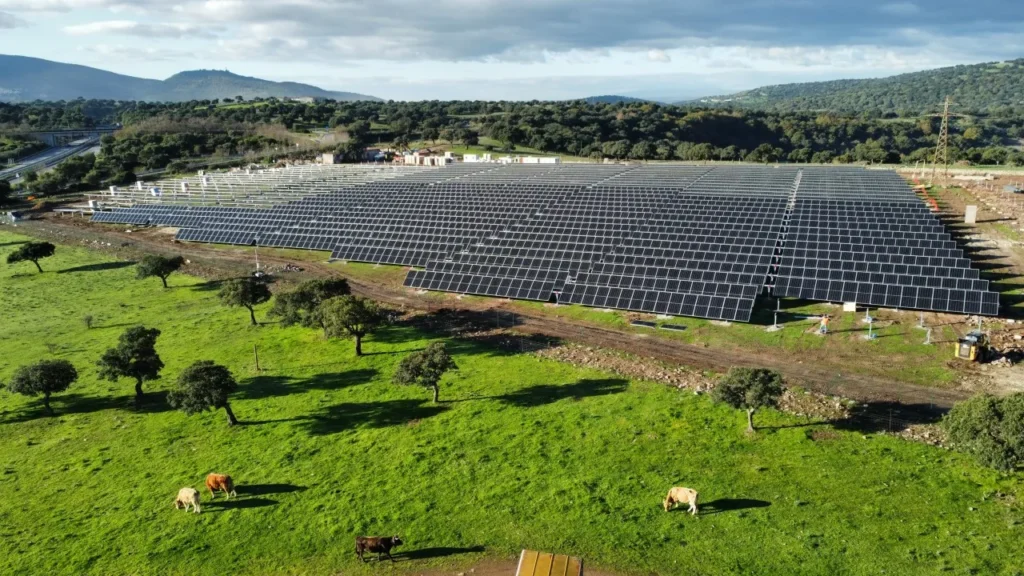
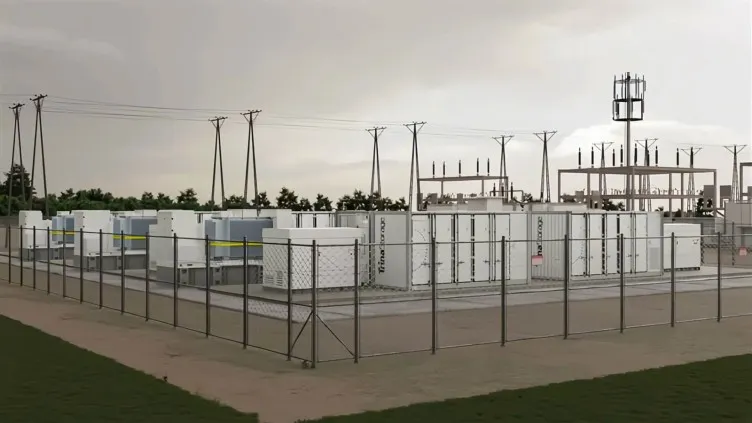
Trina Storage expands the offer from modules into cell-to-AC battery systems. The company launched the 5.015 MWh Elementa 2 Pro in 2025, built around its own 314 Ah cells. Its official launch information positions the product for utility-scale projects.
The commercial role is becoming clearer. Storage revenue grew more than 150% in 2025 and shipments doubled, while Trina Solar continued to face weak module margins. This gives the group another route to project value through solar, storage, trackers, and controls. Each layer still needs separate technical and contractual diligence.
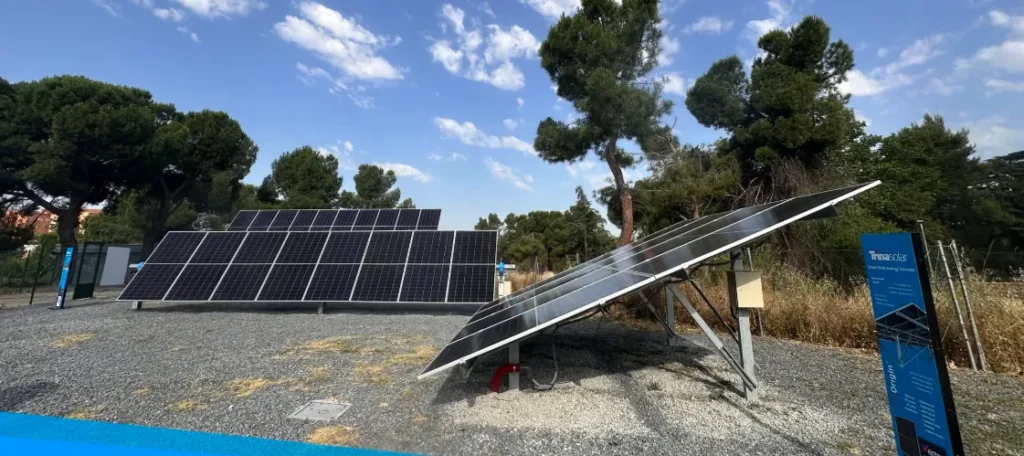
Trinasolar competes most effectively when buyers evaluate watts at the system level. The strongest case combines high module efficiency, suitable voltage and current, proven reliability, logistics efficiency, and compatible balance-of-system equipment.
The procurement test is straightforward. Confirm the exact model and market specification. Model energy yield rather than relying on nameplate wattage. Verify the manufacturing entity and component origin.
Review independent tests, warranty terms, and the supplier’s financial position. That approach reveals the real value of high-power Trina Solar panels.
A 760 W module is one data point. The more valuable questions are commercial. Will higher-power designs change your supplier criteria? Does Trina’s expansion into storage reshape who competes for project value? Which Chinese manufacturers can turn today’s research gains into bankable products at scale?
ChoZan can investigate these questions through a focused China research project. We benchmark relevant competitors, track technology and policy signals, interview sector experts, and bring the findings into an executive working session. Each engagement centers on a live decision, such as supplier selection, partnership strategy, market entry, or innovation planning.
For leadership teams that need direct exposure, a tailored China Learning Expedition can add visits to green-technology clusters, smart manufacturing sites, and local experts.
Bring ChoZan the decision your team needs to make. Book a consultation to define the evidence, access, and China insight required to answer it.
Trina Solar Co., Ltd. is headquartered in Changzhou, Jiangsu, and listed on the Shanghai Stock Exchange STAR Market. Its current company overview shows operations across many regions, so local product availability and support differ.
Trina Solar manufactures panels in China, Vietnam, Thailand, and the U.S. The Wilmer, Texas factory produces 700W+ modules specifically for the American market.
Tier 1 generally signals market acceptance, scale, or financing history under the publisher’s methodology. It does not certify every module’s quality. Pair the label with independent model-level testing, project references, financial review, and warranty analysis.
Vertex S+ targets residential and commercial rooftops with compact dimensions and high power density. Suitability still depends on roof geometry, structural limits, local wind and fire rules, shading, inverter compatibility, and installer access around the array.
The Vertex S+ portfolio includes monofacial and bifacial options across different regions. Check the full model code, rear-side rating, glass configuration, electrical data, certification, and local datasheet before comparing proposals from installers.
Trinasolar is the China-headquartered solar and storage group. T1 Energy is the U.S. company formerly called FREYR Battery that operates the Wilmer factory as G1 Dallas. Commercial agreements and equity links do not make them one company.
Purchase through an authorized channel, record every serial number, and confirm the product with the regional Trina service team. Match labels against invoices, datasheets, warranty registration, electrical ratings, factory information, and packaging before installation begins.
Higher nameplate wattage does not guarantee higher annual energy. Generation also depends on efficiency, temperature behavior, orientation, shading, bifacial conditions, soiling, system losses, inverter limits, and local weather. Compare modeled kilowatt-hours across complete systems.
The 907 W result is a certified industrial-format milestone, with large-scale commercial shipments reported for 2028 to 2029. Buyers should use current regional datasheets. The 760 W Vertex N G3 is the relevant commercial reference.
A complete quote should state the exact model, quantity, watts, efficiency, module dimensions, temperature coefficient, degradation schedule, load ratings, certifications, warranty issuer, manufacturing origin, inverter pairing, mounting design, expected generation, and total installed cost.
Trina Solar competes closely but differentiates through power density and U.S. manufacturing capacity. The Wilmer, Texas factory gives Trina Solar an advantage in the U.S. market.