CONTENT

China has moved from being a low‑cost manufacturing hub to one of the world’s most automated economies. Over the past decade, its domestic robotics industry has matured dramatically. The robot exports grew by 28 percent year‑over‑year in 2025, reflecting the government’s push for advanced manufacturing.
In 2026, the country remains the world’s largest industrial robot market, and collaborative robots (cobots) made by Chinese firms dominated more than 92 percent of the domestic market.
These statistics set the stage for a surge in machine tending robots—units designed to load and unload parts for CNC machines, lathes, and milling centers. They are at the heart of lights‑out manufacturing, small‑batch production, and emerging robotic cells.
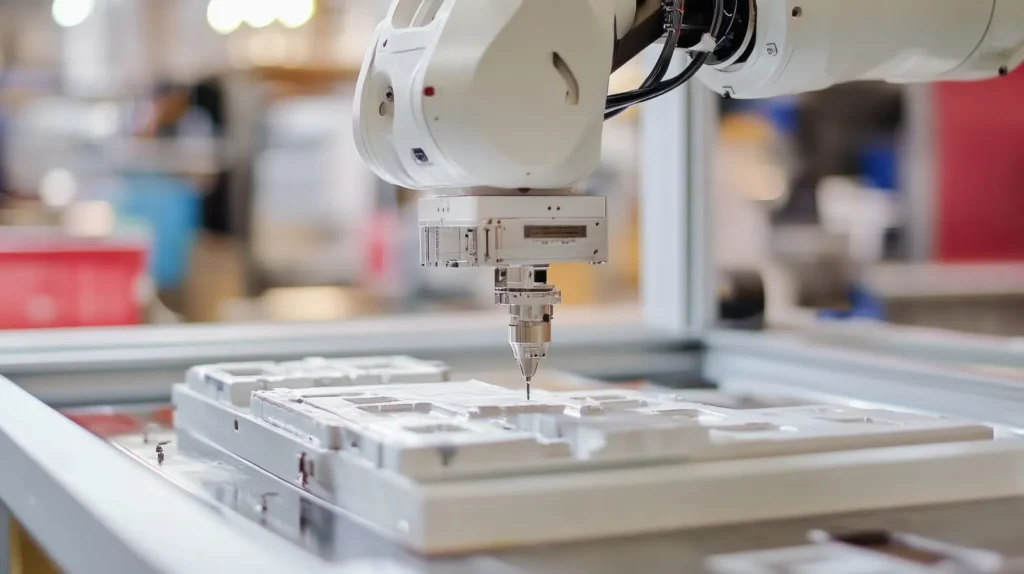
A machine tending robot is a robotic arm that loads raw parts into CNC machines, lathes, milling centers, presses, or injection molding equipment. It then removes finished parts and places them in trays, conveyors, gauges, or inspection stations.
These systems usually combine robotic arms, grippers, sensors, machine interfaces, and safety controls. In CNC automation, they replace repetitive manual handling while keeping machining cycles more consistent. Advanced cells may also include cleaning, measuring, sorting, or part orientation before the next process begins.
The main value is simple. Machine tending robots keep machines running with fewer interruptions and reduce the manual work required between machining cycles.
China’s robotics ecosystem provides a strong supply base for machine-tending automation. Local manufacturers now compete by offering lower costs, faster customization, domestic component supply, and stronger integration with the needs of Chinese factories.
Companies such as Estun Robotics, Siasun, Elite Robots, JAKA Robotics, and Dobot demonstrate the market’s maturity. Estun benefits from vertical integration across servo motors, controllers, and motion systems. Meanwhile, cobot makers such as Elite Robots, JAKA, and Dobot focus on flexible automation for CNC, injection molding, and press tending.
This ecosystem matters because machine tending depends on more than the robot arm. Factories also need grippers, vision systems, fixtures, software, service support, and integration partners. China’s local robotics network now gives manufacturers more affordable ways to build complete robotic cells.
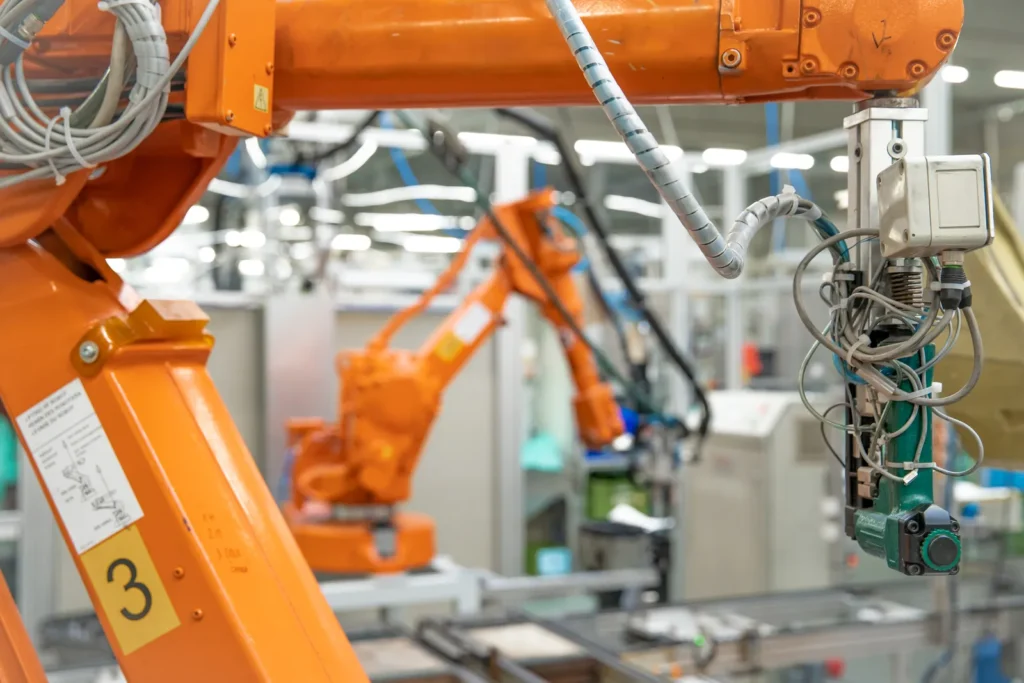
Machine tending automation matters because it solves three practical factory problems: labor pressure, machine downtime, and inconsistent handling. CNC machines can only produce efficiently when parts move in and out reliably. Robots help stabilize that process.
CNC operators and machinists remain difficult to recruit and retain. As a result, factories need automation that reduces repetitive loading work without removing skilled people from production.
Machine tending robots let operators focus on programming, quality control, setup, inspection, and process improvement. This improves labor productivity while reducing fatigue and human error during repetitive part handling.
Robots improve throughput by reducing waiting time between machining cycles. They load and unload parts consistently, which helps CNC machines run for longer periods with fewer idle gaps.
This improves equipment utilization, lowers scrap, and supports steadier output. It also helps factories operate during extended shifts, weekends, or overnight production windows when supervision is limited.
Machine tending robots now support smaller batches because modern systems can adapt to different part families. Quick-change grippers, modular fixtures, and updated programs reduce setup friction.
This flexibility helps job shops, prototype teams, and precision manufacturers take on more varied orders. Instead of building dedicated machinery for every job, they can reconfigure robotic cells around changing production needs.
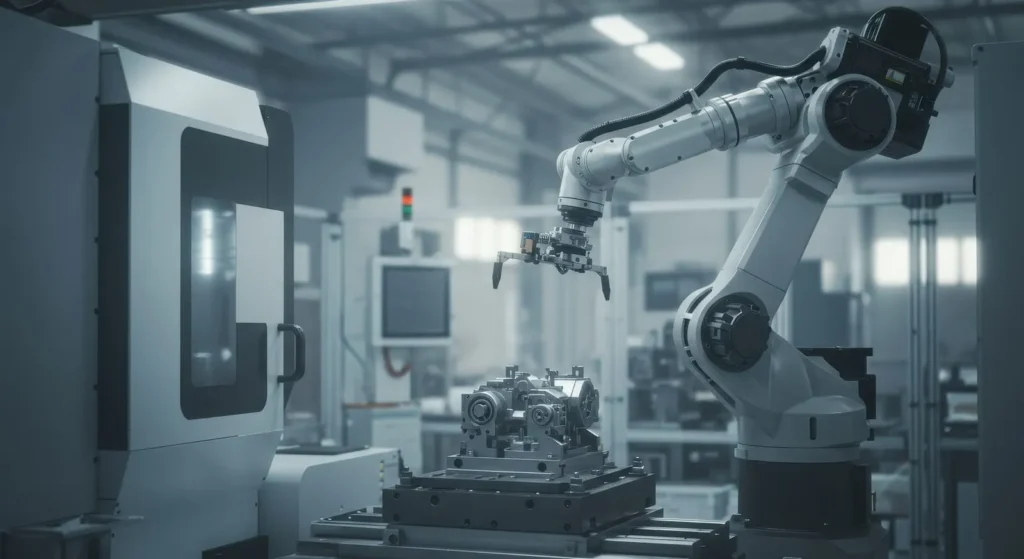
Several innovations are making machine tending easier to deploy in Chinese factories. The biggest changes involve programming, sensing, simulation, and coordination between machines.
Cloud-based programming helps manufacturers store, update, and manage robot programs more efficiently. It also supports remote troubleshooting, version control, and faster deployment across multiple production lines.
AI-assisted tools can simplify setup, improve part recognition, and support real-time process adjustments. This reduces the skill barrier for smaller manufacturers that lack large automation teams.
Machine vision helps robots identify part position, orientation, and surface variations. This improves loading accuracy and reduces the need for perfectly arranged input trays.
For CNC automation, vision systems are especially useful when part shapes vary or when operators need faster changeovers. They make robotic cells more flexible without adding excessive manual setup.
Digital twins help engineers test robotic movements before installation. They can check reach, collision risks, cycle times, gripper designs, and machine access.
This reduces deployment risk because teams can refine the cell before equipment reaches the shop floor. It also helps manufacturers shorten commissioning time and avoid costly production interruptions.
More factories are moving from single robot deployments to coordinated cells. These cells connect CNC machines, conveyors, inspection tools, and material handling systems.
This setup creates a more complete automation workflow. Instead of automating a single loading task, manufacturers can automate the movement of parts across multiple production steps.
Lights-out manufacturing means production can continue with minimal human supervision. In CNC environments, this usually starts with one automated cell before expanding into larger dark factory zones.
A lights-out cell combines CNC machines, machine-tending robots, automatic doors, fixtures, conveyors, tool monitoring, and inspection systems. Together, these elements let production continue beyond normal staffed shifts.
The goal is not simply to remove people. Instead, the goal is to keep expensive machines productive for longer periods while skilled workers manage higher-value tasks during planned shifts.
Lights-out production requires stable processes, reliable machines, strong tooling plans, and careful fault detection. A robot alone cannot create a dark factory.
Manufacturers must plan part supply, chip removal, coolant management, tool wear, inspection, and emergency stops. They also need clear maintenance routines because unattended production leaves little room for unexpected failures.
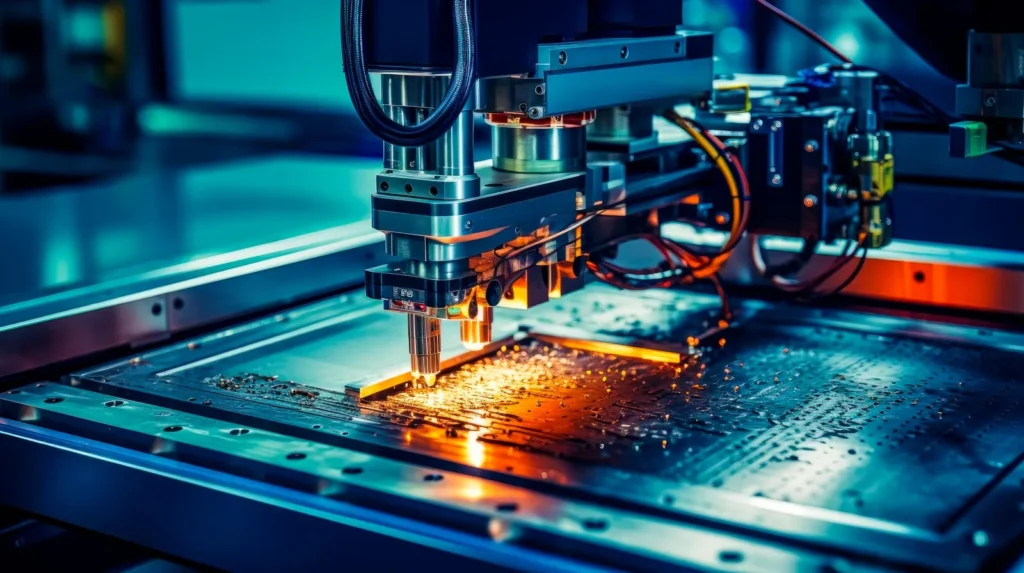
Machine-tending robots form the handling layer within lights-out CNC cells. They move parts between machines, fixtures, conveyors, and inspection points.
However, they work best when the surrounding process is ready for automation. This means consistent part presentation, reliable machine interfaces, proper guarding, and strong monitoring software.
Manufacturers should treat machine tending as a production system, not a robot purchase. The right setup depends on the part, machine, cycle time, floor space, and operator workflow.
Selecting the appropriate machine-tending robot involves evaluating payload, reach, precision, and environmental protection. Elite Robots recommends the CS66/CS612 models for machine tending due to their 6–12 kg payloads and rugged IP68 protection, making them suitable for CNC, injection molding, and press applications.
For tasks requiring heavier payloads or specialized functions such as welding or palletizing, Estun or Siasun robots may be more appropriate. Evaluating mean time between failures (MTBF), in‑house component development, and service support is also crucial.
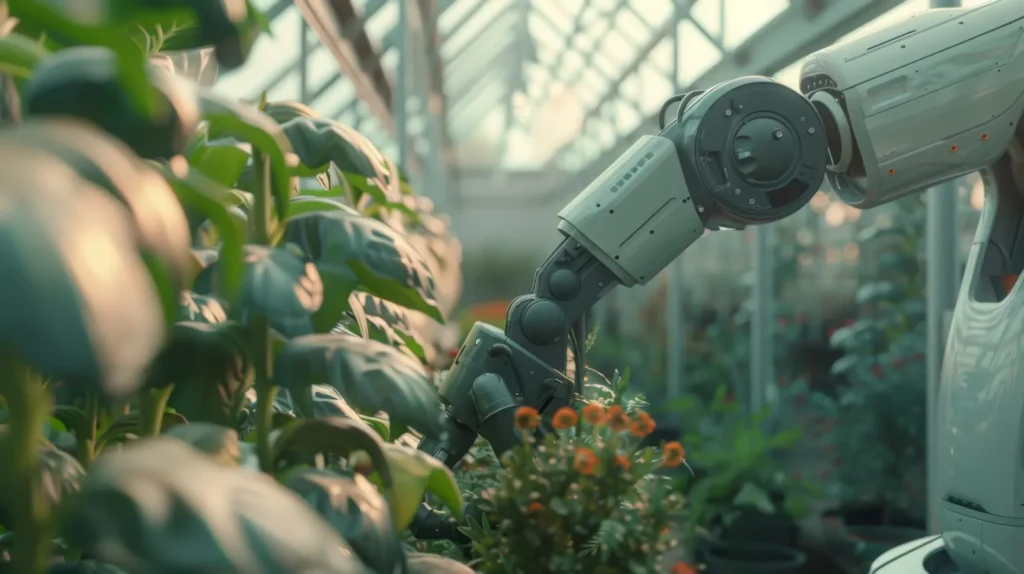
Grippers must match the part shape, weight, surface finish, and loading position. A poor gripper can damage parts, slow cycle time, or cause failed picks.
Dual grippers can also improve CNC tending efficiency because the robot removes the finished part and loads the blank with a single machine entry. This reduces wasted motion and shortens handling time.
Integration determines performance. The robot must communicate with the CNC machine, automatic doors, chucks, fixtures, sensors, and safety systems.
For lathes and milling centers, teams must confirm machine access, part orientation, gripper design, and loading sequence. Simulation can help identify collision risks and cycle time bottlenecks before installation.
Small batch automation works best when manufacturers design for fast changeovers. Quick-change grippers, modular workholding, reusable programs, and flexible vision tools reduce setup time.
Operators still play an important role. They manage part changes, inspect quality, update programs, and handle exceptions that do not justify full automation.
China’s machine tending robot market will grow as manufacturers seek higher machine utilization, more stable quality, and more flexible CNC automation. The strongest growth will come from factories that combine affordable robot hardware with software, vision, simulation, and local integration support.
The next stage will not center on isolated robotic arms. It will center on connected robotic cells that link CNC machines, inspection systems, conveyors, and production software. This will help manufacturers move closer to practical lights-out operations without attempting full factory automation too early.
For manufacturers, the key lesson is clear. Machine tending robots work best when they support a redesigned production workflow. Companies that plan around cycle time, changeover speed, quality control, and service support will gain more value than those that only compare robot prices.
Machine tending robots show how China is turning factory automation into a practical productivity system. For global executives, the bigger question is what these shifts reveal about manufacturing strategy, robotics adoption, supplier ecosystems, and the future of industrial competitiveness.
ChoZan helps business leaders understand China’s innovation landscape through research, executive briefings, expert calls, workshops, and learning expeditions. Our team translates fast-moving developments in robotics, AI, smart manufacturing, and digital transformation into clear insights your organization can use.
If your team wants to learn how China’s factories are applying automation at scale, ChoZan can help you move beyond observation and turn market signals into strategy.
Book a consultation to explore how China’s robotics and automation ecosystem can inform your next growth, innovation, or transformation agenda.
Yes, machine-tending robots can work with older CNC machines if the machine has reliable door access, cycle signals, and part clamping. Some setups need interface modules, PLC updates, or external control boxes before automation becomes practical.
The required floor space depends on robot reach, part trays, guarding, and operator access. Compact cobot cells can fit alongside a CNC machine, while larger industrial robot cells require more space for fencing and material flow.
Parts with consistent shape, stable weight, repeatable orientation, and predictable surfaces are easiest to automate. Simple billets, castings, and machined blanks usually work better than fragile, oily, tangled, or highly variable components.
Not always. Vision is useful when parts arrive in inconsistent positions, vary by size, or require orientation checks. For fixed trays and fixtures, many CNC machine tending cells can run reliably with simple sensors and repeatable part presentation.
A cobot offers more flexibility for mixed tasks and smaller production runs. A dedicated CNC loader is usually well-suited to repeat parts, faster cycles, and enclosed cells where speed, rigidity, and predictable handling matter more than redeployment.
Manufacturers calculate ROI by comparing automation cost with recovered spindle time, reduced manual loading hours, lower scrap, fewer missed shifts, and better delivery reliability. The best projects start with idle-time data and real-cycle measurements.
Yes, one robot can tend multiple CNC machines when cycle times, reach, layout, and part flow align. This setup works best when machining cycles are long enough for the robot to serve each machine without delays.
Machine tending projects should follow local robot safety regulations and recognized standards for guarding, emergency stops, risk assessment, and operator training. Cobots still need safety validation because end effectors, sharp parts, and CNC doors create hazards.
Operators usually need training in program selection, part changeovers, safe restart procedures, basic fault recovery, and quality checks. They do not always need advanced robot programming skills if the cell uses guided software and presets.
A factory should avoid automation when parts change frequently, loading is irregular, fixtures are unstable, or machine downtime is due to cutting problems rather than handling. In those cases, process improvement should come before investing in robots.