
CONTENT

China’s robotics industry has entered a different phase. The conversation has shifted from prototype demonstrations to scalable manufacturing, component localization, and commercial deployment. At the center of this transition are Robot Actuators, the motion systems that determine how accurately, efficiently, and reliably a robot interacts with the physical world.
Every robot relies on actuators. They convert electrical energy into controlled mechanical movement and directly influence speed, payload, precision, safety, and energy efficiency. In humanoid robots, actuator performance also affects balance, walking stability, dexterity, and battery life.
China now holds one of the world’s deepest manufacturing ecosystems for robotics components. Government support for embodied AI, expanding industrial automation, and investment across the robotics value chain have accelerated domestic development of motors, reducers, controllers, encoders, and integrated joint modules.
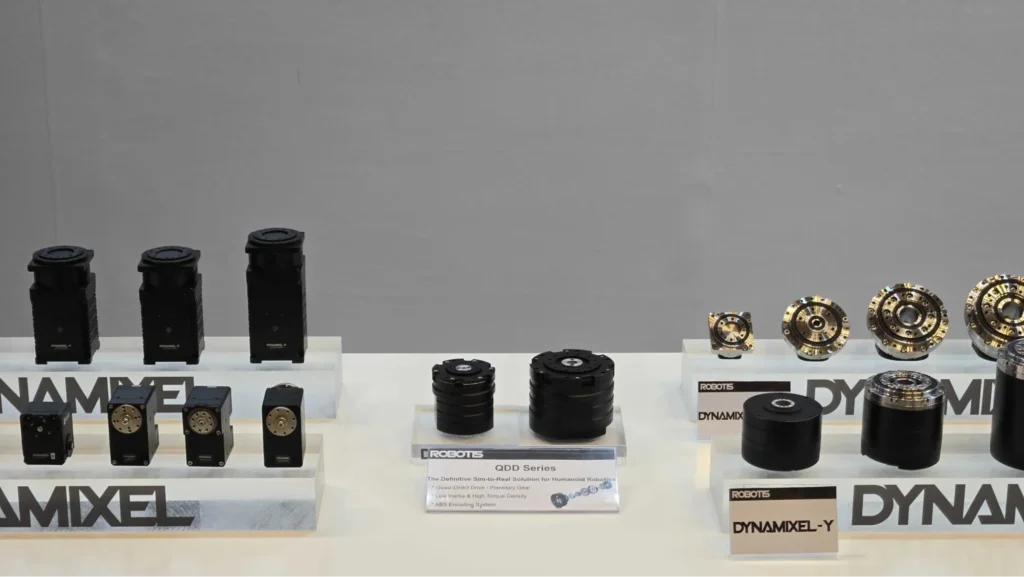
The actuator is no longer viewed as a standalone mechanical component. Modern robotic actuators combine electric motors, precision reducers, encoders, torque sensing, braking systems, controllers, bearings, and thermal management into compact motion modules.
For robot manufacturers, integration delivers several commercial advantages:
China’s manufacturing ecosystem supports this integration because many suppliers operate within highly connected industrial clusters. Motors, magnets, precision machining, electronics, castings, controllers, and battery technologies can often be sourced domestically, shortening product development cycles.
This manufacturing depth has become increasingly important as Chinese humanoid robot companies move from research into factory deployments. Reuters reported in 2025 that companies including AgiBot and MagicLab are expanding industrial testing while leveraging China’s extensive robotics supply chain and government-backed innovation programs.
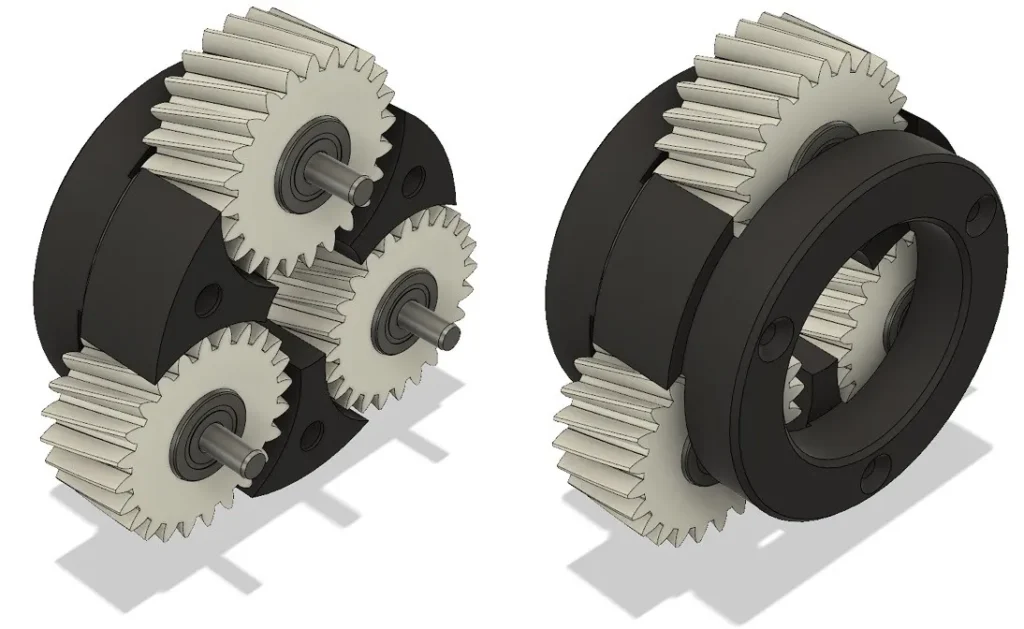
Most industrial electric actuators use closed-loop servo motors with a reducer. A robot servo motor responds to encoder feedback, allowing the controller to control position, speed, and torque.
When selecting a servo motor for robotic arm use, buyers should examine continuous torque, peak torque, speed, rotor inertia, control bandwidth, and full-duty-cycle capability.
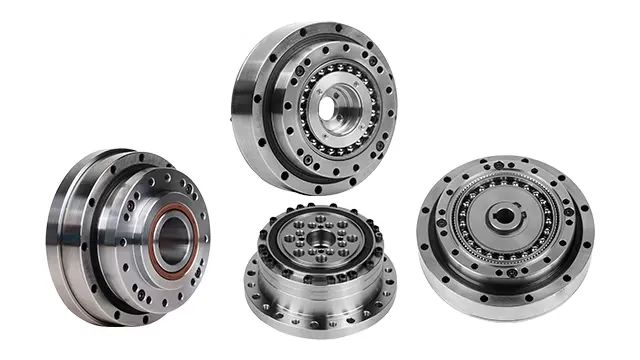
The gearbox changes the tradeoff. Harmonic drives offer high reduction ratios, compact packaging, and low backlash. A robot harmonic drive is common in smaller precision joints. In a harmonic drive robot joint, buyers still need to test torsional stiffness, flexspline fatigue, lubrication, efficiency, and accuracy after repeated loading.
Cycloidal reducers suit heavier industrial axes, while planetary gearsets can support compact joints that need higher shock tolerance or lower cost.
Direct-drive designs remove the gearbox. They reduce friction and backlash, though the motor may need more size, copper, cooling, or current to deliver the required torque. Quasi-direct-drive actuators use a low-ratio gearbox to balance torque output and backdrivability.
This architecture is important for quadruped locomotion and dynamic humanoid joints. A leg must absorb impact, respond rapidly, and recover from disturbances. Peak torque alone cannot capture that performance. Buyers should compare torque across speed, thermal duration, efficiency, impact loading, mass, and control response.

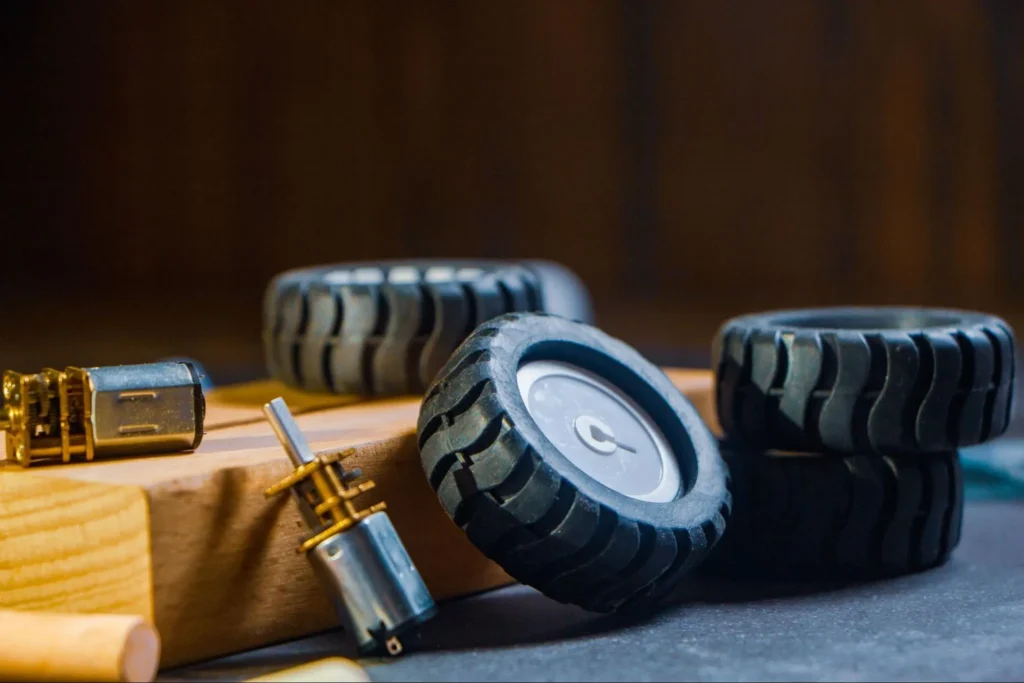
Hands introduce a different constraint. Motors, tendons, lead screws, miniature gearsets, and sensors must fit into a small space without excessive weight.
Beijing-based Linkerbot told Reuters in May 2026 that it makes joint modules, motors, and reducers in-house. Its customers also mount dexterous hands on existing arms instead of buying complete humanoids. That pattern may bring actuator revenue before full humanoid deployment reaches scale.
Soft robotic actuators follow another path. Pneumatic, dielectric, hydraulic, and smart material systems trade rigid precision for compliance. In 2025, researchers at Shanghai Jiao Tong University reported a fabric-based pneumatic actuator with more than 420-fold stiffness variation and a load capacity exceeding 5 kilograms in a study on soft wearable robots.
These technologies suit rehabilitation, wearables, and delicate handling, though pumps, valves, durability, and control complexity remain commercial barriers.
China’s component strategy now links localization with integration. Shenzhen’s government said in February 2026 that roughly half of the city’s robot components could be sourced within 10 kilometers and 80 percent within 40 kilometers. The same official account described a local chain covering algorithms, sensors, actuators, robot bodies, and manufacturing applications.
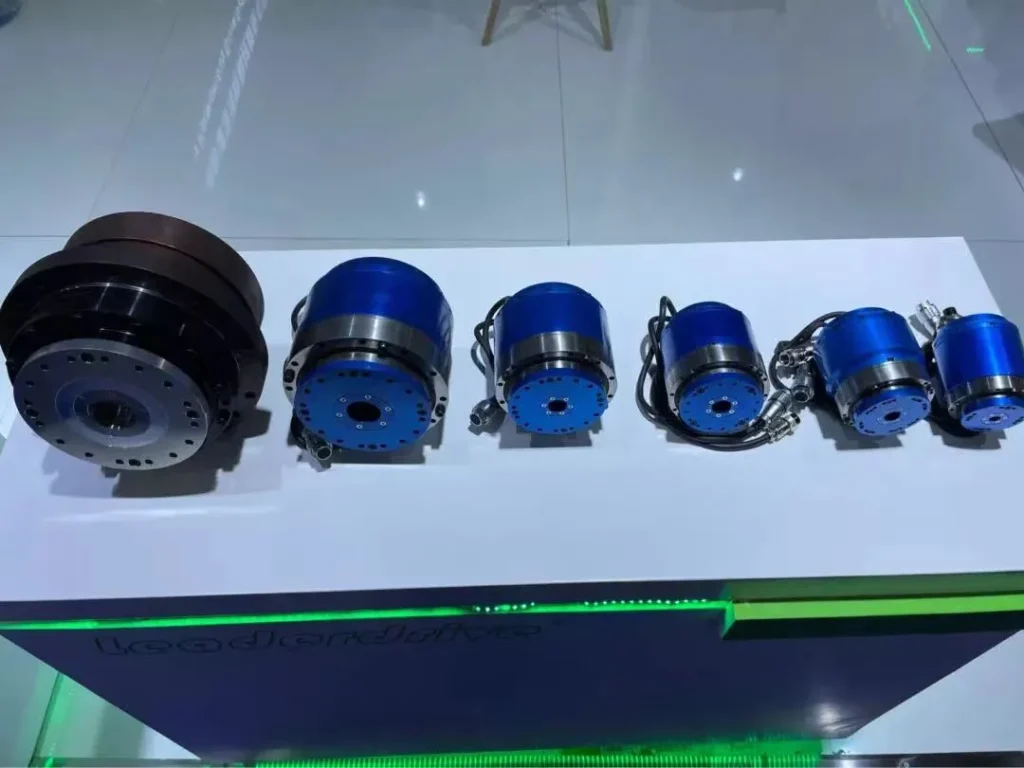
Component companies are moving closer to complete joints. At Automate 2025, Leaderdrive presented micro harmonic reducers for hands and wrists, KGU integrated rotary actuators, and inverted planetary roller screws for linear motion, according to its official product announcement. This portfolio spans the transmission layer and the packaged module.
Robot makers are also pulling key parts inward. Unitree’s 2026 prospectus stated that the company develops and manufactures its core components in-house. Its 2025 operating income rose 335 percent, and humanoids reached 51.5 percent of main business revenue during the first nine months.
Vertical integration can reduce cost and speed iteration. It can also make access to external components harder when successful robot brands reserve their best designs for their own platforms.
Fast entry has increased competitive pressure. In November 2025, China’s National Development and Reform Commission said the country had more than 150 companies developing humanoid robots and warned against producing highly repetitive products that could impede serious research.
The warning matters for humanoid robot actuators. Prototype performance, short demonstrations, and low quoted prices do not prove batch consistency.
The Ministry of Industry and Information Technology’s 2025 digital transformation guide for Shenzhen’s robot sector notes fluctuations in the quality of high-end core components and recommends maintaining lifecycle records of harmonic reducer failures under different loads. It also calls for batch traceability and automated quality data.
China’s first humanoid and embodied intelligence standard system, released in 2026, now covers actuation and perception modules within its limb and component specifications. Standardization should make comparison easier, but field data will remain decisive.
A sourcing review should begin with the operating task, not a supplier catalog.
Industrial robot actuators offer near-term volume through established automation demand. Humanoid platforms offer more joints per machine and enable faster design changes, though real-world factory use remains early.
Unitree’s prospectus showed that much of its industry-application revenue still came from reception, tour guiding, inspection, and limited manufacturing uses in 2025.
The strongest suppliers will connect proven industrial processes with humanoid requirements for compactness, torque density, force control, and energy efficiency. They will also support several architectures rather than relying on a single robot form.
China’s supply chain can shorten development cycles. Durable value will come from validated performance, transparent quality systems, and designs that survive outside a demonstration hall.
China’s robotics supply chain moves quickly, and component claims can be difficult to compare across suppliers, clusters, and applications. ChoZan helps teams study developments such as robot actuators through tailored research, expert calls, executive workshops, advisory projects, and China learning expeditions.
Book a consultation with ChoZan to build a clearer view of the companies, capabilities, and market signals relevant to your robotics strategy.
The phrase refers to the component or joint module that converts electrical, hydraulic, or pneumatic energy into controlled movement. In modern robots, the actuator commonly combines a motor, transmission, feedback sensors, bearings, and drive electronics.
The number depends on the robot’s degrees of freedom and joint design. Unitree’s G1 platform lists 23 to 43 joint motors across configurations, showing how hand, wrist, waist, and limb options affect actuator count.
The best motor depends on payload, reach, cycle time, precision, and thermal limits. Many robotic arms use permanent-magnet servo motors because they enable accurate position and torque control, but sizing must account for the full movement profile.
A servo motor produces controlled rotary movement. A robotic actuator is the wider joint assembly and may include the motor, reducer, encoder, torque sensor, bearings, brake, housing, drive electronics, and embedded control software.
A harmonic reducer supports high reduction ratios and low backlash in a compact form. Planetary gearboxes can provide strong load capacity and efficiency. The better option depends on rigidity, shock, dimensions, lifespan, noise, and cost.
Torque density compares actuator torque with its mass or physical size. Higher torque density can support stronger movement without excessive joint weight, but cooling, efficiency, durability, control quality, and realistic continuous output remain important.
Heat can come from high continuous torque, aggressive acceleration, inefficient gearing, motor losses, poor airflow, undersized drives, or repeated operation near peak output. Thermal testing should reproduce the actual payload, speed, and operating cycle.
There is no universal service life. Durability changes with load, duty cycle, shock, temperature, sealing, lubrication, bearing quality, and maintenance. Buyers should request life test methods, failure criteria, field data, and warranty conditions.
Many Chinese suppliers now offer motors, reducers, integrated joints, drives, and robot-specific components. Suitability still depends on certification, documentation, batch consistency, export rules, service access, firmware support, and validation inside the final robot.