CONTENT
The Jiuquan Satellite Launch Center is a Chinese spaceport in the Gobi Desert, in the border region of Gansu and Inner Mongolia. It supports astronaut missions, satellite launches, and commercial rocket development. Its wider launch area brings national space programs and commercial operators into the same regional aerospace network.
That combination makes Jiuquan relevant beyond space exploration. Its activity offers a practical view of how China connects engineering, ground facilities, and customer demand. The commercial question is how reliably this system can deliver orbital access at a price and schedule that customers can support.
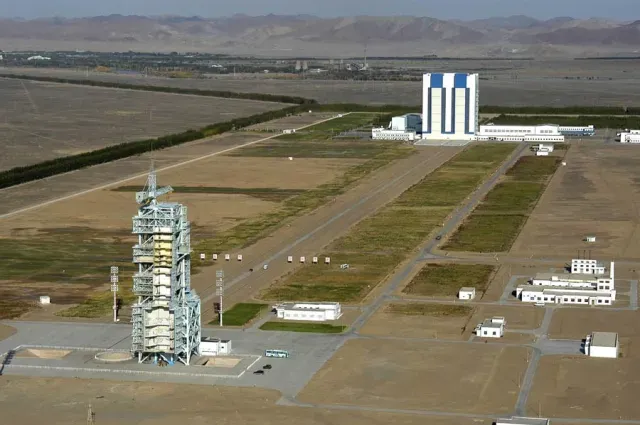
The Jiuquan Satellite Launch Center is located in the Badain Jaran Desert, at the border between Gansu province and the Inner Mongolia autonomous region. The facility covers approximately 2,800 square kilometers, and its climate provides around 300 launch-suitable days each year.
The nearest urban center is Jiuquan city, but the launch complex itself is a self-contained town known as Dongfeng.
Public descriptions of Jiuquan show multiple functional areas, including technical and processing facilities, launch areas, command and tracking infrastructure, astronaut facilities, and administrative and support areas.
The coordinates are approximately 40.96 degrees north and 100.29 degrees east. The commercial launch zone, formerly called the Dongfeng Commercial Space Innovation Pilot Zone, operates adjacent to the original state facilities and has its own access roads and support infrastructure.
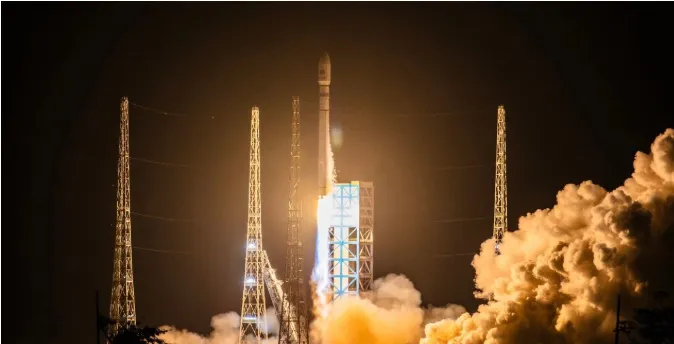
Human spaceflight remains central to the Jiuquan Satellite Launch Center. On May 24, 2026, a Long March 2F rocket launched Shenzhou-23 from the site. The China Manned Space Agency reported successful spacecraft separation and entry into the intended orbit.
An earlier emergency mission shows another part of the site’s function. Shenzhou-22 launched without a crew on November 25, 2025, after damage to another spacecraft disrupted the normal return arrangements. Reuters reported that teams prepared the mission in 16 days, with the spacecraft and rocket already at Jiuquan.
The operational lesson concerns readiness. Hardware on standby, established procedures, and coordinated teams gave the program options when its original plan changed. The 16-day response describes a specific emergency campaign; it should not become a standard commercial turnaround estimate.
For any launch customer, this suggests a useful question: what resources and contingency arrangements are actually available when a mission encounters a problem?
The Dongfeng Commercial Space Innovation Pilot Zone supports commercial activity associated with the Jiuquan spaceport. Its role becomes clearer when you consider commercial launch pads alongside the systems needed to test and operate a rocket.
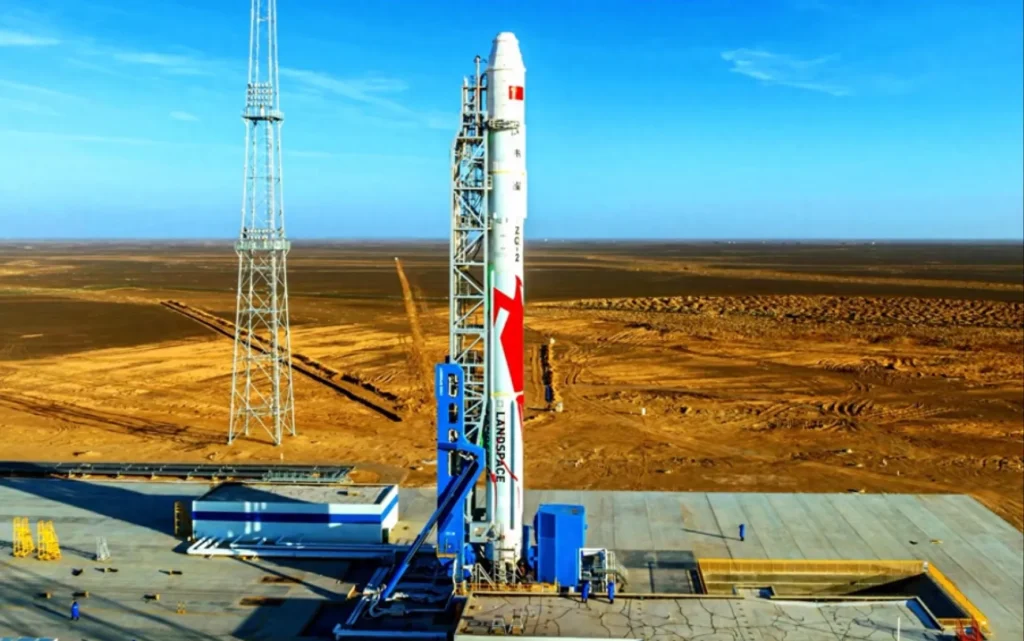
LandSpace’s June 29, 2026, Zhuque-3 static-fire test provides a concrete example. The company reported that the test checked the rocket, the launch-site systems, and their compatibility. That is a specific demonstration of launch infrastructure supporting vehicle development.
The business implication is straightforward: a capable rocket needs ground operations that work with it. Customer evaluations should include the vehicle’s preparation process, the facilities available for its payload, and the team’s experience with that configuration.
This also broadens how to assess private launch companies. A propulsion breakthrough matters, but so does the ability to complete ground verification and move into a flight campaign. Companies that control more of that sequence can test their engineering assumptions under operational conditions.
Two verified 2026 missions illustrate different uses of the commercial launch area.
| Mission | Verified result | Commercial relevance |
| CAS Space Kinetica-2, March 30, 2026 | The medium-lift liquid-fueled rocket completed its debut flight carrying three spacecraft, including technology demonstration and educational payloads. | The mission provided flight evidence for a new vehicle serving multiple payload requirements. |
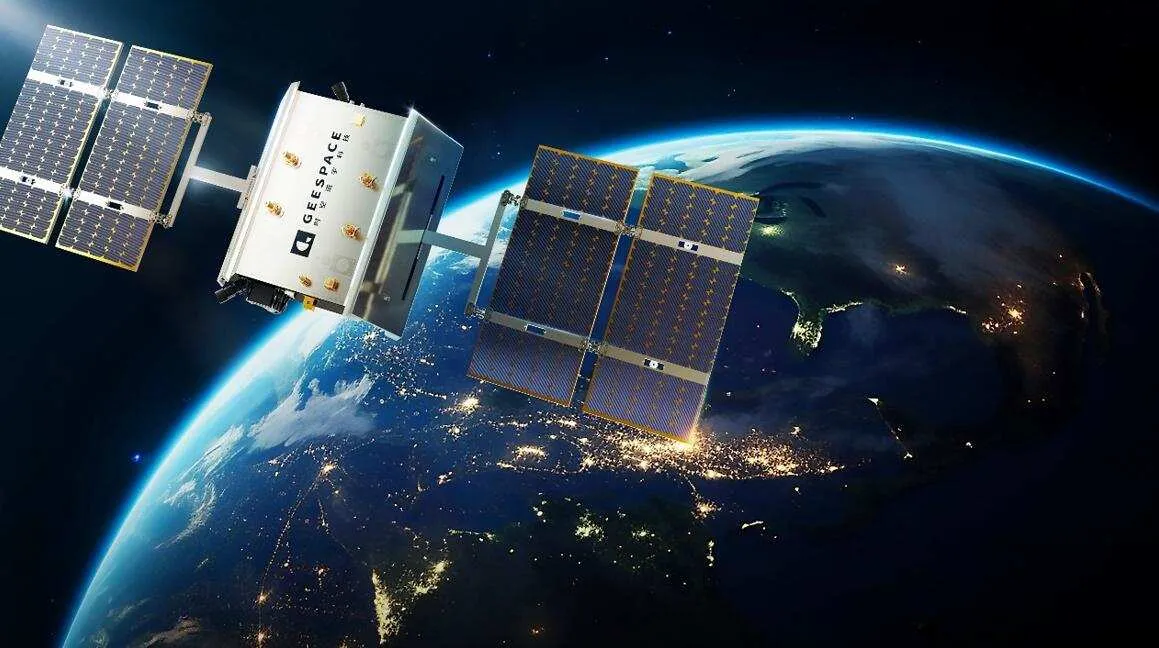
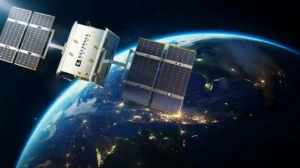
| LandSpace Zhuque-2E Y7, September 15, 2026 | The rocket placed 10 Qianfan constellation satellites into their intended orbit. | The mission connected commercial launch capacity with batch deployment for a satellite network. |
These flights serve different purposes. A vehicle’s debut establishes initial flight capability. A constellation mission tests delivery against a network operator’s deployment requirements. Comparisons should account for that distinction before treating all successful launches as equivalent evidence of commercial maturity.
For satellite deployment, payload quantity is one useful measure. The customer also needs the contracted orbit, an acceptable delivery window, and clear integration responsibility. A launch count alone doesn’t address those requirements.
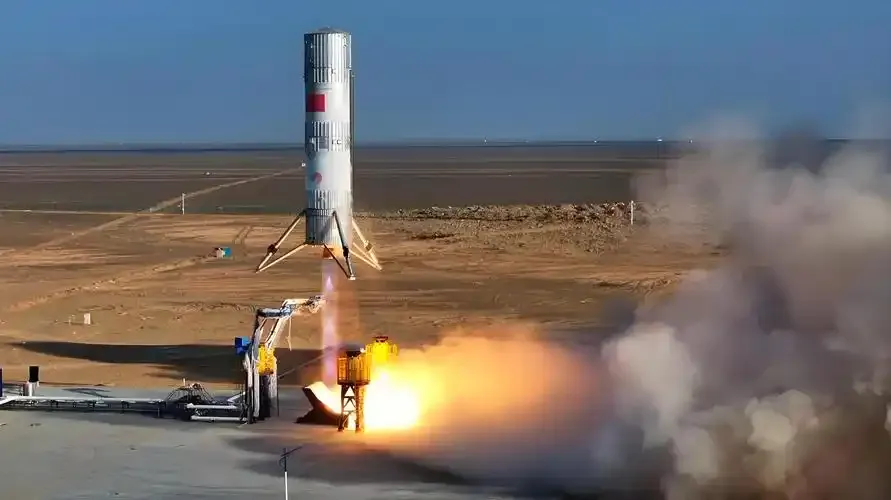
Jiuquan’s commercial area also supports China’s reusable-rocket work. On August 19, 2026, LandSpace reported that Zhuque-3 Y2 delivered the Honghu-03 satellite to orbit and achieved a first-stage soft landing in Minqin County.
The announcement described inspection, maintenance, and reuse flights as subsequent work. Its evidence therefore supports a reported touchdown milestone, while repeat flight and operating economics require separate verification.
A sound commercial assessment should ask how much hardware survives recovery, which components require replacement, and how long inspection takes. The cost of recovery operations also belongs in the calculation. An advertised reusable design does not, on its own, establish a lower delivered launch price.
That distinction keeps expectations realistic while recognizing engineering progress. Each demonstrated capability has value, and its commercial significance depends on consistent execution in the next steps.
The state-owned China Aerospace Science and Technology Corporation conducted the Long March 12A’s debut flight on December 23, 2025, from a newly constructed service tower at Jiuquan.
The 70.4-meter rocket is China’s tallest space vehicle, with a liftoff weight of 437 metric tons and a low-Earth orbit payload capacity of at least 6 tons.
The second stage entered its designated orbit, but the first-stage booster did not land at the recovery site. Engineers obtained critical technical data during the flight.
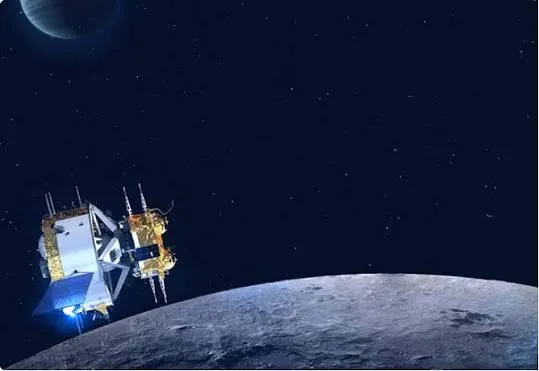
In April 2025, seven institutions from six countries, including France, Germany, Japan, Pakistan, the United Kingdom, and the United States, were authorized to study lunar samples collected by the Chang’e-5 mission.
In April 2026, the China National Space Administration announced five cooperative projects selected for the Tianwen-3 Mars sample-return mission. The mission is planned to launch around 2028 and return Martian samples to Earth around 2031.
Through a joint UNOOSA–CMSA initiative, institutions from United Nations member states have been invited to apply to conduct scientific experiments aboard the China Space Station. China and Pakistan signed an astronaut-cooperation agreement in February 2025.
In April 2026, CMSA selected Muhammad Zeeshan Ali and Khurram Daud as reserve astronaut candidates, with one expected to fly to Tiangong as a payload specialist after completing training and assessment. Both were training in China as of September 2026
The Jiuquan Satellite Launch Center raises useful questions about how infrastructure and commercial enterprise put technology to work. ChoZan’s China research and expert dialogues help teams examine emerging technologies and business models.
Book a consultation to explore which lessons from China’s innovation system could inform your strategy.
The Chinese name is 酒泉卫星发射中心. Use it when checking Chinese mission announcements or searching local mapping services. Match the result with the mission name to distinguish the launch facility from other places associated with Jiuquan.
Confirm access before making travel arrangements. Ask the organizer which areas the itinerary includes, what identification or authorization is required, and how launch-related changes affect the visit. Request written confirmation of arrangements for your travel dates.
Start with the China Manned Space Agency’s official channels for Shenzhou coverage and the launch provider’s announcements for commercial flights. Check the mission name and broadcast date carefully, since recorded footage can appear alongside live coverage.
Chinese announcements commonly give Beijing time, which is UTC+8. Check each listing’s stated time zone before converting it. A morning launch in China can fall on the previous calendar date in an American news report.
Use a launch calendar to identify the mission, then check the operator’s latest announcement. Treat an estimated month differently from a confirmed launch window, and recheck the information before arranging travel or scheduling live coverage.
They are separate sites. CMSA’s 2026 mission records place Shenzhou-23 at Jiuquan and Tianzhou-10 at Wenchang. Check the named launch center in each announcement, since China’s space station program uses more than one departure site.
CMSA reported that the Shenzhou-21 crew returned aboard Shenzhou-22 to the Dongfeng landing site on May 29, 2026. A capsule recovery area serves a different purpose from the launch pad, with dedicated search and medical teams.
A rocket supplies the propulsion needed for launch, while a spacecraft performs its mission in space. For example, CMSA’s Shenzhou-23 announcement describes the spacecraft separating from its Long March 2F rocket after reaching the intended trajectory.
Treat orbital insertion and service availability as separate milestones. Ask the satellite operator for commissioning results, coverage information, and a service start date. A launch announcement alone does not establish that customers can access the resulting service.
Commercial describes a business activity, while private describes ownership. Check each provider’s shareholders and institutional relationships before classifying it. A company selling launch services may have a different ownership structure from another provider serving similar customers.