Uncategorized

XPeng flying car performing public demonstration flight over Dubai skyline with audience recording urban air mobility test

XPeng Flying Car: How AeroHT Fits Into XPeng’s Broader AI Mobility Strategy

The story of the XPeng flying car is larger than one futuristic product. It sits inside two bigger shifts that matter in 2025 and 2026. One is China’s move from prototypes to deployable systems within China’s broader digital transformation model.  The other is XPeng’s move from a smart EV maker to a broader physical-AI mobility

XPeng Flying Car: How AeroHT Fits Into XPeng’s Broader AI Mobility Strategy Read More »

JD logistics

JD Logistics: How JD Built China’s Most Integrated Supply Chain System 

China’s retail and logistics landscape has entered a phase in which infrastructure, not interfaces, defines competitive advantage across the ecosystem. The companies that win are the ones that control fulfillment, delivery, and inventory as a unified system.  JD Logistics sits at the center of this shift. This reflects a broader shift in how China builds

JD Logistics: How JD Built China’s Most Integrated Supply Chain System  Read More »

Seedance AI video model interface with abstract visual design and title screen

Seedance Pro: ByteDance AI Video Generator for Business

AI video is no longer a marketing experiment. In 2026, it’s becoming an operational layer — used for product education, e-commerce conversion, internal enablement, multilingual campaigns, and executive communication. What started as flashy generative demos is now embedding itself into workflows. And China is accelerating this shift faster than most Western markets. The reason isn’t

Seedance Pro: ByteDance AI Video Generator for Business Read More »

Baidu ERNIE Bot interface representing Wenxin Yiyan product layer powered by ERNIE 4.5 AI within China’s enterprise ecosystem

ERNIE 4.5 AI Guide: Use Cases and How to Choose

ERNIE 4.5 AI is Baidu’s flagship foundation model for enterprise deployment inside China. Baidu ERNIE 4.5 is embedded across search, cloud, and industry platforms, giving it distribution strength and regulatory alignment advantages in the domestic market. Leaders evaluating ERNIE 4.5 AI should assess it as an integrated enterprise system rather than a standalone large language

ERNIE 4.5 AI Guide: Use Cases and How to Choose Read More »

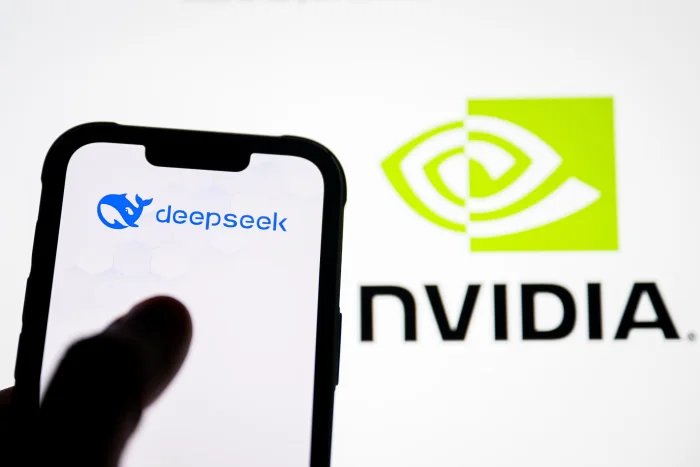
DeepSeek app on smartphone with NVIDIA logo in background representing dependency on Nvidia GPUs and CUDA ecosystem for AI development

DeepSeek and Compute: What the Nvidia Question Signals About China’s AI Stack

DeepSeek Nvidia is not a news cycle topic. It is a capacity question that determines which Chinese AI labs can train frontier models in 2025 and which cannot. Compute access inside China now sits at the intersection of export controls, cloud allocation rules, and software lock-in. That intersection shapes architecture choices, training timelines, and unit

DeepSeek and Compute: What the Nvidia Question Signals About China’s AI Stack Read More »

Smartphone displaying Kimi AI app with Moonshot AI branding blurred in the background

Kimi AI Explained: Capabilities, Architecture, and Enterprise Use Cases 

The AI assistant market in 2026 is crowded. You have your general-purpose chat tools, your research engines with citations, and your IDE native coding companions. Kimi AI from Moonshot AI takes a different path. It focuses on completing complex analytical tasks rather than simply generating conversational responses. This distinction matters more now than it did

Kimi AI Explained: Capabilities, Architecture, and Enterprise Use Cases  Read More »

Smartphone displaying Tencent Yuanbao AI assistant app with chat interface and tools for writing, Q&A, and productivity tasks

Hunyuan AI: Tencent’s Multimodal Models and How to Evaluate

Hunyuan AI marks Tencent’s shift from single-model releases to a full generative infrastructure layer. Instead of competing on isolated benchmarks, the company is building systems that generate video, images, 3D assets, and interactive content within the same stack. This shift is happening at scale. By 2025, Tencent reported over 150 enterprise integrations of its Hunyuan

Hunyuan AI: Tencent’s Multimodal Models and How to Evaluate Read More »

chatgpt vs deepseek

DeepSeek vs ChatGPT for Enterprises: Use Cases, Cost, and Deployment Options

Since the start of the generative‑AI boom, enterprises have been torn between building their own models and licensing proprietary systems from a handful of powerful vendors. The arrival of the open‑source DeepSeek family in early 2025 disrupted that landscape. Within seven days of its R1 release on 24 January 2025, DeepSeek attracted more than 100

DeepSeek vs ChatGPT for Enterprises: Use Cases, Cost, and Deployment Options Read More »

Mobile screen showing StepFun AI agent tools including diligence check and automation features for intelligent task execution and research workflows

StepFun AI: What It Is, What It Can Do, and How to Evaluate

China’s AI market in 2026 is consolidating around teams capable of executing at scale, a shift closely tied to broader China tech trends and AI ecosystem shifts that favor infrastructure and deployment over experimentation. StepFun AI stands out among the “Six Tigers” because it focuses on multimodal foundation models and real deployment rather than traffic

StepFun AI: What It Is, What It Can Do, and How to Evaluate Read More »

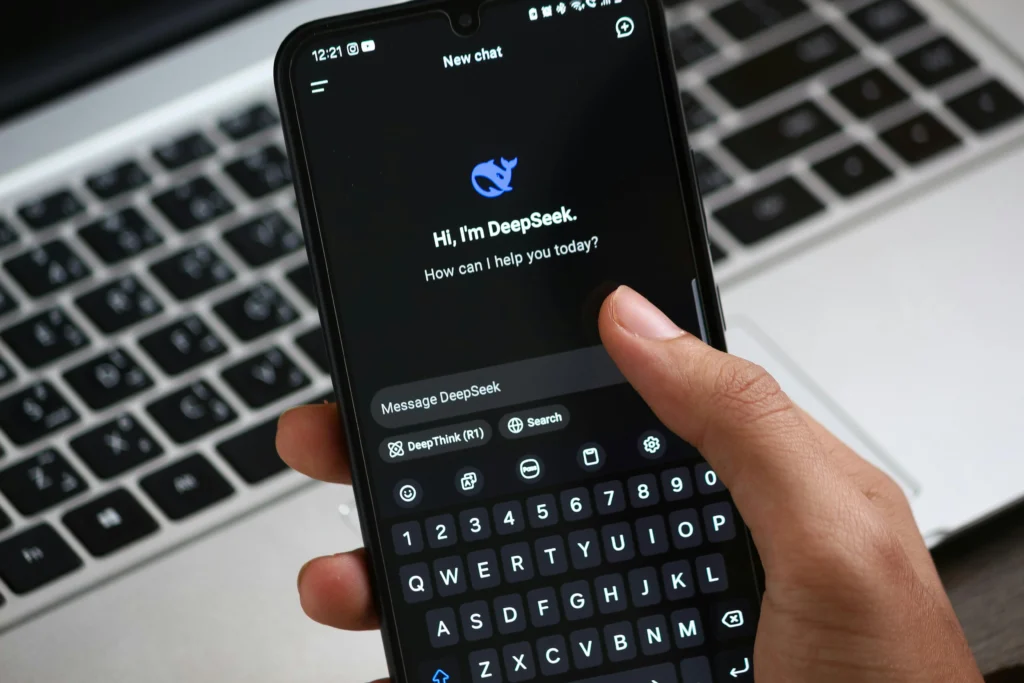
is deepseek free

Is DeepSeek Free or Open Source? What It Means for Enterprise Adoption and Cost

The emergence of DeepSeek, a family of large language models (LLMs) from the Hangzhou‑based start‑up DeepSeek Inc., marked a pivotal moment in the global artificial intelligence landscape. In December 2024 and January 2025, the company released DeepSeek‑V3 and DeepSeek‑R1, high‑performance LLMs that generated headlines for their impressive reasoning ability and surprisingly low training and inference

Is DeepSeek Free or Open Source? What It Means for Enterprise Adoption and Cost Read More »