CONTENT

China’s robot deployment is reshaping global manufacturing. In 2025, the country installed 276,000 industrial robots, more than Japan, the United States, and Germany combined. Domestic robots captured around 40 percent of unit sales, and the government expects this share to exceed 50 percent by 2027.
China’s advantage comes from speed, cost, and supply chain density. Around Shenzhen, companies can source motors, gearboxes, sensors, and housings within a 100 kilometre radius. This allows prototypes to be built for US $4,000 to $8,000 in 10 to 14 days, compared with US $15,000 to $25,000 and 10 to 14 weeks in Western markets. Chinese firms also dominate the low-cost segment, with eight of the fourteen global sub-US $10,000 robotic arm makers based in China.
Demand is strongest in EVs, automotive, electronics, batteries, logistics, and general manufacturing. EV and automotive firms operated about 28,000 units in 2025, while electronics companies ran 19,500 units. Battery makers such as BYD and CATL deployed around 12,500 units. This demand provides Chinese factories with a large deployment base, which helps suppliers refine robotic manipulation, inspection, and process optimization more quickly.
Chinese factories use industrial robot arms and cobots across welding, assembly, palletizing, material handling, machine tending, and battery production. Industrial arms suit high-throughput, heavy-duty tasks, while cobots support flexible, lower-payload work with faster setup.
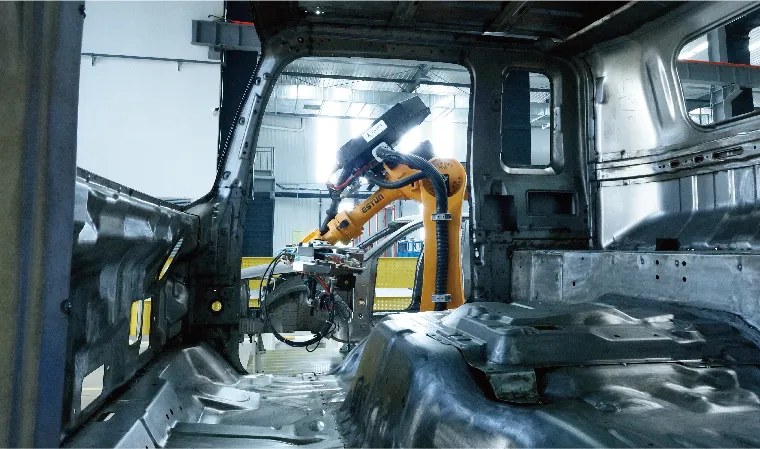
Heavy fabrication and EV production rely on robotic arms for precise, repeatable welding. Industrial arms can achieve ±0.02 to ±0.05 mm repeatability and sustain long duty cycles. Chinese suppliers such as Estun, EFORT, and EVST provide complete welding systems with six-axis arms, AI welding libraries, and 3D vision.
In welding cells, buyers should prioritize duty cycle, torch stability, seam tracking, fixture quality, and after-sales welding support. These factors often matter more than arm price alone.
Electronics assembly needs precision, compact design, and quick changeovers. Cobots are popular because operators can program and redeploy them faster than traditional industrial arms. Many achieve ±0.03 to ±0.1 mm repeatability, which supports board handling, connector insertion, and small-parts assembly.
Electronics manufacturers usually need compact cells, fast changeovers, and reliable small-part handling. Cobots work well when operators frequently need to adjust products, fixtures, or inspection steps.
Industrial robot arms handle heavy boxes, parts, and components when payloads exceed 35 kg or throughput must exceed 30 parts per minute. The key decision is throughput. Heavy, fast palletizing usually needs enclosed industrial robots, while lighter mixed-SKU lines can use cobots.
Machine tending requires reliable loading, unloading, vision integration, and safe operation around CNC machines or injection molding systems. Battery and CNC applications need stable loading, unloading, part positioning, and vision feedback. In battery production, force control becomes important because materials can be delicate.
Choosing between industrial robots and cobots depends on speed, payload, precision, safety, changeover needs, and total cost. Industrial robots are well-suited to high-speed, high-payload production. Cobots work better for flexible tasks, operator proximity, and frequent changeovers.
Key considerations include:
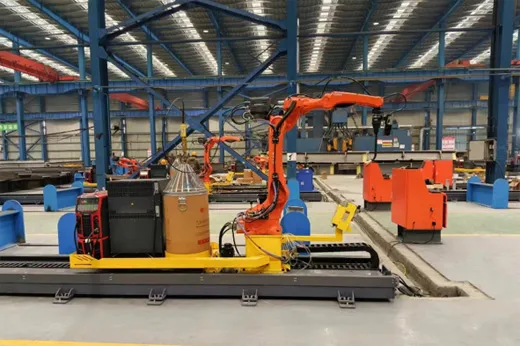
China’s robotic arm ecosystem includes large industrial robot makers, cobot specialists, and component-driven automation companies. These manufacturers compete on payload range, vertical integration, welding expertise, ease of programming, and international expansion.
Best for: vertically integrated motion control and welding automation.
Founded in 1993 in Nanjing, Estun produces six-axis industrial robots and cobots with payloads from 3 kg to 600 kg. Estun’s robots are widely used for welding, palletizing, and machine tending. Its strength comes from in-house servo motors, controllers, and motion control systems. Its Cloos acquisition also strengthened its welding technology and European distribution network.
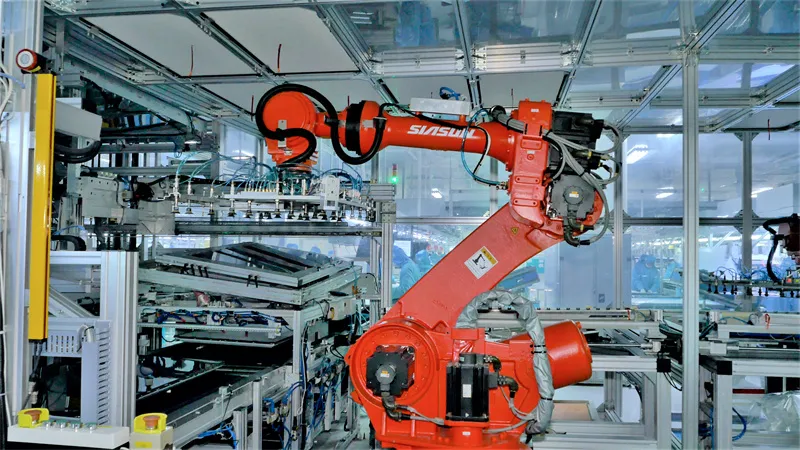
Best for: full smart manufacturing projects.
Siasun, based in Shenyang, grew out of the Chinese Academy of Sciences. It offers industrial robots, cobots, mobile robots, and full smart manufacturing systems. Its broad portfolio makes it useful for automotive, electronics, logistics, and integrated factory automation projects.
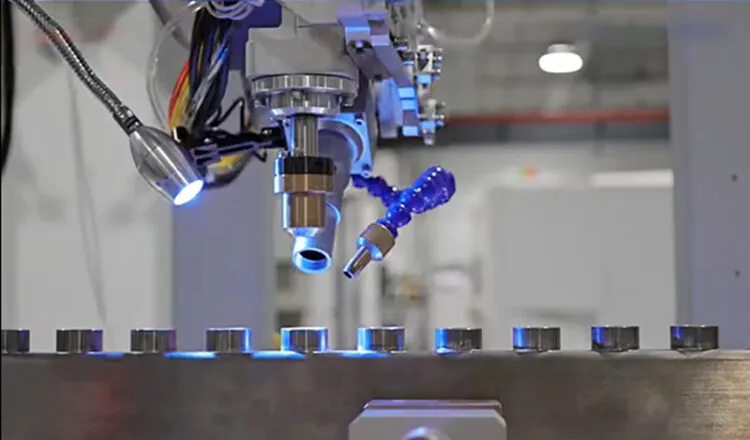
Best for: heavy payloads and battery automation.
EFORT, headquartered in Wuhu, offers six-axis robots, SCARA robots, and cobots, with industrial robot payloads up to 500 kg. Its acquisitions of Italian control technology improved software and integration capabilities. EFORT is strong in large-payload work and lithium-ion battery cell loading.
Best for: a broad range of robots and turnkey welding cells.
EVST, founded in 2018 in Chengdu, offers industrial robots, cobots, SCARA robots, delta robots, and full welding workstations. Its payload range spans 6 kg to 800 kg for industrial robots and 3 kg to 30 kg for cobots. It also provides 3D vision, AI welding libraries, explosion-proof cobots, and turnkey integration.
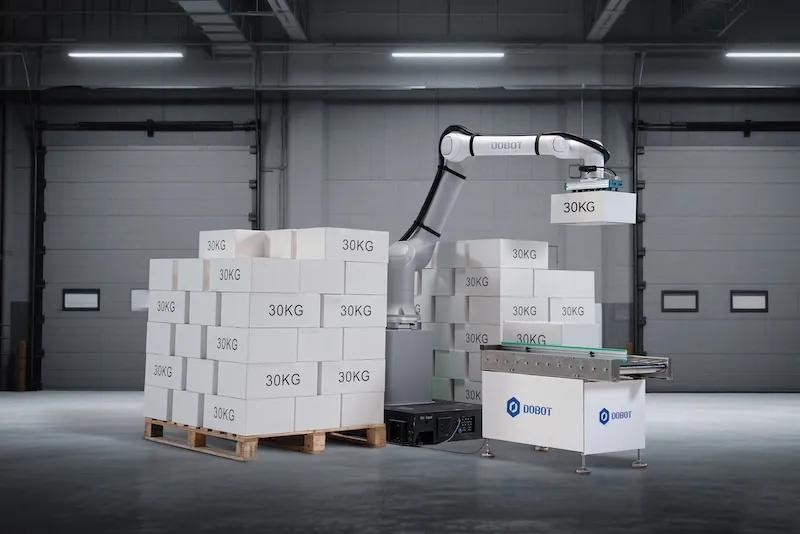
Best for: SMEs, education, prototyping, and lightweight automation.
Dobot, founded in 2015 in Shenzhen, focuses on small and mid-sized businesses. Its CR cobots cover payloads from 3 kg to 30 kg and support drag-and-teach programming. The MG400 desktop robot is widely used in education, prototyping, and light automation.
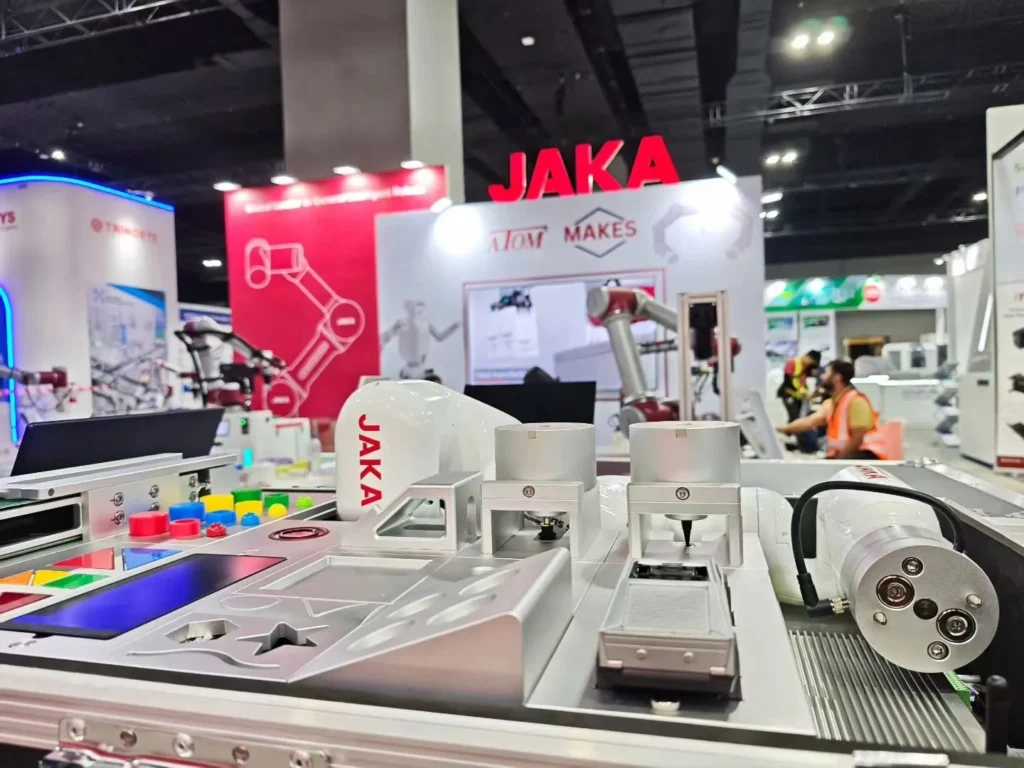
Best for: compact cobot deployment and international partnerships.
Shanghai-based JAKA builds cobots with payloads ranging from 1 kg to 18 kg. Its strengths include wireless connectivity, compact joint design, and simple deployment. It works with Toyota and the production facility in Nagoya to support its international quality positioning.
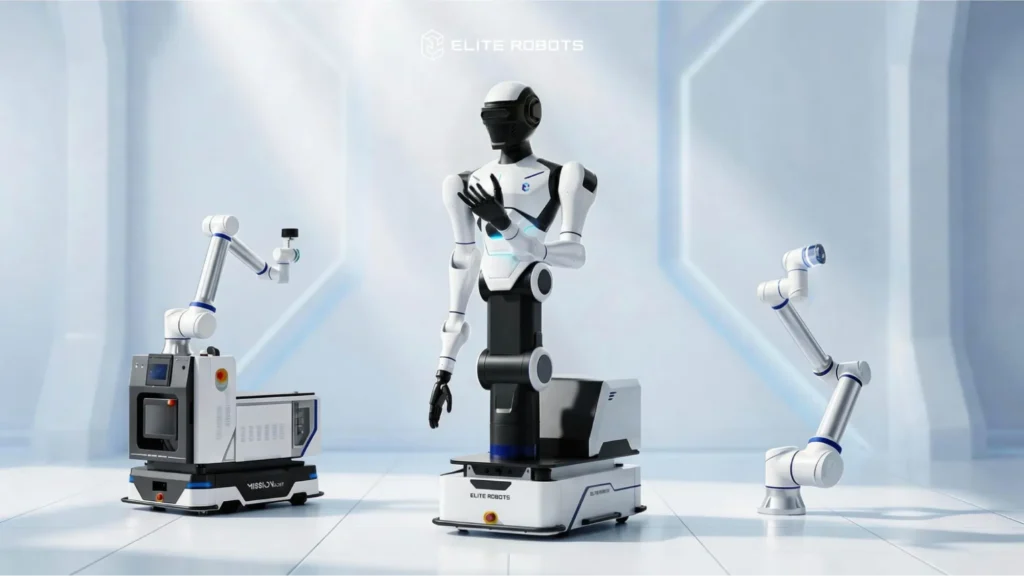
Best for: protected cobots and integrator-friendly architecture.
Elite Robots, founded in Suzhou, offers the CS cobot series with payloads up to 25 kg and IP68 protection. Its open SDK and expandable controller architecture make it attractive to system integrators building customized automation systems.
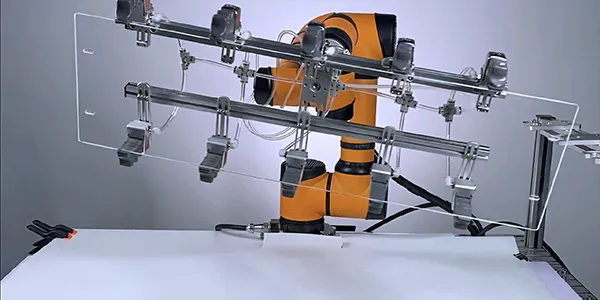
Best for: cleanroom and flexible cobot applications.
AUBO focuses on collaborative robots, with its i-series covering payloads from 3 kg to 20 kg. Its robots are used in automotive parts, 3C electronics, food processing, and cleanroom applications where compact, flexible automation matters.
Best for: laser-linked precision automation.
Han’s Robot, a subsidiary of Han’s Laser, builds cobots backed by strong expertise in lasers, motors, and sensors. Its Elfin series covers payloads from 3 kg to 12 kg and includes force-torque sensing for precision assembly, electronics, and laser-linked production.
Best for: servo-driven robotics and control system integration.
Primarily a servo motor manufacturer, Inovance shipped over five million robotic joint servo motors in 2025 and has since expanded into robotics. Its GR6150HW welding robot features IP67 protection and is designed for shipbuilding and heavy machinery applications. The company collaborates with BYD on force‑control robots for EV battery assembly, underscoring its integration capability across motors and control systems.
Installing industrial robotic arms or cobots requires a clear automation plan, not just hardware selection. Key factors include task type, payload, reach, repeatability, environment, tooling, integration cost, and supplier support.
China’s robotics and automation ecosystem is moving faster than most global teams can keep up with from the outside. ChoZan helps global teams understand China’s robotics, automation, and smart manufacturing ecosystem with clarity. Through research, executive briefings, innovation learning programs, and digital transformation consulting, we help leaders identify relevant players, track market shifts, and turn China insights into practical business decisions.
Connect with ChoZan to explore China’s automation landscape and sharpen your innovation strategy.
Industrial robotic arms should follow ISO 10218-1:2025 for robot design and ISO 10218-2:2025 for robot cells. Buyers should also review safeguarding, emergency stops, commissioning procedures, and maintenance access before deployment.
Robotic arms are programmed through teach pendants, graphical interfaces, offline simulation, or APIs. High mix factories usually need reusable program templates, vision-guided adjustments, and operator-friendly controls that reduce downtime during product changeovers.
The best end effector depends on the task. Vacuum grippers suit cartons and flat surfaces, magnetic grippers handle metal parts, and force-controlled grippers handle delicate assemblies or objects with inconsistent shapes.
Robotic arm integration can take several days for a simple cobot cell and several weeks for a complex industrial line. Timelines depend on fixtures, safety validation, PLC links, vision setup, and operator training.
Industrial robotic arms need scheduled inspections, lubrication, calibration checks, cable reviews, gearbox monitoring, and backup of controller programs. Predictive maintenance tools can reduce unplanned downtime by tracking vibration, heat, cycle counts, and motor behavior.
Yes, robotic arms can use AI vision to inspect surfaces, guide pick-and-place tasks, and detect defects during production. This works best when lighting, camera placement, training data, and rejection rules are carefully controlled.
PLCs connect with programmable robot arms through industrial communication protocols, digital I/O, fieldbus networks, or Ethernet-based systems. This link lets the robot coordinate with conveyors, sensors, safety devices, CNC machines, and production software.
Quick-change grippers help robotic arms switch tasks more quickly without requiring full mechanical rework. They matter in high-mix production because a single cell can move from assembly to testing, packaging, or inspection with less downtime.
Connected industrial robotic arms are at risk of unauthorized access, controller manipulation, data exposure, and network downtime. Buyers should review access controls, software updates, segmentation, remote support policies, and vendor cybersecurity documentation before deployment.
Robotic arms will replace some fixed automation where product variety changes often. Dedicated machinery still wins for ultra-high-volume tasks, but flexible robotic cells give manufacturers greater adaptability as SKUs, materials, and labor needs shift.