CONTENT
China’s logistics sector is in the midst of a structural transformation, and warehouse robots sit at the center of that shift. The numbers tell a clear story. In 2025, the Chinese industrial mobile robot (AGV/AMR) market reached approximately 28 billion yuan, growing at an annual rate of around 28 percent, making it one of the fastest-growing segments in logistics automation.
Industry projections place the 2026 logistics AGV市场规模 at 12.5 to 15 billion yuan, with year-on-year growth between 22 and 26 percent. This is not an incremental improvement. This is a fundamental rewiring of how goods move through the world’s largest manufacturing and e-commerce economy.
The strategic question is no longer if automation will reshape Chinese logistics, but how fast and through which technologies. The answer hinges on a clear understanding of autonomous warehouse robots, their AGV predecessors, and the broader logistics automation strategy taking shape across Chinese industry.
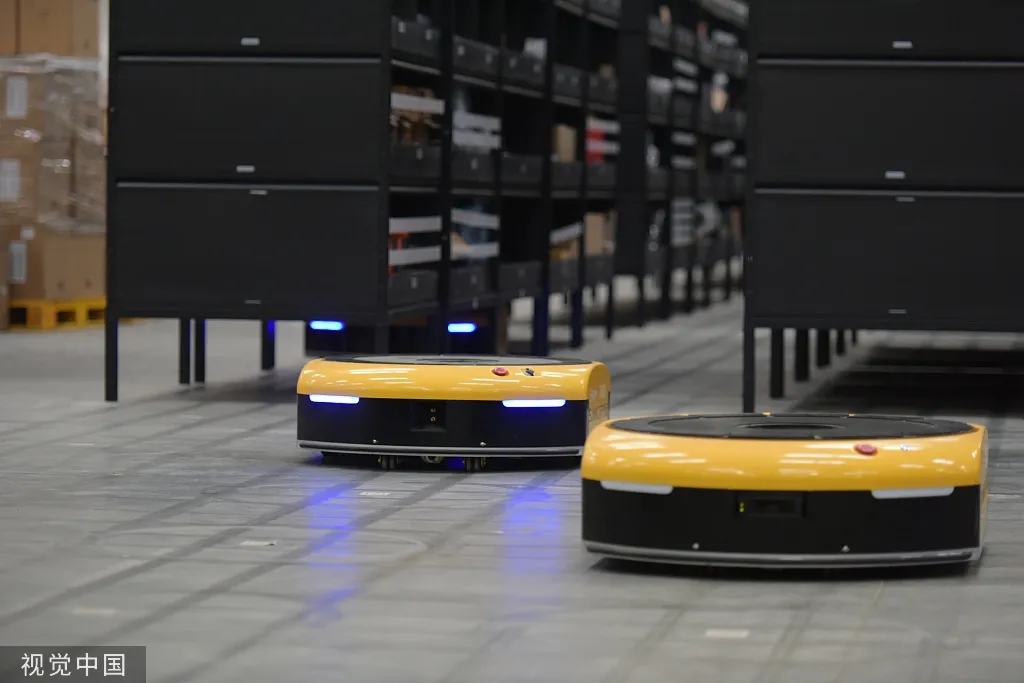
China’s online retail economy has trained consumers to expect fast delivery, frequent promotions, broad assortment, and near-instant service recovery. For warehouse leaders, this creates a costly operating equation.
More SKUs increase storage complexity. Live commerce spikes demand without much warning. Apparel, beauty, electronics, grocery, and healthcare all require different picking logic.
Warehouse robots help solve this by changing the physical flow of goods. In a manual model, workers walk to inventory. In a goods-to-person model, robots bring shelves, totes, or cases to a station. The strategic gain is not only fewer steps. It is a tighter link between storage, picking, sorting, replenishment, and inventory visibility.
China’s strongest operators are not buying a single warehouse robot for a narrow task. They are building smart warehouses in which robots, warehouse management systems, warehouse execution systems, and control software operate as a single operating layer. Cainiao’s automation technology page, for example, describes scheduling across stacker cranes, four-way shuttle cars, AGVs, robotic arms, WMS, WES, WCS, TMS, and algorithms.
This matters for global business leaders because the China model treats logistics robots as part of a digital execution system. The buying question shifts from “Can this robot move goods?” to “Can the fleet coordinate inventory, labor, space, and service promises in real time?”
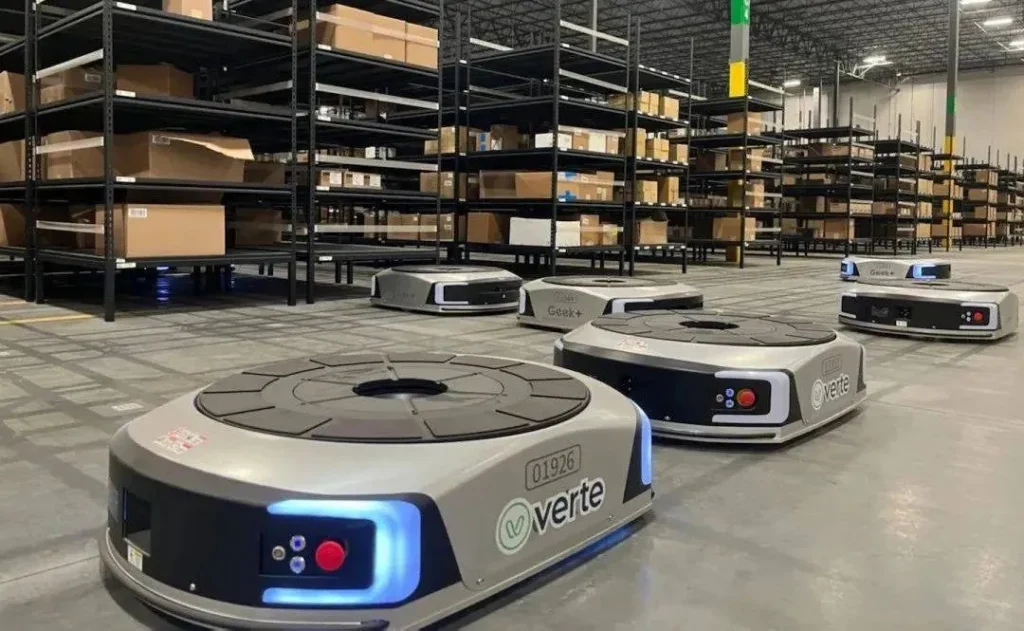
Understanding warehouse robotics requires a clear distinction between AGVs and AMRs. Automated Guided Vehicles (AGVs) rely on external guidance—magnetic strips, QR codes, reflective posts, or tracks. They follow preset paths.
A standard magnetic AGV costs between 80,000 and 150,000 yuan; a laser-guided AGV runs 150,000 to 250,000 yuan. AGVs excel in stable, predictable environments like automotive assembly lines or high-volume production floors where paths rarely change.
Autonomous Mobile Robots (AMRs) operate differently. They use LiDAR or visual SLAM to build environmental maps and plan routes in real time. A standard AMR costs 200,000 to 400,000 yuan, with high-end composite units reaching 600,000 to 1 million yuan.
The premium buys flexibility. AMRs adapt to changing layouts without infrastructure overhauls, making them ideal for environments with frequent SKU changes, seasonal demand shifts, or dynamic workflows.
In 2025, AGVs still held approximately 60 percent of the market, with AMRs at 40 percent. But AMR growth—roughly 35 percent—substantially outpaced AGV growth at about 20 percent. The crossover point is approaching. Industry analysts expect AMRs to surpass AGVs as the dominant technology by 2027.
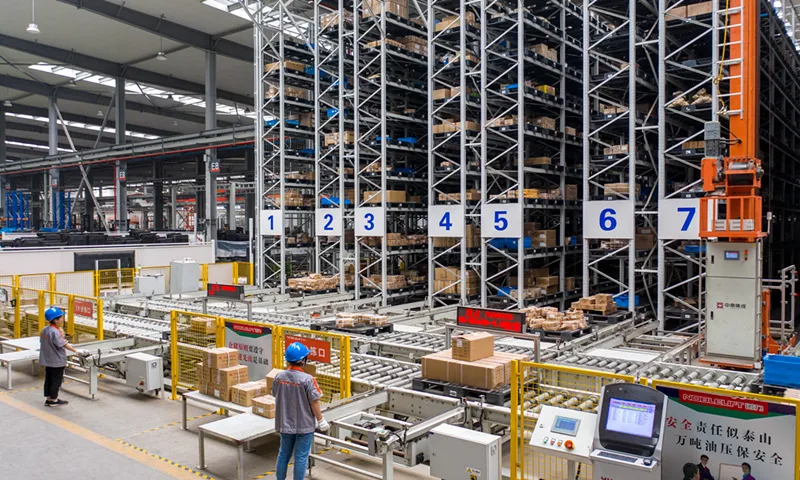
Geekplus is one of China’s most visible warehouse robotics companies. In December 2025, the company said it retained its number-one global AMR market share for the seventh consecutive year, citing Interact Analysis’ 2025 Mobile Robots Market Report.
The same release says Geekplus held a 23 percent share of the global order fulfillment segment and a 48.5 percent share in shelf-to-person solutions.
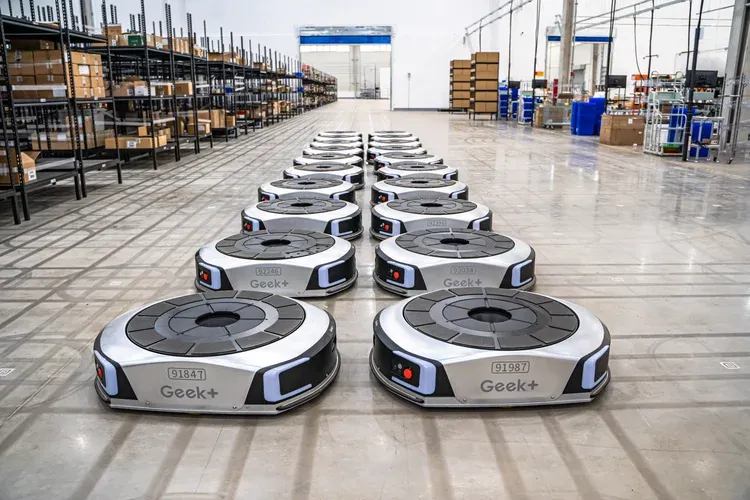
China’s warehouse automation robots ecosystem is strongest where speed, modular deployment, and high SKU fulfillment meet. Geekplus positions its software and robot portfolio across shelf-to-person, tote-to-person, pallet-to-person, sorting, and intralogistics use cases.
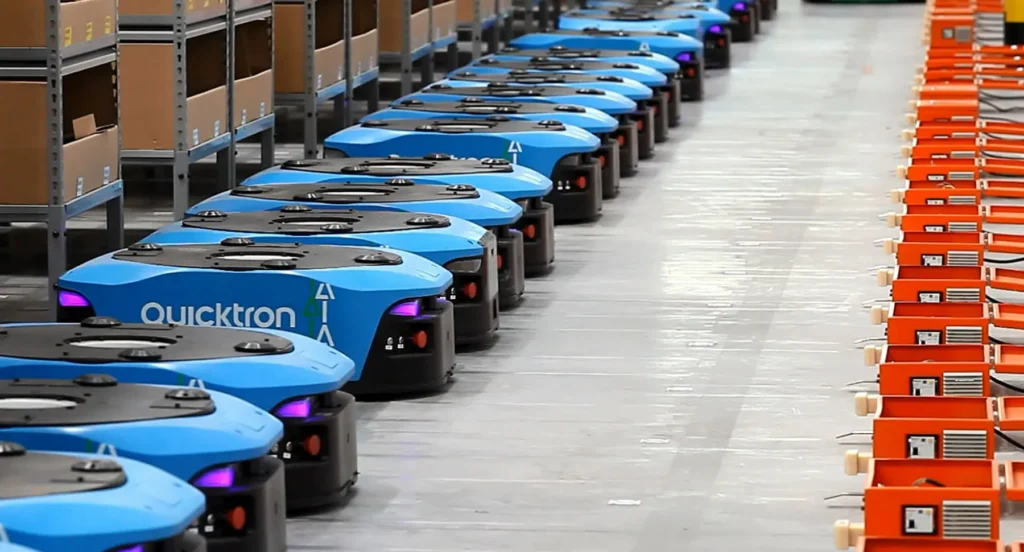
Quicktron’s 2025 communications show another important direction in China logistics automation. Its QuickMix solution integrates bin-to-person, shelf-to-person, pallet-to-person, dense storage, and flexible material handling under one robot control system. The company says it operates across more than 20 countries and regions.
Its QuickBin Ultra system uses M5E high-speed bin搬运 robots and A5 high-speed bin存取 robots working in tandem, increasing storage density by 60 percent and achieving single-workstation throughput of 600 bins per hour.
The A5 robot can access 200 bins per hour. For high-frequency拆零 operations in e-commerce, pharmaceuticals, and manufacturing, these are not marginal gains.
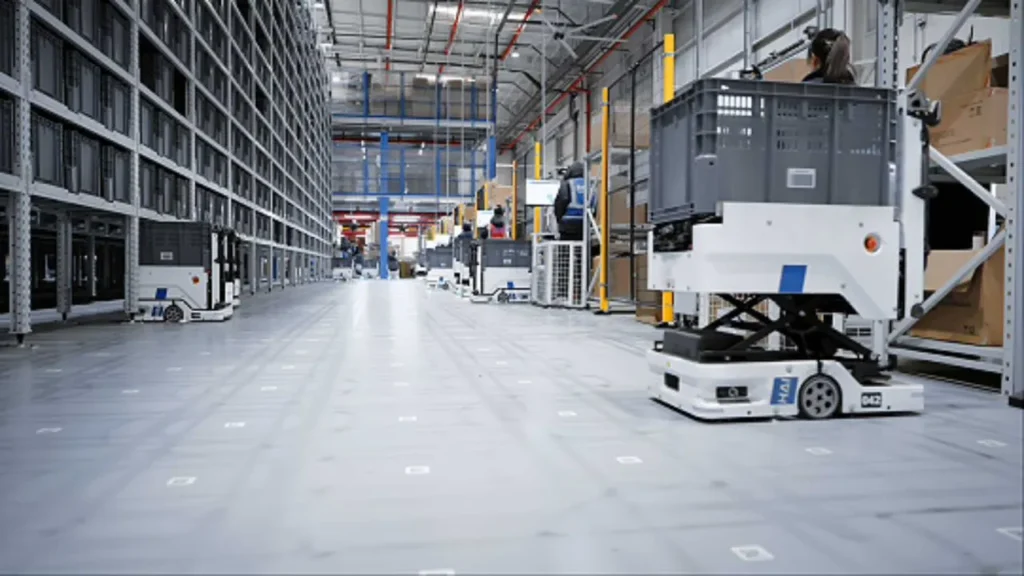
Hai Robotics shows how goods-to-person robots are becoming as much a space strategy as a labor strategy. In September 2025, the company announced two new factories in Yancheng, China, and Penang, Malaysia, and said the expansion increased production capacity for HaiPick System robots by 10 times.
In March 2026, Hai Robotics upgraded HaiPick Climb. The company said the system can deliver totes to picking stations in under two minutes, support up to 4,000 deliveries per hour, and store up to 45,000 totes within 1,000 square meters.
For investors and operators, the insight is practical. When rents, expansion costs, and delivery windows rise together, vertical density becomes a board-level metric.
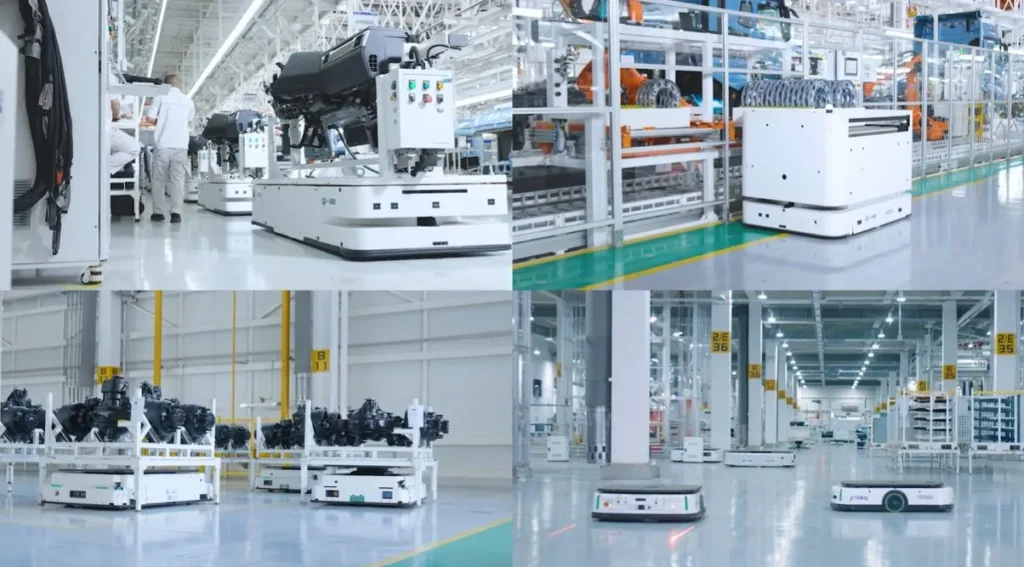
Hikrobot also reflects China’s move from individual robot intelligence to fleet-level intelligence. Its mobile robot page describes AMR, iWMS, and RCS-based solutions for internal logistics and lists more than 100,000 robots in use, more than 3,000 clients, and more than 200 industrial scenarios.
This scale matters because robotics in logistics depends heavily on field learning. Navigation, charging, maintenance, traffic rules, exception handling, and system integration improve through deployment depth.
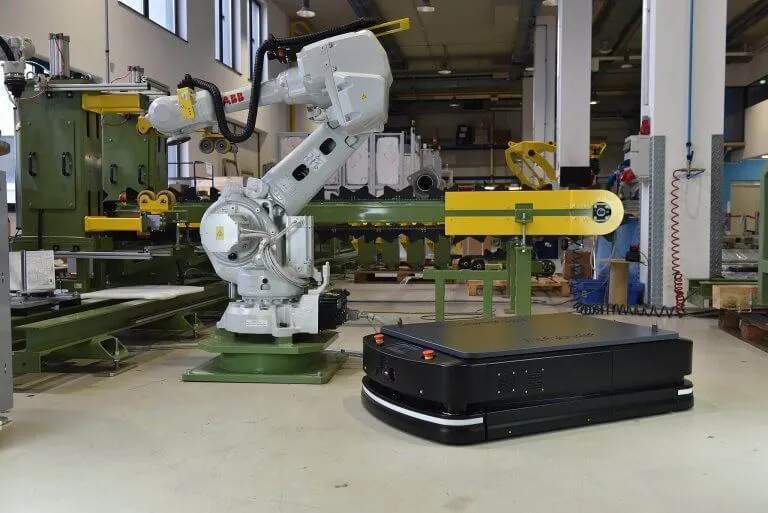
The most immediate value comes from warehouse picking. In large SKU operations, walking time can quietly consume labor capacity. Goods-to-person systems reduce travel and concentrate human work around quality checks, exception handling, packing decisions, and station performance.
This does not remove people from the warehouse. It changes the labor model. Staff become operators of flow rather than walkers of aisles. For brands with seasonal campaigns, this can improve resilience during major shopping festivals.
Many Chinese and global operators face a familiar choice: rent more space, outsource overflow, or automate existing space. Warehouse robots make the third option more credible. Dense storage, vertical tote systems, and coordinated robot fleets can raise throughput without a proportional increase in footprint.
The commercial relevance is strongest for apparel, beauty, electronics, healthcare, and cross-border ecommerce. These categories carry high SKU complexity and need better inventory accuracy.
The hardware matters, but robot fleet management is the real strategic layer. The software must assign tasks, avoid congestion, prioritize urgent orders, coordinate charging, and connect to upstream business systems. A weak fleet system turns automation into traffic.
Executives should evaluate the control tower before the robot body. Ask how the system handles peak demand, mixed robot types, manual zones, safety events, and WMS integration. This is where logistics robotics becomes operational intelligence.
China’s best automation deployments begin with order flow, inventory structure, and service promise. The wrong starting point is a vendor demo. The right starting point is a map of SKU velocity, return rates, batch logic, replenishment pain, labor bottlenecks, and space constraints.
A company may need goods-to-person robots, sorting robots, pallet AMRs, robotic arms, or none of them at the first stage. The correct answer depends on where the margin is leaking.
Fast fashion needs flexible picking and returns handling. Grocery needs temperature-aware workflows and freshness control. Electronics need accuracy and protection for high-value inventory. Manufacturing needs stable line-side logistics and predictable replenishment.
This is why warehouse automation robots should be selected based on operating rhythm, not on trend appeal. AMRs are attractive for flexible environments. AGVs remain useful for stable flows. Hybrid systems can be stronger than either approach alone.
China is valuable because it compresses experimentation. Great online demand, dense logistics networks, manufacturing depth, and active robotics suppliers create a market where warehouse automation is tested at operational speed.
For global brands, the lesson is not to copy every Chinese solution directly. The lesson is to study how Chinese operators connect automation to business pressure. Warehouse robots are most powerful when they serve clear commercial outcomes: shorter cycle times, higher storage density, better accuracy, lower strain, and more resilient peak season execution.
Chozan helps global executives understand China’s fast-moving technology and retail innovation systems with practical business context. For teams evaluating warehouse robots, smart warehouses, robotics suppliers, or China logistics automation models, Chozan can support learning expeditions, executive workshops, custom research, expert calls, and strategic advisory.
Book a consultation to explore how China’s automation playbook can inform your next decision on growth, operations, or innovation.
Warehouse robots are used for picking, sorting, pallet movement, replenishment, returns handling, and internal transport. In China, the strongest use cases appear in ecommerce, apparel, electronics, healthcare, grocery, manufacturing, and third-party logistics operations.
AMRs navigate more flexibly with sensors, mapping, and software. AGVs usually follow fixed routes or guided paths. AMRs suit dynamic fulfillment environments, while AGVs work well for stable material handling routes.
Goods-to-person robots can be better when warehouses have large SKU ranges, long walking distances, and high order volume. They bring inventory to workers, which can improve picking speed, ergonomics, and space productivity.
A company should start by mapping bottlenecks, SKU velocity, labor pain points, space constraints, and order profiles. The first project should address a single measurable workflow issue before expanding into broader fleet automation.
China is important in robotics in logistics because it combines great online retail demand, deep manufacturing capacity, competitive robot suppliers, and fast deployment environments. This creates useful lessons for global supply chain leaders.
Automated warehouse robots usually redesign work rather than remove every human role. Robots handle repetitive movement, while people focus on exception handling, quality checks, packing decisions, supervision, and system management.
The biggest risk in a warehouse AMR project is weak integration. Poor links with WMS, WES, charging logic, traffic rules, and human workflows can reduce the value of otherwise strong robot hardware.
Logistics robots work well in ecommerce, apparel, grocery, electronics, pharmaceuticals, automotive parts, and third-party logistics. The strongest fit appears where SKU complexity, speed pressure, and repetitive movement create high operating costs.
Smart warehouses use robot fleet management to assign tasks, manage traffic, schedule charging, monitor performance, and handle exceptions. This software layer decides how efficiently robots, workers, inventory, and orders move together.
Global brands should learn that warehouse automation robots deliver value when tied to commercial goals. China’s lesson is to connect automation to fulfillment speed, inventory accuracy, space productivity, and peak-season resilience.